Unknown's avatar

Compelling Success In South Africa

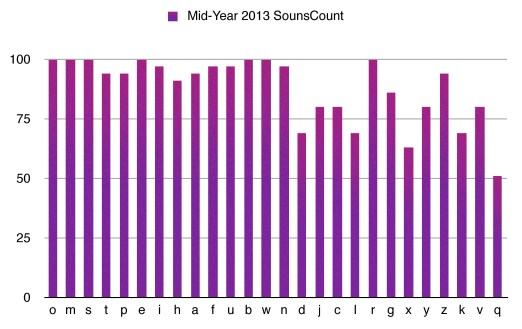
SounsCount: Mid-year assessments for two Grade R classrooms: One where learners are taught in home-language (N=35) and one (N=42) where they are taught in second language.

graphimageshollo5-13

The  5 year old children from these two Grade R classrooms in the township of Mamelodi* began their work with Souns in January 2013, several weeks after the beginning of their school year. These assessments were administered in late May 2013. Considering school holidays and only a portion of their year completed, the results (percents) are stunning. According to the teachers and our observation, building words and sounding out words – the application of letter-sound knowledge –  are regular activities in the classroom. When the school year ends in December, the learners will be well on their way to a successful school year in Grade 1.

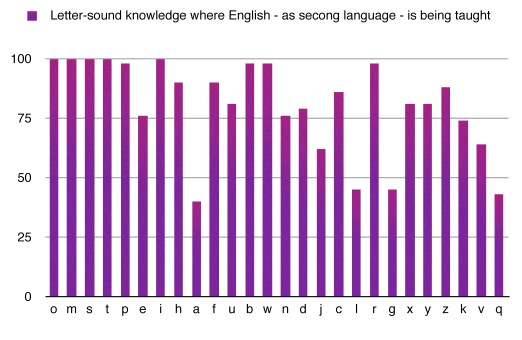
While each classroom is demonstrating notable success, there is a distinct difference between the class which is teaching children in their home language (above) and the class where children are being taught English (below), a second language for the learners. It will be interesting to see the results as the children in the two classrooms continue through the Souns program.

LukiNelmapius5-13

Based on the joy we witnessed in the classrooms, these children are learning the fundamental skills of writing and reading – letter-sound associations – with fun and exploration. The teachers are engaged with the program and excited about the results. Souns® works!

This is a Rotary literacy project initiated by Rotary Districts 6900 and 9400. Thank you, Rotary Club of Pretoria East in RD9400 and Rotary Club of Peachtree City in RD6900. Children have a better path ahead because of you and the The Rotary Foundation.

*Mamelodi is a township of over a million population: http://www.mameloditrust.org.uk/photos/photo_about1.jpg

Unknown's avatar

The Power of “Working Alongside!”

photo-199

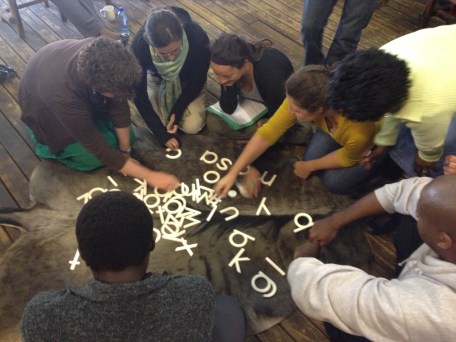
I am in a van on the road to Peace Corps Inservice Training (IST) in South Africa. Such beautiful hearts and minds sit with me. Grace, courtesy, warmth, and enthusiasm are constantly present in this organization’s efforts to better the world. I have been on this same trip to different sites on several occasions to train volunteers to implement our Souns for literacy program. I find it an equally positive experience each time.

PCV’s (Peace Corps Volunteers) have an energy and a flexibility that are bound to make a difference for their communities as their terms progress. One volunteer on this trip is doing what so many do, extending their term an additional year. PCV’s are making a difference and they feel it and often do not want to end the experience. The other side of the story, of course, is that the volunteers are learning more about themselves than can be measured on a calendar. The lessons will affect them for a lifetime. I think of it as tracking their future. Each of us has a gift already in place, but it is only discovered and confirmed through experience.

In the words of one PCV:

“Working alongside people who struggle to put food on the table, yet who have welcomed me into their lives and hearts has allowed me to see the great potential in the rural areas, and has motivated me to extend my service beyond the usual two years.  As I work to teach new skills, I am learning what it means to be part of a global community that transcends culture, ideologies, and language.”

Tomorrow I will be “tracking” my future, doing what I love most (next to doing a walk-about in my mind along a warm beach somewhere) – I will be introducing PCV’s to the Souns program. Those who find it compelling will be trained and will receive sets of Souns provided by The Rotary Foundation through a Global Grant project sponsored by RD9400 and RD6900. PCV’s are reaching thousands of children, making a difference one child, one village at a time. What a pleasure it is to be wrapped around with such purpose.

photo-199 copy

 And it was so much fun!

Unknown's avatar

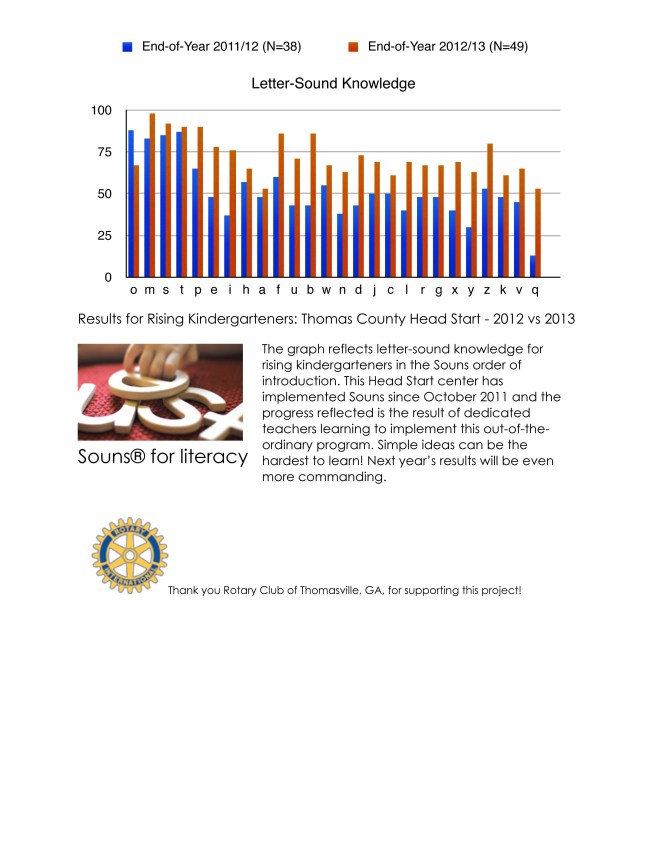
Head Start Graduates – Two Years Compared


   Percent Of Head Start Graduates Who Demonstrated Letter-Sound Knowledge

The teachers are responsible for improved success of graduates! They are committed to helping their children read!

SounsHSthomasvillegraph12:13

Unknown's avatar

SounsAfrica – Hands-on Makes a Difference


sounsremedialSA13

Thank you, Rotary Districts 6900 and  9400, and The Rotary Foundation! Another confirming detail from recipients of your gift of literacy through the Souns program. The following communication says this project is making a difference!

Working with remedial students using the Souns program:

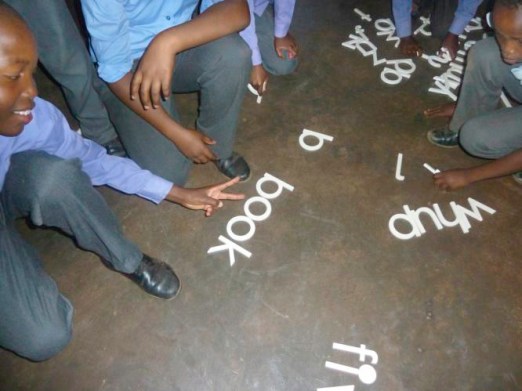
The students got through the program already today after starting about January 15th, probably because they are older, but they did not know all the letter sounds before now. They just loved manipulating the Souns and making words. I think they could have played with them for weeks. I will probably let them work with the Souns letters off and on all year. I just love the picture with the kid who figured out how to write “scool.” 

sounsremedialsa13-2


Unknown's avatar

Data Shows Progress for Head Start Students

Promising data comes out of a Head Start Center piloting the Souns program. The center is part of the Southwest Georgia Community Action Council (SWGACAC) Head Start Program overseeing 18 counties.

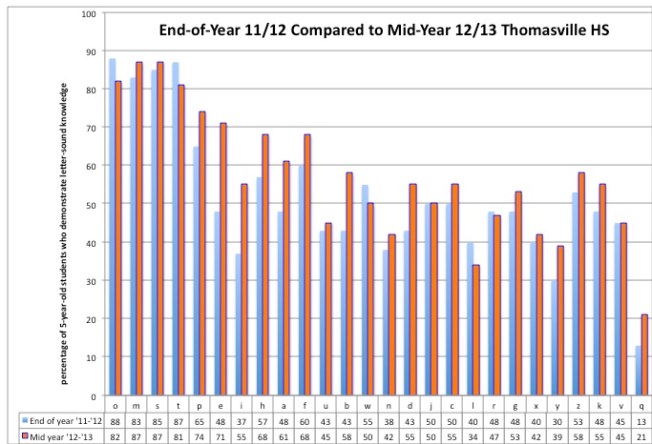
This is the second year the Lester Street center has implemented Souns – thanks to the Rotary Club of Thomasville. Recently, the rising kindergarten students had a mid-year (January 2013) evaluation of letter-sound knowledge learned through the Souns program. The following graph compares end-of-year (2011/12 – N=60) results with the mid-year (2012/13 – N=38) results showing percentages of students demonstrating letter-sound knowledge in SounsⓇ sequence. The graph confirms a story of learning for everyone .

 thomasvillecomparative12-13

It will be quite interesting to visit Lester Street again in May to get end-of-year data for 2012/13. The teachers and administration have been so loyal to this program. It is clear everyone is more comfortable with Souns this year. Good practice is building. As familiarity with this deceptively simple program develops, the results will compound until children are able to sound out phonetic words prior to entering kindergarden. That is a very attainable goal for typically developing children using Souns as designed.

It is also helpful to see certain similarities in the two evaluations, especially which letter-sound associations children find more difficult to learn.

Unknown's avatar

Rotary Appeal: Children are Waiting!

It began here! Now, progress compels an appeal to the corporate world in South Africa!  

Implementing Sounsbw

The SOUNS programme focuses on pre-school literacy readiness which is the foundation of subsequent academic success. The SOUNS programme was originally introduced in RSA in the Knysna area, but a parallel project started in the Gauteng province in February 2011. This programme has to date reached over 8500 children in 97 crèche and school locations. The success of the programme is illustrated by the speed with which pupils gain letter-sound knowledge, build words, and subsequently, read words. It is also illustrated by the enthusiasm with which teachers and children embrace the programme. This enthusiasm has allowed the RCPE to combine with many partners in expanding the programme. Organisations involved already include The South African Congress for Early Childhood Development, The Khanimamba Training and Resource Centre, many regional crèche forums, The University of Pretoria student outreach programme and the UP Business Unit, The American Peace Corps through their volunteers, and finally, several primary schools with the support of the Gauteng Educational Department. The programme has reached pupils mainly in the Mamelodi area, but many satellite centres in the Limpopo and Kwa- Zulu Natal provinces are springing up.

The original project planned to place sets in150 classroom locations. This project is now reaching conclusion with to date 178 sets in the field. The RCPE is seeking further funds from Rotary International to initiate a phase 2 project that will fund a further 250 sets and reach potentially a cohort of 10 000 pupils per annum.

SOUNS has the potential to make a significant contribution to advance the literacy skills of future South African children country wide. By targeting pre-school children, the skills will then impact throughout the child’s life, cascading on many aspects of learning. Many systems are in place for this to happen.

• The SOUNS programme has repeatedly proved that it is effective. • The communities already exposed to the programme realise its effectiveness and are keen to embrace the programme.

• Pilot programmes have allowed an effective operating procedure to be developed.

• Contacts have been made that will allow a rapid expansion of the programme.

• Support structures to allow this rapid expansion exist but will need to be refined to allow a significant up-scaling of the programme.

Such a programme will have to limit its scope by selecting an area to concentrate its efforts. The benefits that will accrue from such a policy are that educational departments can be introduced to the programme and the early development of literacy skills. It might sound idealistic, but the future was never changed without a vision. The vision here is to give universal opportunity to South African pre-school children to SOUNS so that the future generations of South African children can become literate and enter the formal educational structures equipped to capitalise on the learning experiences that they deserve. The Rotary family seeks a partner in that vision.

THE ROTARY CLUB OF PRETORIA EAST IS BOTH A NONPROFIT ORGANISATION AND A PUBLIC BENEFIT ORGANISATION. THIS WILL ALLOW ANY CORPORATE FUNDER TO UTILISE THE SPONSORSHIP IN THEIR BBBEE AND CSI PROGRAMMES.

To see the entire appeal…please open this pdf file.

CSI appeal jan 12 version-1

Unknown's avatar

Final Results – A Year Later In SA

sounsworksknysna1

The SOUNS Literacy Programme was first introduced (through a grant from  Rotary International) into preschool classes in 2010, and a relatively small number of preschool learners in the Knysna area were taught according to the correct SOUNS methodology.

Since January 2012, thanks to a further grant from DG Murray Trust, all classes at 22 Knysna Education Trust preschools had the benefit of receiving SOUNS kits, teachers in the field were trained to present the programme in Afrikaans, Xhosa and English as required. Volunteers were trained to monitor progress in the preschools and the learners’ progress was tracked by teachers and volunteers who reported back to KET regularly. Staff at KET was able to present the programme in both Afrikaans and Xhosa, which are the usual community languages of the Western Cape.

EVIDENCE FROM GRADE 1 TEACHERS:

During the month of June 2012 [mid-school year in SA], Grade 1 teachers indicated that learners who had been on the SOUNS programme the previous year were performing well in Grade 1 literacy, with performance indicators well above national and provincial averages. Teachers reported the following levels for learners who had previously learnt SOUNS at preschools: 53% good – excellent, 30% average – satisfactory, and 16% weak.

For the entire evaluation of preschools, please click here:

Nov12- NEW SOUNS LITERACY SURVEY November 2012 (2) (then click again)

Unknown's avatar

You Will Be Surprised!

Where are we now with the collaboration of hearts, minds, talents, and resources intent upon children reading in South Africa? There is power in joined forces: Rotary Districts 6900 and 9400, Rotary Club of Pretoria East in South Africa, Rotary Club of Peachtree City , GA, USA., and the Peace Corps in South Africa. The Rotary Foundation funded a Global Grant which is impacting thousands of children from rural villages and urban townships across provinces in South Africa. Miracles do happen. Children will read! Thank you, Rotary! Thank you, Peace Corps!

A comment  from Robin Jones, the Rotarian heading this RD9400 and RD6900  project from Rotary Club of Pretoria East, South Africa –  The feed back from the existing Peace Corps volunteers (PCV’s) is slow but what I have received is amazing. You will be surprised at the numbers of kids we are reaching.

One PCVToday is our first day back to school after winter break. The kids I worked with today were all so excited I was back to teach them! Right before break I had tested each class on which sounds they have mastered. I assumed most of the kids would forget some of the sounds over break but surprisingly that wasn’t the case. All the kids had done extremely well in both remembering the previous sounds and with the introduction of new ones today. A few weeks before break we had started on constructing words which I plan to continue next week since our knowledge is expanding.

Another PCVI don’t know how much you have heard about the excitement level with souns and Peace Corps, but to say it is high would be an understatement. Many folks are reaching out to South Africa Rotary, Rotary back home, and planning together. It really is a great time. One of those awesome folks works with a large NGO. They are spread throughout the country and work with 56 creches. She has submitted a proposal to do trainings for each of these cretches. Pretty exciting to think about the impact this can have on early literacy.

Yet another PCV I have been using SOUNS  for about 2 months in the Creche. I spend 4 days two hours each day teaching small groups (6-8) of toddlers 3-6 years old. It is a wonderful tool for teaching phonics….And the lower case alphabet is definitely the way to go! The plastic letters are indestructible: they have been chewed, dropped, sucked, thrown, kicked, ‘crayoned’, pulled…all without the slightest damage. I really love this program. It sets a good pace for kids learning…and the kids absolutely love these letters and sounds. I am hoping to see a difference in the Grade R at the Creche who will be entering Grade 1 at the Primary School.

And yet another PCVI was wondering, could we get other Rotary clubs to sponsor sets? For instance, my mom is in Rotary in North Carolina, does US Rotary have connections to other groups that could help us out?

“Can you help us out?”  is a call from the field for assistance that is so small in terms of dollars. You can help a Peace Corps volunteer help a classroom of children in his or her village. We have some materials funded now, with additional funding requested; but the numbers of classrooms are beyond that scope. One Rotary Club supporting One Classroom  will make the world shake with potential for these kids.

Peace Corps volunteers are passionate, committed  resources for their villages. They are teaching the children and the teachers so this work is sustainable. Rotary Districts, Rotary clubs, Rotarians or benevolent minded readers, consider what $200 will do, as that is all it takes for a classroom (no expendables, so imagine the impact over years).  Souns is a global Rotary literacy option (see Rotarian, August 2011) from  Counterpane, a 501-(c)- 3 non-profit educational organization. Your gift supports classroom materials only. All Souns training for Rotary projects is in-kind giving by Rotarians. Email everychildwillread@gmail.com or click below and support a classroom. Thanking you forward! Every child wants to read!          Please Donate!

  
Unknown's avatar

It Began With Rotary! Now Look!

This literacy effort began with a Rotary Matching Grant between RD6900 and RD9350. The lead Rotary clubs were RC Peachtree City (USA) and RC Sea Point (South Africa).  Now look! SounsAfrica has grown legs of its own!! https://sounstalk.org/wp-content/uploads/2012/08/souns-survey-june-2012.pdf

The following is an email with a powerful attachment from Knysna Education Trust in South Africa. KET is the source for Souns in South Africa for all activities outside of Rotary projects. They are really making a difference for literacy.

I thought you may be interested in the survey that I collated in June this year.  We are very pleased with the results that it shows.  I need to do another one for DG Murray Trust mid-September.  It is a lot of work and effort by many stakeholders to come out with this summary, but it tells us what we want to know.

The results in the 5 primary schools in the Knysna townships, where our preschool learners move on to, are also much better this year, which is the first year that Grade 1 results are able to be measured since starting the programme in the preschools.  The school management team of the Western Cape Education Department have told me that those 5 schools are much better this year.

Lesley S.   / Knysna Education Trust

Unknown's avatar

Souns/Peace Corps – Seeds Sprouting!

 Souns Approach to Learning Phonetic Sounds without Souns symbols.

This is the Souns program through the words of one Peace Corps volunteer as he is helping teachers around him build a more literate world for children in South Africa. He is introducing the Souns program across environments. Children will read in South Africa thanks to the collaborative effort of  the Peace Corps and Rotary Districts 9400/6900.


I.  Introduction

Children often have a difficulty with reading because they learn words through rote memory of high frequency words.  These children have difficulties when coming across unfamiliar words.  If children are exposed to individual phonetic sounds at an early age, such as the cretche age, they will be a more balanced reader, able to read with fluency and decode.

II.  An Approach

There is a program called Souns that utilizes hard plastic representations of phonetic sounds and a progression of phonetic sounds that allows a young child to learn high frequency sounds first.  The progression is as follows:

o  m  s  t  p  e  i  h  a  f  u  b  w  n  d  j  l  c  r  g

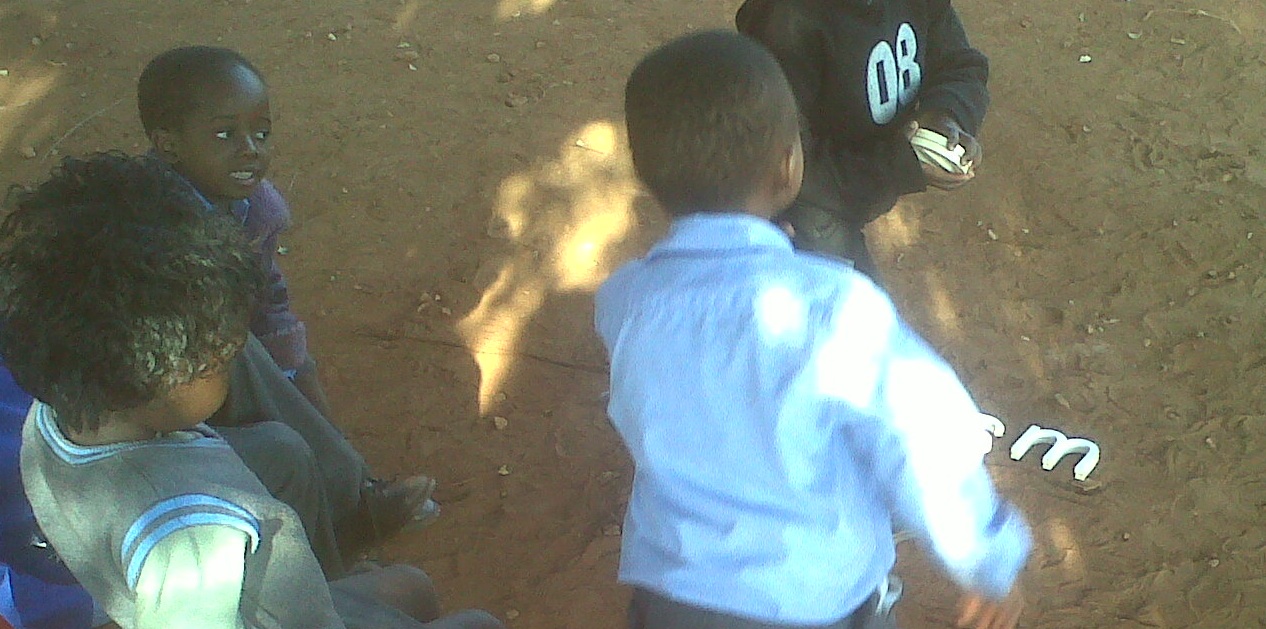
Learners are introduced to the first four sounds “o  m  s  t.”  Groups can be from 1-8 learners.  The preferred method is to be seated on the floor.  The teacher has the four sounds in a bag and pulls out one sound (the plastic representation of the sound) and says “o.”  The learners will repeat “o.”  Then the teacher goes from learner to learner, saying “o” and allowing each learner to touch and hold the sound.  After all learners have touched and said the “o” sound, lay the sound on the ground and repeat with “m” and then the rest of the four sounds.

After all 4 sounds have been introduced and laid on the ground in from of the learners, repeat the sound and give one to each child.  Now that each child is holding a sound, ask, “Can I have the “o”?”  The child with “o” will hand you the “o” and you will place the sound back in the bag.  Say “thank you” and ask for the “m” and so on until all the letters are in the bag.  Give each child a “high five” and say “thank you”.

III.  Notes on the Approach

Each session should last less than 15 minutes and done only once a day.  The sessions should focus on being fun and not dispensing of knowledge.

A teacher should never say “no.”  If a learner says a sound incorrectly, such as “o” when the sound is “m”, say, “This is “m,”” and continue with the session.  If a learner points at a sound, such as “m”, and says it incorrectly, say, “This is “m,”” and allow the child a chance to say it correctly.  If they continue to struggle, say “Good job,” make a note, and continue with the session.

It is important that each sound is not drawn out too much.  If the learners are learning “t”, make sure the learners say “t” once and not “t, t, t, t”.  If they are learning “s,” make sure they say “sss” and not “sss, sss, sss”.  This is because the child will soon be reading and they need to learn how the sound sounds naturally when read.

Never add vowel sounds to the end of consonant sounds.  If teaching “s”, it is never “sa” or “se” or “si”, it is “sss” and only “sss”.  This will help the child break words down and be able to learn other languages that do not follow the Bantu word formation of every syllable ending in a vowel.  “sa”, “se”, “si”, “so”, “su” is a helpful approach for reading intervention and can be done at a later stage, but it is not beneficial when a child is first learning phonetic sounds.

When showing the learners a sound, be sure to display the sound in a way that it is proper for the child viewing it.  This way they do not confuse the sound.  This is especially imperative when doing b, d, p, and q.

IV.  An Amended Approach for LEAP 5 and Local Cretche

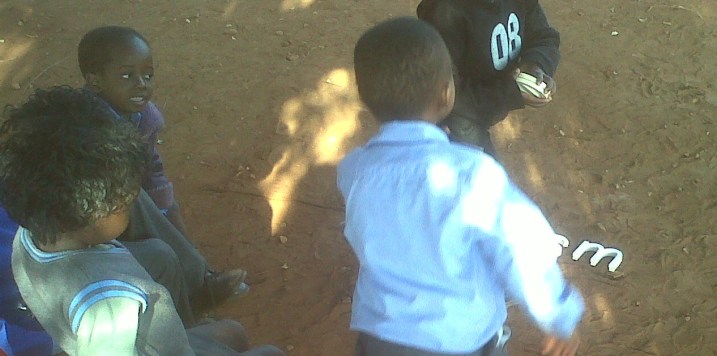
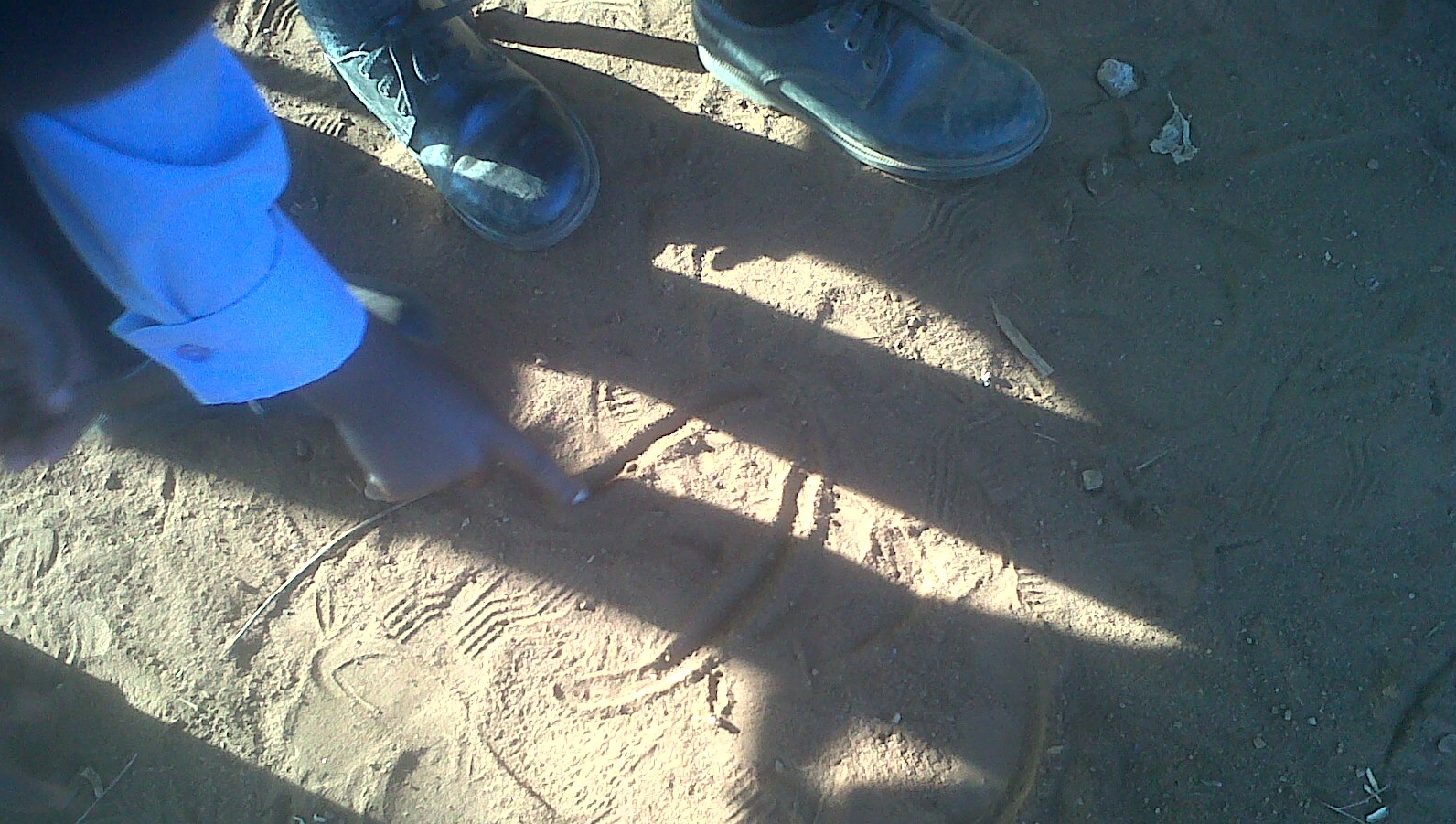
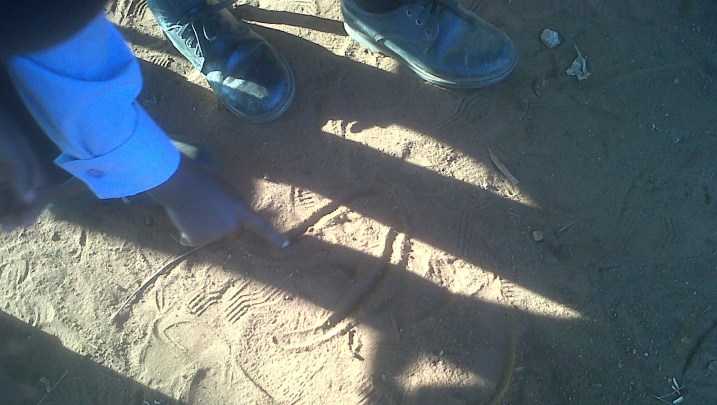
Working with the plastic representations can be substituted by drawing with a stick in the dirt.

Each LEAP learner could work with a group of 4 or less.  I suggest 4 or less so the cretche learners receive equal exposure.  You can adjust this if need be, of course.  Here is a suggested process:

1.  The LEAP learner will take their group and a stick to their designated spot in the yard.  In this case, they will sit down in a line with students beside the teacher. Greet each student, ask a simple question, and say something to get them excited, such as, “Ready to have some fun?!”  Be sure the learners can each see the patch of dirt in front of them and the LEAP learner.

2.  They will go through the introduction process, as mentioned above, but instead of displaying a plastic representation of the sound, the teacher will slowly write the sound in the dirt in front of the learners.  Form the letter slowly, so the child is able to watch how the letter is formed.

3.  The LEAP will point to the representation of the sound drawn in the dirt and say it to each learner.  After saying it to one learner, allow the learner to attempt drawing the sound in the dirt also.  As noted under “Notes on the Approach,” be sure to not say “no”.  Just allow the learner to try their best and move along, keeping their excitement high.

4.  By the end, you should have 4 sounds drawn in the dirt, facing the learners.  Go through each sound saying, “Can someone touch the “o”?” and then erase after choosing one child to touch it and then move to the “m” and so on until all sounds are erased.

5.  Give each learner a sign of congratulation such as a “high five” and end the session.

V.  Resources

Please visit souns.org and read more about souns.  Then go to souns Resources on the left hand column.  Once on the souns Resources page, click on the souns Tracking Sheet and start one tracking sheet for each cretche learner that is kept track of by their LEAP learner.

                   *Mastered, shading in the whole box, should be filled in only when you draw the sound in the
dirt, and without any prompting or prior teaching that day, the individual cretche learner say the
correct sound.

VI.  Activities to Add to the Approach

If learners are having difficulties with sounds, it often helps to change your approach.  Here are a few suggestions to make learning even more fun:

1.  Get a marker or pen and lightly write the sound on the hand of each learner.  Be sure to write the same letter on the same part of the palm.  This will allow you to write four sounds (2 on top of each hand and two on the bottom of each hand).  Be sure to sit behind the learner and slowly write the sound, allowing them to see how the sound is formed.  After this, you can ask them to match their sound to their friends’ same sound.  It is a fun way for them to take their learning home and show their parents what they learned that day at school.

2.  As a review, draw each sound apart from each other in the yard.  Say a sound and have the group run to each sound, look at it, and shout it out.  This is a good way to get them excited about the sound and can even be done individually as a way of review.  Be sure to demonstrate first.

3.  Get large representations of sounds already learned and spread them out in your learning area.  Ask learners to find the different sounds on the paper and/or have them show you the sounds.  This will be a pivotal step in their understanding of how sounds connect to the world they live in.

4.  Once learners attain the first 8 sounds, it is a good time to create some words.  From the first 9 sounds, in Tshivenda, you can say the words mme, ita, sita, sema, and many more that I don’t know.  Say the word normally and then say it slowly, making sure the learner hears each individual sound.  Ask the learner what that word means and if you have a physical representation of the word, show it to the learners.  Allow the learner then to do say the word normally and then slowly.  Say it again together, pointing out the first sound, and then you or, if able, the child writes the sound in the dirt.  Do the same for the next sound.  When the entire word is written, sound out each sound and then say the word again normally.  Congratulate the learner and tell them they built a word.  This will be a big step for the learner and should be used only with sounds mastered.

VII.  Final Note

This is an easy concept that will be great for the LEAP learners to share with the cretche learners.  It will be most beneficial when mixed with reading of stories, singing of songs, and playing of games.

© 2012 by SounsⓇ All rights reserved. No part of this document may be reproduced or transmitted in any form or by any means, electronic, mechanical, photocopying, recording, or otherwise, without prior written permission of Souns.