Unknown's avatar

Souns/Peace Corps – Seeds Sprouting!

 Souns Approach to Learning Phonetic Sounds without Souns symbols.

This is the Souns program through the words of one Peace Corps volunteer as he is helping teachers around him build a more literate world for children in South Africa. He is introducing the Souns program across environments. Children will read in South Africa thanks to the collaborative effort of  the Peace Corps and Rotary Districts 9400/6900.


I.  Introduction

Children often have a difficulty with reading because they learn words through rote memory of high frequency words.  These children have difficulties when coming across unfamiliar words.  If children are exposed to individual phonetic sounds at an early age, such as the cretche age, they will be a more balanced reader, able to read with fluency and decode.

II.  An Approach

There is a program called Souns that utilizes hard plastic representations of phonetic sounds and a progression of phonetic sounds that allows a young child to learn high frequency sounds first.  The progression is as follows:

o  m  s  t  p  e  i  h  a  f  u  b  w  n  d  j  l  c  r  g

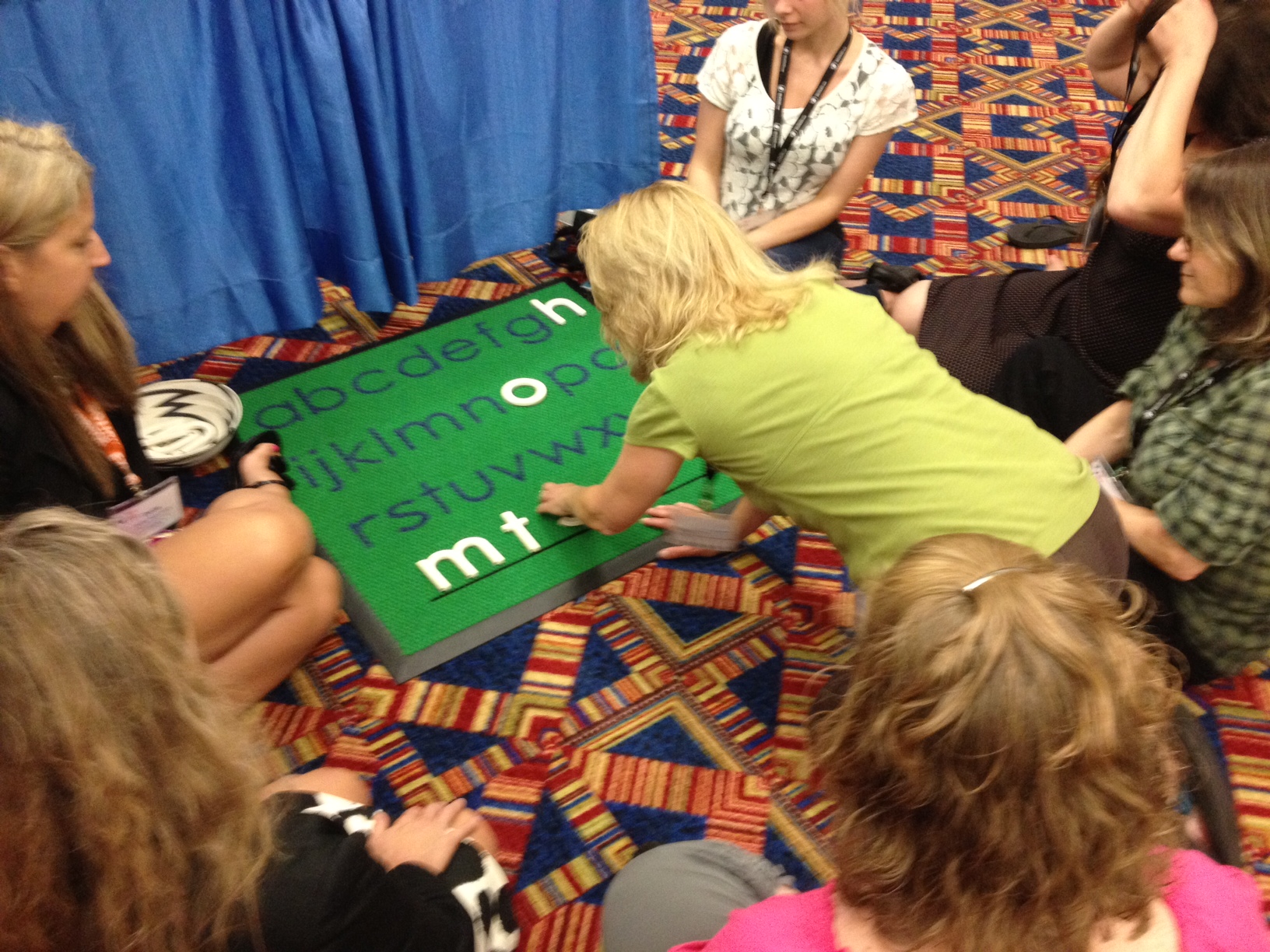
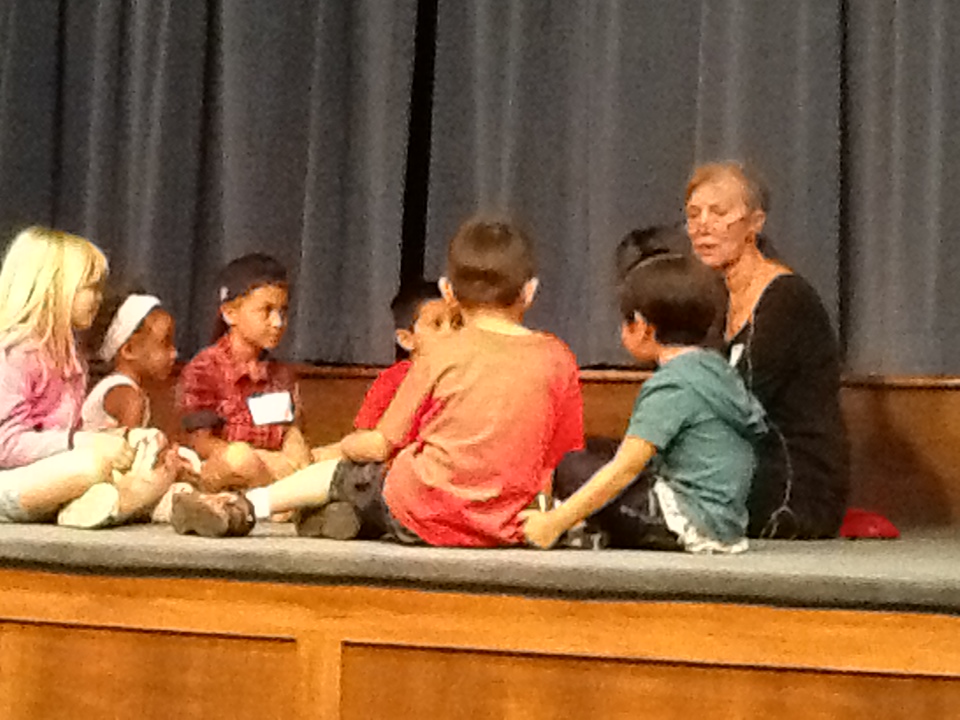
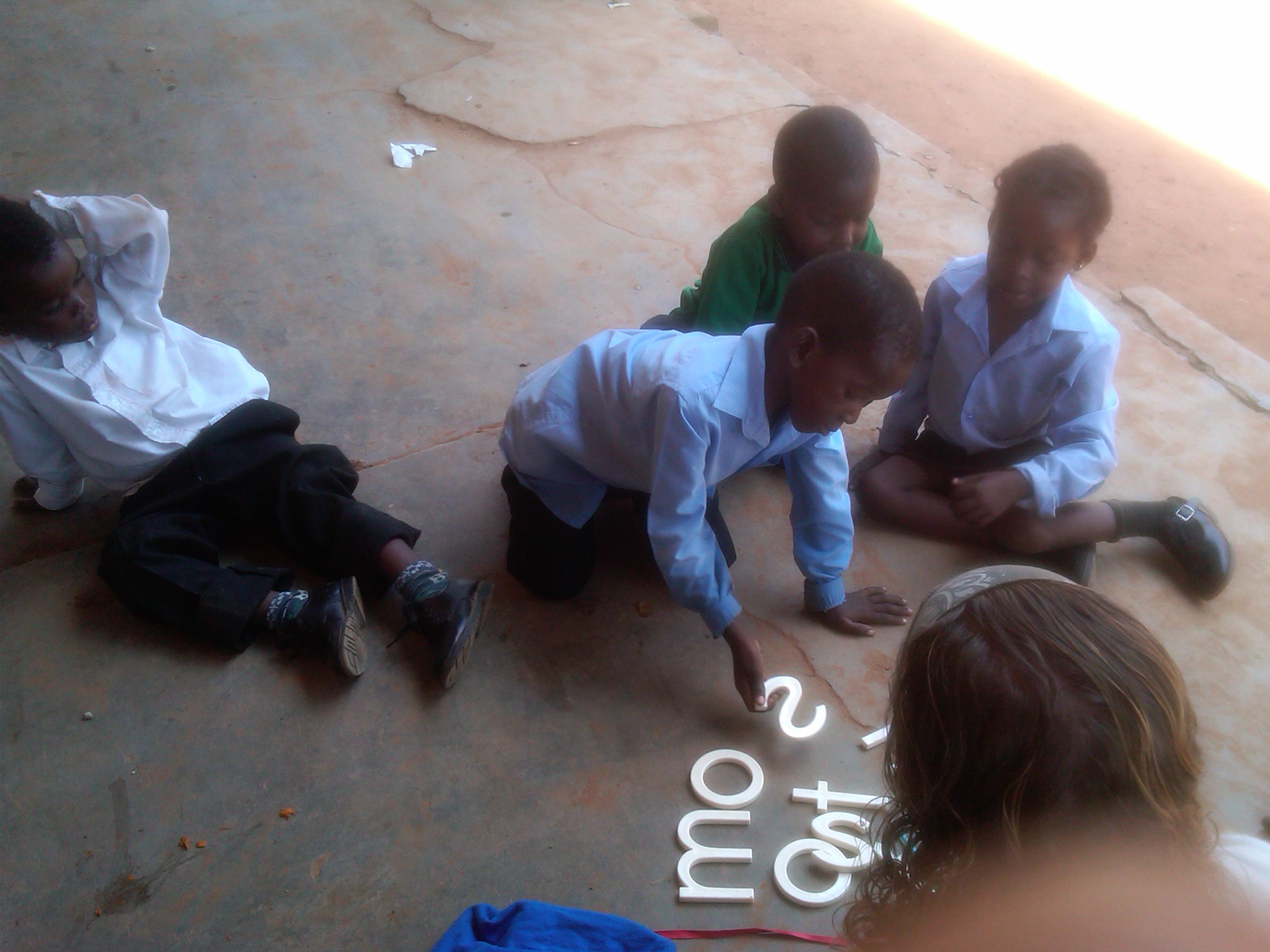
Learners are introduced to the first four sounds “o  m  s  t.”  Groups can be from 1-8 learners.  The preferred method is to be seated on the floor.  The teacher has the four sounds in a bag and pulls out one sound (the plastic representation of the sound) and says “o.”  The learners will repeat “o.”  Then the teacher goes from learner to learner, saying “o” and allowing each learner to touch and hold the sound.  After all learners have touched and said the “o” sound, lay the sound on the ground and repeat with “m” and then the rest of the four sounds.

After all 4 sounds have been introduced and laid on the ground in from of the learners, repeat the sound and give one to each child.  Now that each child is holding a sound, ask, “Can I have the “o”?”  The child with “o” will hand you the “o” and you will place the sound back in the bag.  Say “thank you” and ask for the “m” and so on until all the letters are in the bag.  Give each child a “high five” and say “thank you”.

III.  Notes on the Approach

Each session should last less than 15 minutes and done only once a day.  The sessions should focus on being fun and not dispensing of knowledge.

A teacher should never say “no.”  If a learner says a sound incorrectly, such as “o” when the sound is “m”, say, “This is “m,”” and continue with the session.  If a learner points at a sound, such as “m”, and says it incorrectly, say, “This is “m,”” and allow the child a chance to say it correctly.  If they continue to struggle, say “Good job,” make a note, and continue with the session.

It is important that each sound is not drawn out too much.  If the learners are learning “t”, make sure the learners say “t” once and not “t, t, t, t”.  If they are learning “s,” make sure they say “sss” and not “sss, sss, sss”.  This is because the child will soon be reading and they need to learn how the sound sounds naturally when read.

Never add vowel sounds to the end of consonant sounds.  If teaching “s”, it is never “sa” or “se” or “si”, it is “sss” and only “sss”.  This will help the child break words down and be able to learn other languages that do not follow the Bantu word formation of every syllable ending in a vowel.  “sa”, “se”, “si”, “so”, “su” is a helpful approach for reading intervention and can be done at a later stage, but it is not beneficial when a child is first learning phonetic sounds.

When showing the learners a sound, be sure to display the sound in a way that it is proper for the child viewing it.  This way they do not confuse the sound.  This is especially imperative when doing b, d, p, and q.

IV.  An Amended Approach for LEAP 5 and Local Cretche

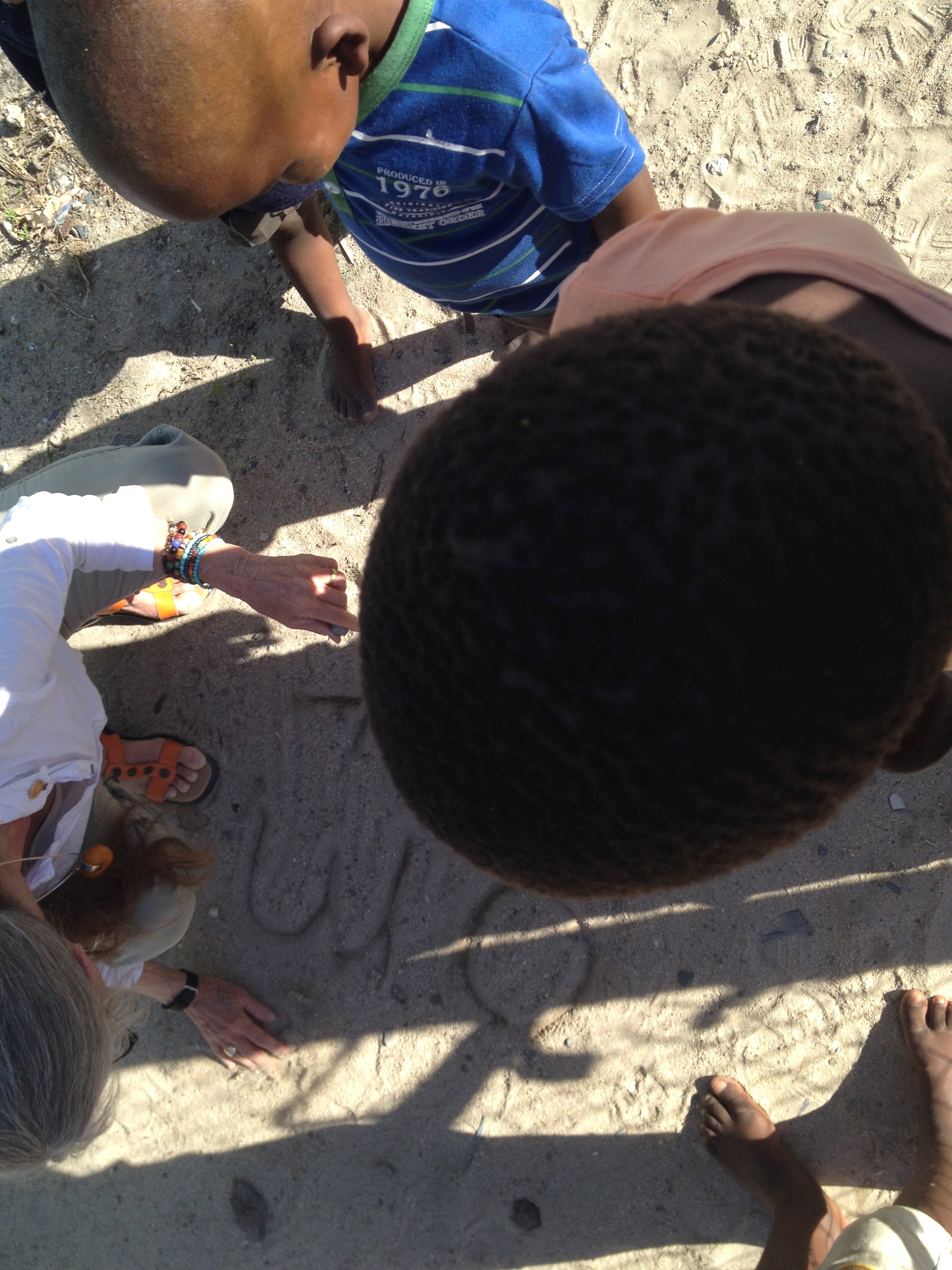
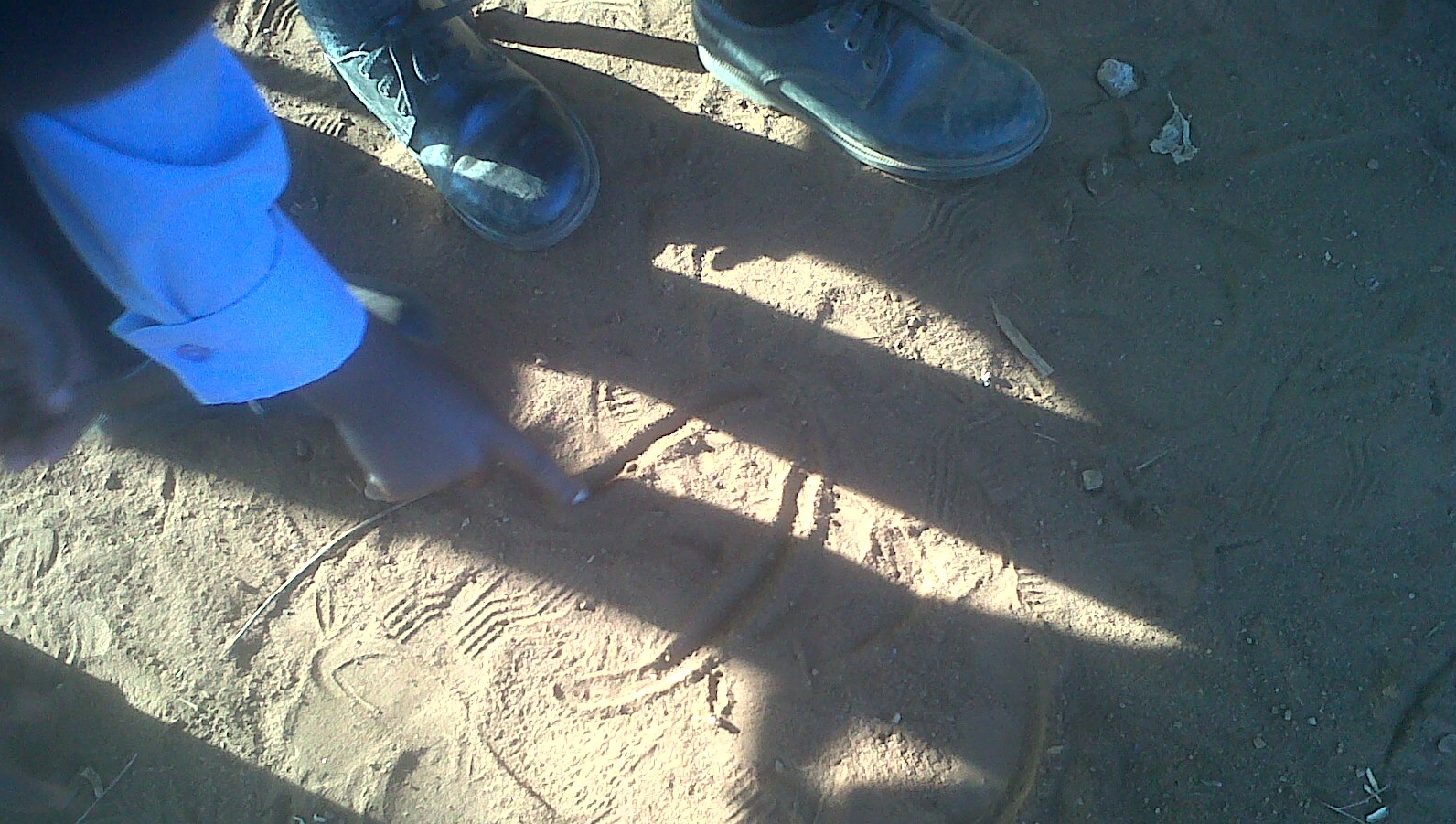
Working with the plastic representations can be substituted by drawing with a stick in the dirt.

Each LEAP learner could work with a group of 4 or less.  I suggest 4 or less so the cretche learners receive equal exposure.  You can adjust this if need be, of course.  Here is a suggested process:

1.  The LEAP learner will take their group and a stick to their designated spot in the yard.  In this case, they will sit down in a line with students beside the teacher. Greet each student, ask a simple question, and say something to get them excited, such as, “Ready to have some fun?!”  Be sure the learners can each see the patch of dirt in front of them and the LEAP learner.

2.  They will go through the introduction process, as mentioned above, but instead of displaying a plastic representation of the sound, the teacher will slowly write the sound in the dirt in front of the learners.  Form the letter slowly, so the child is able to watch how the letter is formed.

3.  The LEAP will point to the representation of the sound drawn in the dirt and say it to each learner.  After saying it to one learner, allow the learner to attempt drawing the sound in the dirt also.  As noted under “Notes on the Approach,” be sure to not say “no”.  Just allow the learner to try their best and move along, keeping their excitement high.

4.  By the end, you should have 4 sounds drawn in the dirt, facing the learners.  Go through each sound saying, “Can someone touch the “o”?” and then erase after choosing one child to touch it and then move to the “m” and so on until all sounds are erased.

5.  Give each learner a sign of congratulation such as a “high five” and end the session.

V.  Resources

Please visit souns.org and read more about souns.  Then go to souns Resources on the left hand column.  Once on the souns Resources page, click on the souns Tracking Sheet and start one tracking sheet for each cretche learner that is kept track of by their LEAP learner.

                   *Mastered, shading in the whole box, should be filled in only when you draw the sound in the
dirt, and without any prompting or prior teaching that day, the individual cretche learner say the
correct sound.

VI.  Activities to Add to the Approach

If learners are having difficulties with sounds, it often helps to change your approach.  Here are a few suggestions to make learning even more fun:

1.  Get a marker or pen and lightly write the sound on the hand of each learner.  Be sure to write the same letter on the same part of the palm.  This will allow you to write four sounds (2 on top of each hand and two on the bottom of each hand).  Be sure to sit behind the learner and slowly write the sound, allowing them to see how the sound is formed.  After this, you can ask them to match their sound to their friends’ same sound.  It is a fun way for them to take their learning home and show their parents what they learned that day at school.

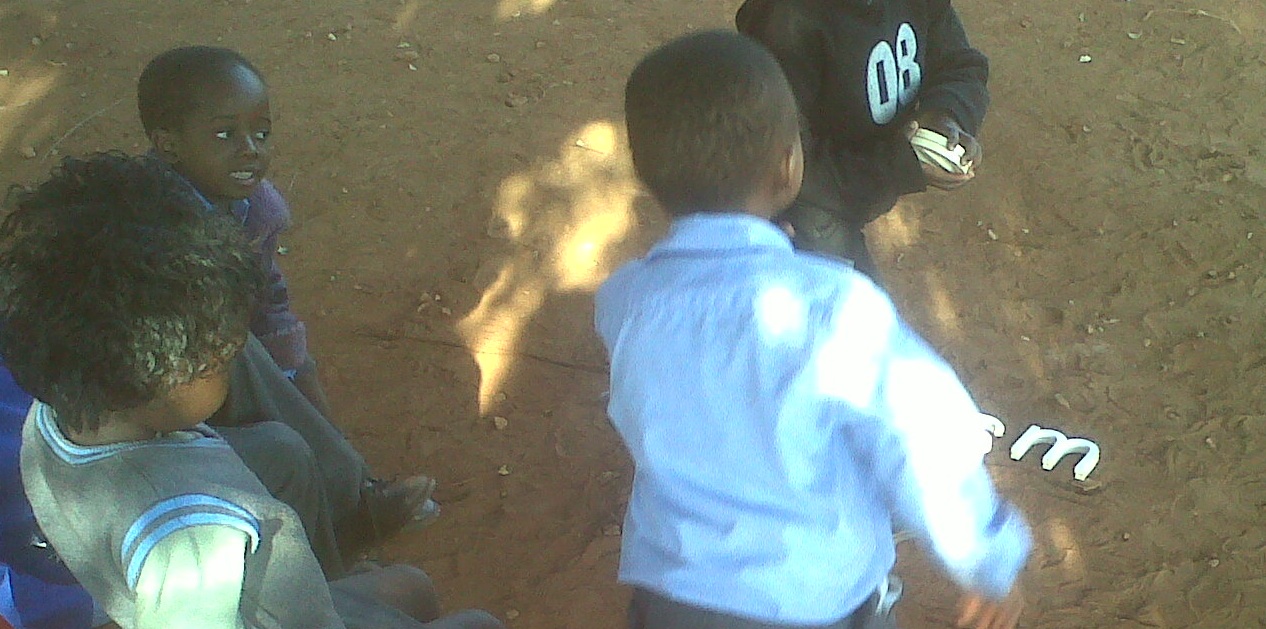
2.  As a review, draw each sound apart from each other in the yard.  Say a sound and have the group run to each sound, look at it, and shout it out.  This is a good way to get them excited about the sound and can even be done individually as a way of review.  Be sure to demonstrate first.

3.  Get large representations of sounds already learned and spread them out in your learning area.  Ask learners to find the different sounds on the paper and/or have them show you the sounds.  This will be a pivotal step in their understanding of how sounds connect to the world they live in.

4.  Once learners attain the first 8 sounds, it is a good time to create some words.  From the first 9 sounds, in Tshivenda, you can say the words mme, ita, sita, sema, and many more that I don’t know.  Say the word normally and then say it slowly, making sure the learner hears each individual sound.  Ask the learner what that word means and if you have a physical representation of the word, show it to the learners.  Allow the learner then to do say the word normally and then slowly.  Say it again together, pointing out the first sound, and then you or, if able, the child writes the sound in the dirt.  Do the same for the next sound.  When the entire word is written, sound out each sound and then say the word again normally.  Congratulate the learner and tell them they built a word.  This will be a big step for the learner and should be used only with sounds mastered.

VII.  Final Note

This is an easy concept that will be great for the LEAP learners to share with the cretche learners.  It will be most beneficial when mixed with reading of stories, singing of songs, and playing of games.

© 2012 by SounsⓇ All rights reserved. No part of this document may be reproduced or transmitted in any form or by any means, electronic, mechanical, photocopying, recording, or otherwise, without prior written permission of Souns.
Unknown's avatar

Birth To Three Institute in D.C.


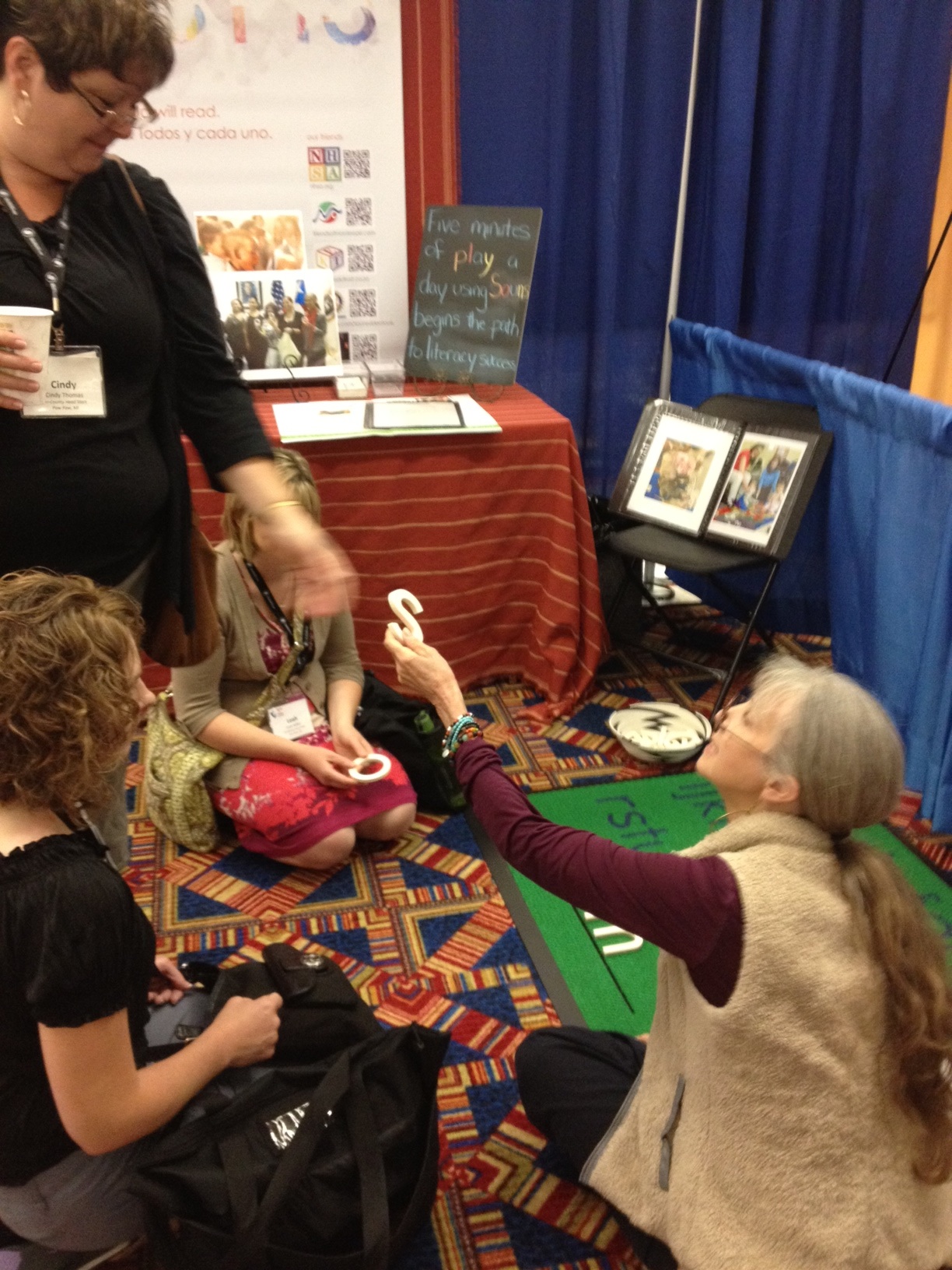
What invigorating conversations with beautiful, passionate people were enjoyed at BTT Institute, June 12-14. Souns is committed to making a difference in early literacy for children, and open hearts and like-minded educators at this event were like a stream running through it without end. Another wonderful BTT Institute, another year toward a better world for children learning to read and write.We learned and laughed together as we played being the child for a bit! It was a very good thing. (1066 and all that)


Unknown's avatar

Rotary / Head Start – Literacy in Puerto Rico

What a memorable Souns training trip.  It is exceptional to find as supportive a combination of teachers, supervisors, and administration as I have experienced in Head Start in the San Juan Municipality. As a Rotarian engaged in a collaborative early literacy effort between Rotary Districts 7000, 6990, and Head Start, this work seems scripted as if by the angel on each child’s shoulder.­­

This training trip is one of several and will add to the growing list of classroom teachers prepared to implement Souns in their classrooms at the beginning of the coming school year. Additionally, we had a training session for Center Supervisors.

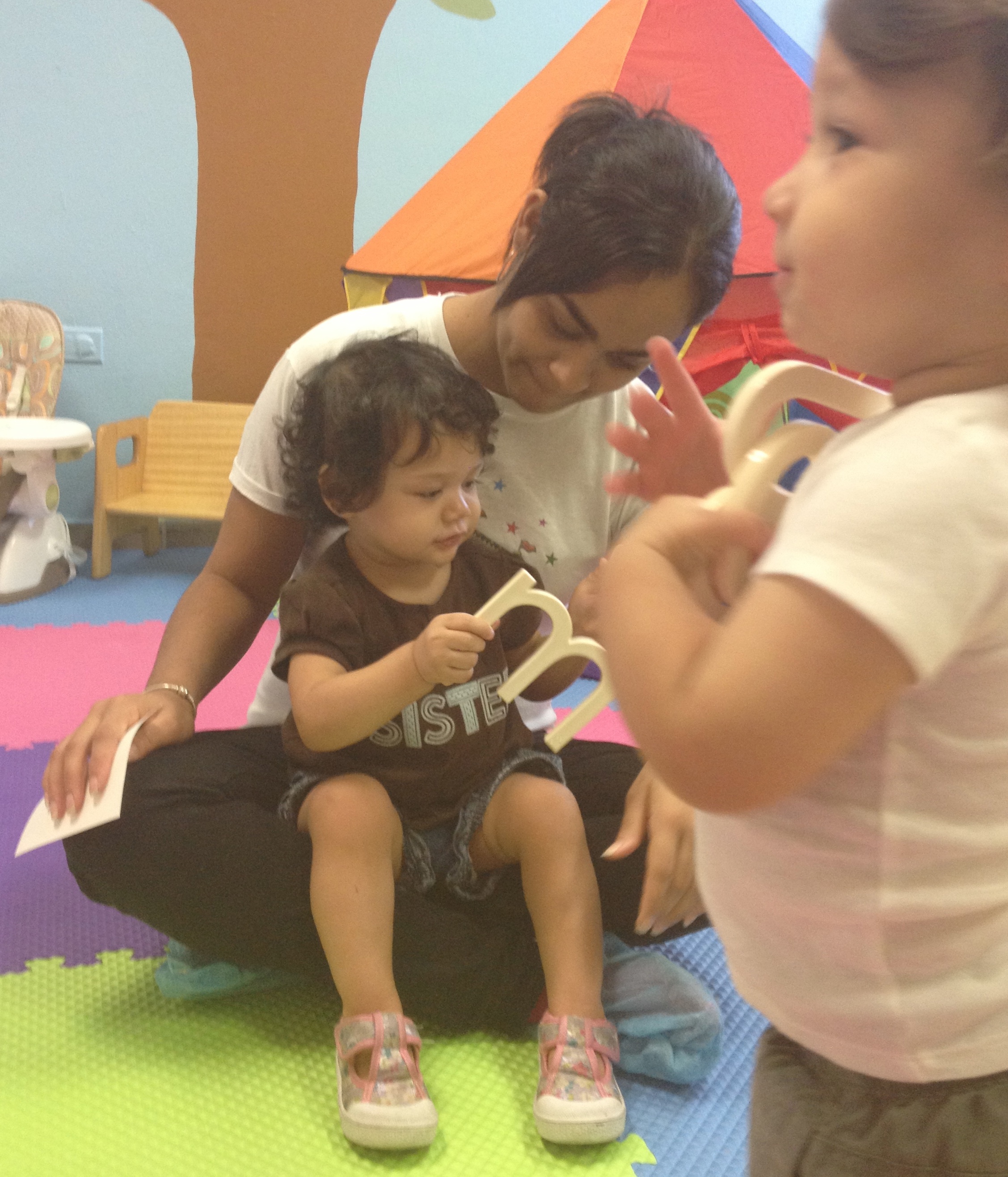
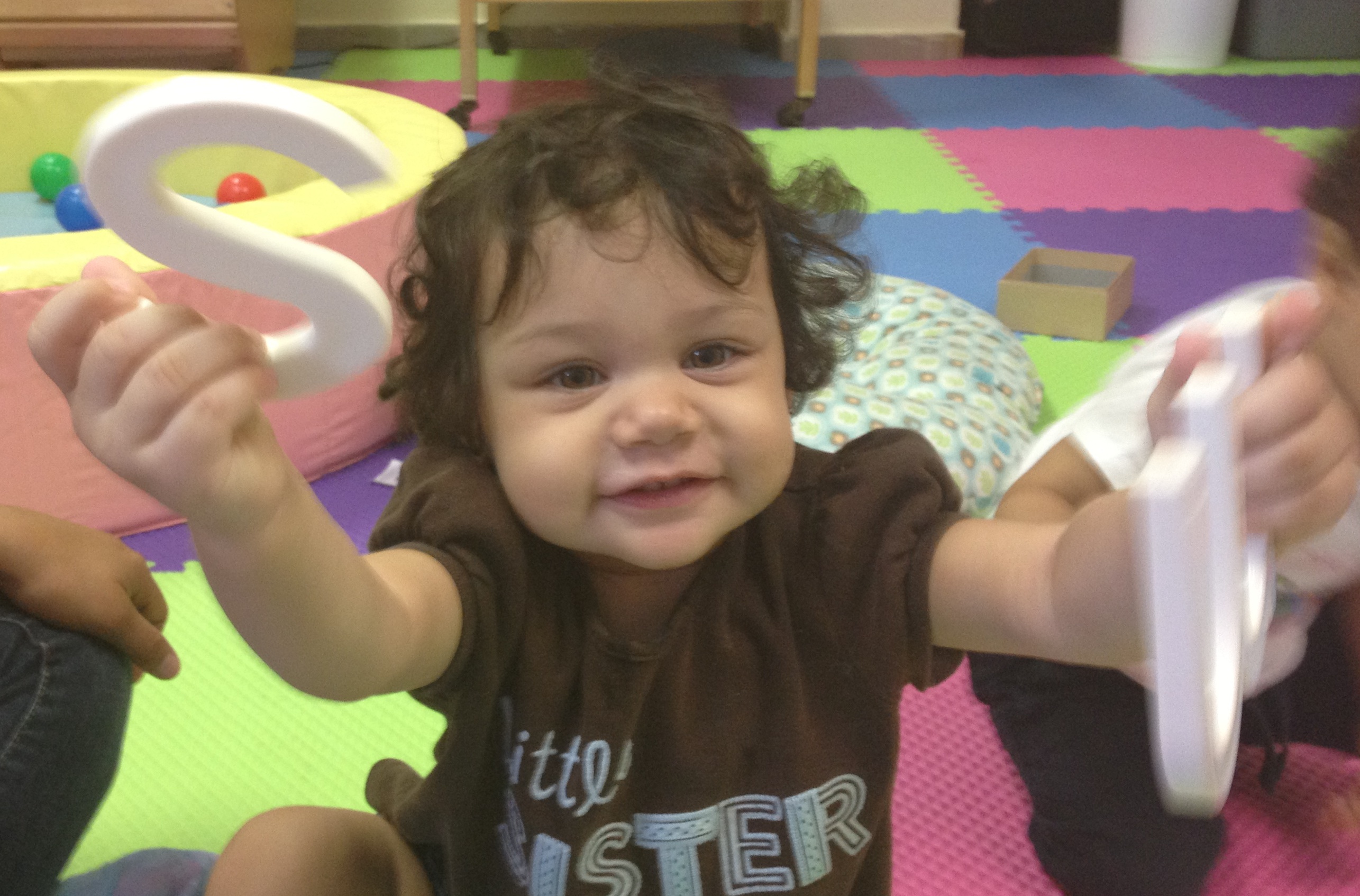
In early training for Souns, it is best to demonstrate how the symbols are initially presented with children in the classroom. While our teacher training was held in a Head Start Center open in June and not yet implementing Souns, the Supervisors’ training the next day was held in a facility where no children were available Fortunately, a mother volunteered to bring her child for the demonstration. The child was one from a class whose teacher has had Souns for a month. As my planned initial lesson was not possible, I chose to present a simple Souns evaluation. What a delight to see the ease with which this three-year-old child demonstrated her confidence with the five letter-sound associations I presented to her. She has only been exposed to Souns for one month. Imagine this young person’s future as a reader.

The training also included a serendipitous testimony – the unscheduled visit of an Early Start teacher who has had Souns materials for several months and wanted to share her students’ progress as they graduated from her class. “These children were building words with Souns like mama and papa and stop by listening to the sounds in the words,” she said. This teacher was so happy with the skills her departing three-year-olds had gained through her implementation of Souns.

The future is waiting for many, but not for these children and not for these teachers. Teachers with the support they are getting in San Juan Municipality Head Start are teachers who go home feeling like they truly have made a difference.

Thank you Rotary and thank you Head Start of San Juan Municipality! Because of you we all celebrate this moment of success in a world that needs to know how simple it can be for Every – YES, EVERY – child to read!

Unknown's avatar

Souns in “luv” with Colorado Springs!

What an energetic and committed group of literacy minded folks are to be found in Colorado Springs. We trained teachers and volunteers and presented Souns for three days. I had little time to catch my breath, and that was not a result of the altitude. The beauty of the natural environment is only matched by the drive for every child to read in that bustling community. I applaud my new friends and the birthing possibilities for literacy through such a powerhouse of community support.

A fellow Rotarian determined to pave a road for literacy in Colorado Springs says:

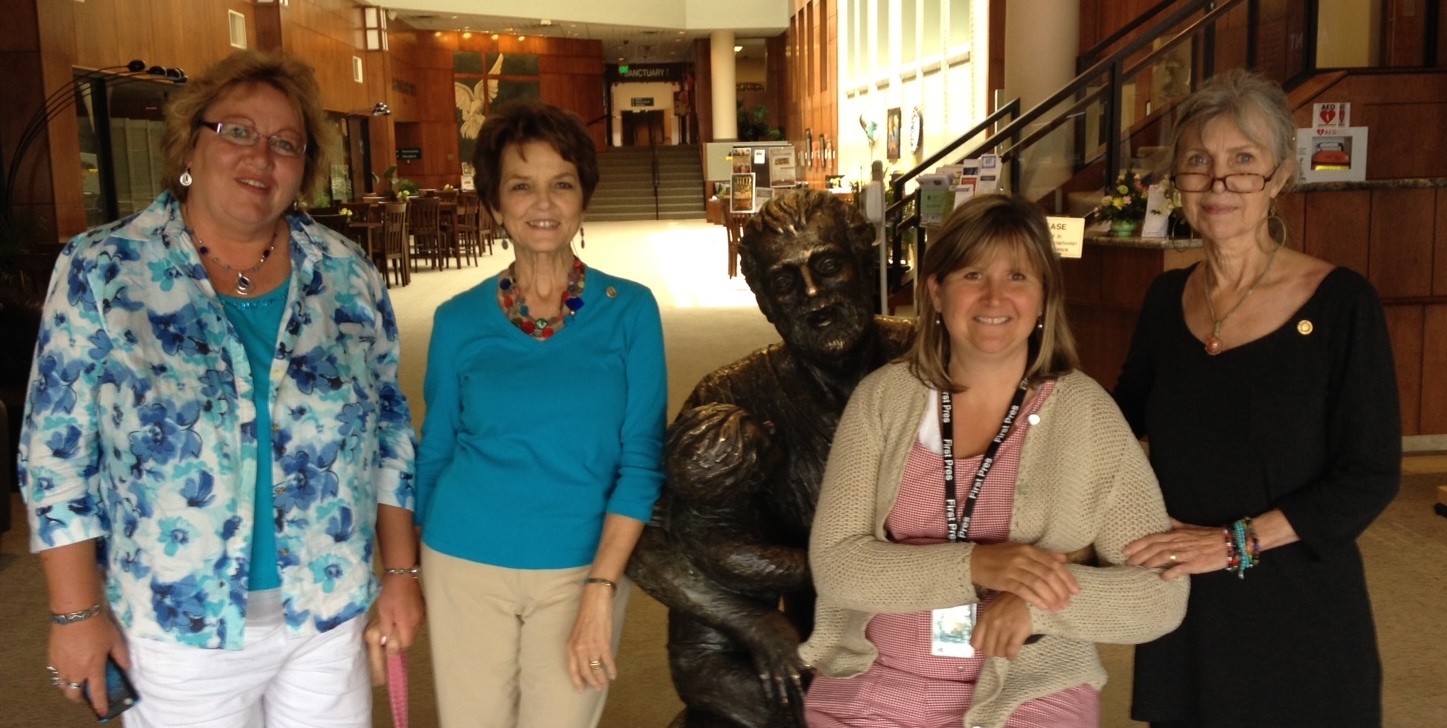
What a delight it was to host Brenda Erickson on her great first visit to Colorado Springs, CO! She came to train and inform about thirty volunteers of the “GET SET!” program at First Pres Church. “GET SET!” provides one year of school to thirty-four youngsters from economically-challenged families of our inner-city area, preparing them for the following year of kindergarten. The teachers see SOUNS as an excellent opportunity to enhance the reading readiness of the two “Get Set” classes.

Brenda also presented SOUNS to our Rotary club, to the Director of our Public Library’s program for infants, toddlers, and young children, and was invited to present SOUNS to a meeting of a large ‘Alliance for Literacy’ group. Great groundwork was laid, and a solid foundation awaits Brenda’s future returns to our city/county area of about 650,000 people, scheduled for sometime in August or September.

I must say that we had great fun in these three days of connecting with other folks who are passionate about literacy! —Robbydale and Minor, June 6, 2012

Thank you all for making this trip so worthwhile. Every – YES, EVERY – child will read!

Unknown's avatar

“Souns like…..” A Peace Corps Reflection


SOUNS Like… “Sesi Nyeleti! Sesi Nyeleti!” All of the Grade R learners shout my name, and jump up and down in unison as I walk from the staff room across the school yard to the Grade R classroom. They are all very excited, because they know that when I come to Grade R it is time for SOUNS. As we walk (or they sprint) over to the spot where we practice our SOUNS, they animatedly yell the most recent sound we have mastered. SOUNS, a literacy program that was introduced during my PST, has become a major part of my day at both primary schools where I teach. On my days at both primary schools, in between my other classes and helping the teachers at the school, I wedge in time to take three groups of about eight Grade R learners per group to work with them on SOUNS.

I had trouble implementing the program. I wanted to make it fun for the kids I was working with, but at the same time effective and educational. After all, learning is the major goal. Literacy is what this program is after. I found myself a tad frustrated, using the same activities day after day and making it far too tedious for the learners. Luckily, at a meeting with my fellow PCVs we had the chance to swap stories and ideas on how to better implement the program. Since returning to site after the meeting, SOUNS has been going wonderfully. Activities like drawing the letter (woops, sound!) on the learners’ hands, having the learners run to the sound, and having the learners sing in unison what sound you have just pulled out of the blue SOUNS bag all make this program very enjoyable for the kids.

What’s more is that they are actually learning. They are connecting the shape/visual of the letter to its sound. A few weeks back, as I was walking with one of the women I am friends with in my village and her son (Grade R), my friend asked her son what he was learning in school. Her son stopped right there, leaned down, and drew the shape of the sound “t” in the ground, voicing the “t” sound. I felt successful, even if it meant I had only reached one learner.

Since starting SOUNS, more PCVs have jumped on the SOUNS bandwagon. From hearing the positive effects it has had on the learners we work with, other PCVs hope to obtain a SOUNS set for their school. In the future and in an effort to make this a sustainable resource, I plan to work with the Foundation Phase Educators on how to implement this program into everyday teaching or as a remediation tool. For now, however, I am quite content as the learners skip back to class after our SOUNS session, happily chanting “mmmmm” and “ssssss.”


Unknown's avatar

Peace Corps, “Souns has been the calm in my sea!”

Greater words to share hath no person than these: I have helped a child! Working with the Peace Corps on this Rotary District 9400/APC pilot for future literacy work has inspired me beyond expectations. What beautiful people demonstrating the very best of humanity. Thank you PCV’s! You are our promise of calm in the world’s turbulent sea! One PCV’s words on his work with Souns:

Souns has been the calm in my sea of first year turbulence. It has been a solid start to everyday, and seeing youth progress in something tangible has been rewarding to push forward in the times when content doesn’t not come so fluidly. Even teachers are picking up the concept of putting learning into the child’s hands.

I have seen the most success in my two days at the cretche. The learners have almost no formal exposure and are taking to it like fish to water. I still have a slower moving group, but even the parents of these children are coming up to me saying their child plays in the sand making their souns.

As mentioned above, teachers are picking it up. The principal of my own school slid in a challenge to his teachers to use more visual aids and study aids in order to improve learner’s retention. He proceeded to make a connection with souns and the vocabulary notebooks he was starting with his Grade 5 learners.

Moving forward, I need to improve my communication with the Grade R teacher in order for them to more congruent follow up during non-souns days. I also need to figure what to do with my grade 1s who have mastered their souns and are progressing quickly with building words.

I see souns not only having a lasting impact on literacy, but also parental and communal involvement. Being visible and informally teaching is broken down barriers to school. In my own house, the parents are talking more with their child about what they are learning and challenging them with new knowledge.

I think we could use a little more shop talk with each other, but I obviously haven’t been able to prioritize it.

Unknown's avatar

SounsZambia – new steps for literacy

Souns is so happy to introduce you to the new friend we have in our global efforts toward literacy. Steven Putter of IRDI  (Waters Edge, an Imagine Rural Development Initiative) is a new advocate for Souns and together we have a goal for families and education in Zambia: every – yes every – child will read! Text below is from IRDI Blog.

“IRDI [Imagine Rural Development Initiative] are proud to announce our partnership with Souns, the greatest educational system we could find globally to fit in our educational system for Zambia. It is the only system we could find that actually satisfied all the criteria of working and designing systems derived from nature and incorporated into early childhood education.

Their playful and personal contact model in their learning environment is such a positive model that it just can’t be ignored as a great added benefit to an already brilliant model of early childhood education.

IRDI would like to take this opportunity to officially welcome [Souns] to Zambia and the IRDI project on Water’s Edge in Luangwa.. welcome and thank you for choosing a partnership that will see the quality training of locals who wish to give their children a head-start in life.”

Unknown's avatar

Peace Corps Reflections (from the field)

Volunteers in the Peace Corps have the option to use Souns in their communities in South Africa. This opportunity is the result of a collaboration between Rotary Districts 6900, 9400, and Africa Peace Corps. The work is promising, even compelling when one considers the difference for children that is being made. It is a wonderful thing to see organizations join forces for building a literate world, which is the only route to a peaceful one.  Please enjoy the collection of quotes from the field. Keep in mind, Souns works in any language using the Latin alphabet symbols. You associate the sound of the symbol for the child’s language. What a bridge between differences.

“I really like the simple, realistic ideals of the souns program. The individualized program meets the learners where they are and provides small group interaction that is often missing in the regular classroom setting.” 

“It was nice to see despite the different language barriers how fast the children pick up on the idea of the program and the different activities you can do with it.”  

“One simple technique that I had not thought of was asking the kids to exchange souns with another learner.”  

“I am going to start grouping the students more as they progress, since I don’t want the students who are progressing to get bored.”

“Things are going well!
I’m learning that
writing must be done in smaller groups!
I recently had a little guy [who wasn’t feeling well] – but he
still participated… only afterwards did I realize [how badly he felt]. Poor guy! But he still was working hard.

I’m trying to get to every kid at least once a week. I’m seeing
progress. Using local words has been especially effective.

Souns is a great way for me to get to work with the younger grades,
otherwise I wouldn’t have the opportunity to interact with them.”

“Souns is doing well in my area! Before our training I had thought we needed to perfect each cluster of 4 sounds before moving on so I wasn’t as far into the sounds as the other volunteers. But now that I am on track things are looking really well! Just the other week we started our first combination of sounds to form short words. It was amazing to see the lightbulb go off in the kids head when the put together sounds to make simple words.” 

Unknown's avatar

Meet @tommmeeee!

@tommmeeee is a tomato frog who tweets…an imaginary creature with a dream of teaching the children of the world to read. One small frog with one large imagination. Our blog SounsTalk is joining @tommmeeee in his effort to build global literacy. Souns is the way Tomee Frog teaches, so we are going to link with @tommmeeee to reach as many little people as possible to help them learn letter-sound associations, the most direct link to reading and writing.

Whatever their language, families, teachers, caregivers in the world who use the symbols of the Latin alphabet for reading and writing can learn from @tommeeee. SounsTalk is our blog to build literacy in a world plagued with children who cannot read. Please join us by following @tommmeeee on Twitter and advocating for early literacy naturally through the Souns program.

Reading leads to informed choices, informed choices lead to freedom, and feedom leads to peace. It is a journey of promise for the children of the world. Learning is fun, and learning to read should be no exception. Thank you @tommmeeee for all we can do together…Ready, set, go!