Unknown's avatar

SounsAfrica – Hands-on Makes a Difference


sounsremedialSA13

Thank you, Rotary Districts 6900 and  9400, and The Rotary Foundation! Another confirming detail from recipients of your gift of literacy through the Souns program. The following communication says this project is making a difference!

Working with remedial students using the Souns program:

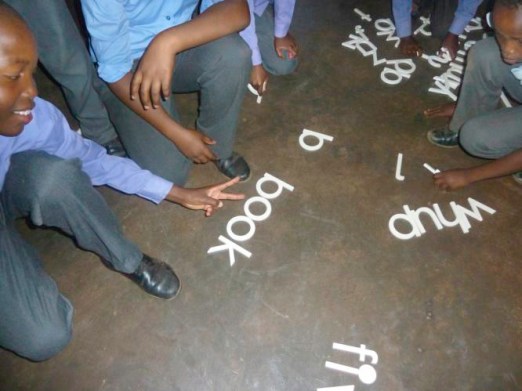
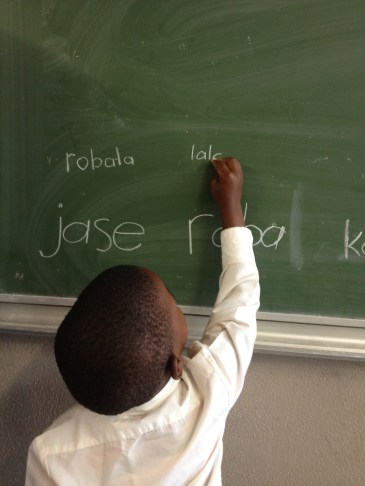
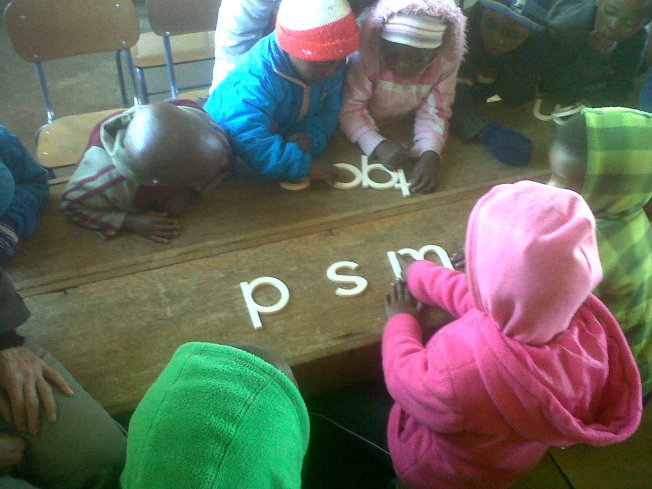
The students got through the program already today after starting about January 15th, probably because they are older, but they did not know all the letter sounds before now. They just loved manipulating the Souns and making words. I think they could have played with them for weeks. I will probably let them work with the Souns letters off and on all year. I just love the picture with the kid who figured out how to write “scool.” 

sounsremedialsa13-2


Unknown's avatar

Rotary Appeal: Children are Waiting!

It began here! Now, progress compels an appeal to the corporate world in South Africa!  

Implementing Sounsbw

The SOUNS programme focuses on pre-school literacy readiness which is the foundation of subsequent academic success. The SOUNS programme was originally introduced in RSA in the Knysna area, but a parallel project started in the Gauteng province in February 2011. This programme has to date reached over 8500 children in 97 crèche and school locations. The success of the programme is illustrated by the speed with which pupils gain letter-sound knowledge, build words, and subsequently, read words. It is also illustrated by the enthusiasm with which teachers and children embrace the programme. This enthusiasm has allowed the RCPE to combine with many partners in expanding the programme. Organisations involved already include The South African Congress for Early Childhood Development, The Khanimamba Training and Resource Centre, many regional crèche forums, The University of Pretoria student outreach programme and the UP Business Unit, The American Peace Corps through their volunteers, and finally, several primary schools with the support of the Gauteng Educational Department. The programme has reached pupils mainly in the Mamelodi area, but many satellite centres in the Limpopo and Kwa- Zulu Natal provinces are springing up.

The original project planned to place sets in150 classroom locations. This project is now reaching conclusion with to date 178 sets in the field. The RCPE is seeking further funds from Rotary International to initiate a phase 2 project that will fund a further 250 sets and reach potentially a cohort of 10 000 pupils per annum.

SOUNS has the potential to make a significant contribution to advance the literacy skills of future South African children country wide. By targeting pre-school children, the skills will then impact throughout the child’s life, cascading on many aspects of learning. Many systems are in place for this to happen.

• The SOUNS programme has repeatedly proved that it is effective. • The communities already exposed to the programme realise its effectiveness and are keen to embrace the programme.

• Pilot programmes have allowed an effective operating procedure to be developed.

• Contacts have been made that will allow a rapid expansion of the programme.

• Support structures to allow this rapid expansion exist but will need to be refined to allow a significant up-scaling of the programme.

Such a programme will have to limit its scope by selecting an area to concentrate its efforts. The benefits that will accrue from such a policy are that educational departments can be introduced to the programme and the early development of literacy skills. It might sound idealistic, but the future was never changed without a vision. The vision here is to give universal opportunity to South African pre-school children to SOUNS so that the future generations of South African children can become literate and enter the formal educational structures equipped to capitalise on the learning experiences that they deserve. The Rotary family seeks a partner in that vision.

THE ROTARY CLUB OF PRETORIA EAST IS BOTH A NONPROFIT ORGANISATION AND A PUBLIC BENEFIT ORGANISATION. THIS WILL ALLOW ANY CORPORATE FUNDER TO UTILISE THE SPONSORSHIP IN THEIR BBBEE AND CSI PROGRAMMES.

To see the entire appeal…please open this pdf file.

CSI appeal jan 12 version-1

Unknown's avatar

Final Results – A Year Later In SA

sounsworksknysna1

The SOUNS Literacy Programme was first introduced (through a grant from  Rotary International) into preschool classes in 2010, and a relatively small number of preschool learners in the Knysna area were taught according to the correct SOUNS methodology.

Since January 2012, thanks to a further grant from DG Murray Trust, all classes at 22 Knysna Education Trust preschools had the benefit of receiving SOUNS kits, teachers in the field were trained to present the programme in Afrikaans, Xhosa and English as required. Volunteers were trained to monitor progress in the preschools and the learners’ progress was tracked by teachers and volunteers who reported back to KET regularly. Staff at KET was able to present the programme in both Afrikaans and Xhosa, which are the usual community languages of the Western Cape.

EVIDENCE FROM GRADE 1 TEACHERS:

During the month of June 2012 [mid-school year in SA], Grade 1 teachers indicated that learners who had been on the SOUNS programme the previous year were performing well in Grade 1 literacy, with performance indicators well above national and provincial averages. Teachers reported the following levels for learners who had previously learnt SOUNS at preschools: 53% good – excellent, 30% average – satisfactory, and 16% weak.

For the entire evaluation of preschools, please click here:

Nov12- NEW SOUNS LITERACY SURVEY November 2012 (2) (then click again)

Unknown's avatar

Alongside Their Children

sounsworkspretoria2
Below is a Peace Corps volunteer’s from-the-field  report about a literacy effort she initiated.  PCV’s are such a force for good in humanity. They serve in ways that change lives in lasting ways in their assigned communities. What awesome work they do! This PCV is currently structuring a plan to sustain this literacy program past her term of service.

Her words:

           A Family Outreach Program began in three informal settlements. Tribal leaders nominated residents to serve as “Community Development Coaches.” These Coaches were trained in early childhood development, play, nutrition, and gardening. Each Coach works with ten families for two years at a time, conducting weekly home visits and teaching both parents and children together. The program targets children ages 1-5 years whose caregivers do not have a source of income (excepting social grants). In 2011, toys and books were donated to each of the families in the program. The arrival of the books prompted the Coaches to request training in literacy. In November 2012, nine Coaches were trained on the SOUNS method and began to implement SOUNS with 110 children in the program.

            Most of the children were immediately delighted with the SOUNS symbols. They readily mimicked the Coaches and eagerly handled the O-M-S-T as each sound was presented. Even the children’s caregivers were excited to participate. Many of these caregivers are illiterate, and SOUNS provides an opportunity for them to learn basic literacy skills alongside their children. At one home visit, the grandmother in charge of four young girls sat to the side, pronouncing each sound carefully and showing her granddaughters how to feel the symbol. X (pronounced “sh” in Tsonga) is already a favorite among the children who giggle every time they shush their Coach. By using the SOUNS method, the Coaches expect to prepare these children to enter Grade R on par with their peers who have attended crèche. 

Unknown's avatar

Interim Souns Report From Knysna, SA

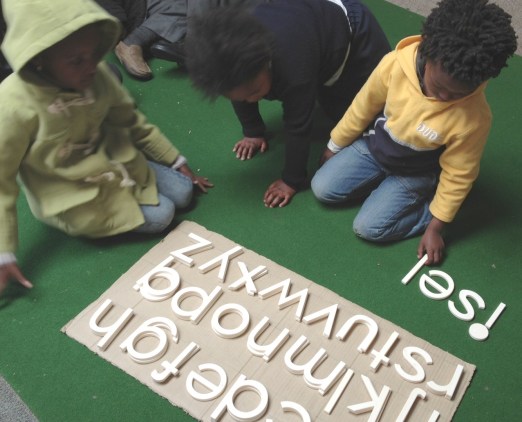
5 year olds building the word isele (frog) by listening to sounds.

In 2010 the first SOUNS kits (2 alphabets of lower case letters and training booklet written in English) were piloted at selected preschools affiliated to the Knysna Education Trust, supported by a matching grant from Rotary Districts 9350 (SA) and 6900 (USA).

In 2011 all 22 of the KET preschools received a SOUNS kit to share among its classes.  At this stage material in the local languages was prepared so that the teachers understood the methodology of the programme correctly, and a local DVD was produced to be used in the training. It was soon realised that there was a need for a Xhosa-speaking person in the field to make sure that the teachers were following the instructions and monitoring their learners’ progress correctly.  A person was appointed by KET to work in the field on all aspects of preschool education, which also included SOUNS. Towards the end of 2011, a generous grant was accessed from the DG Murray Trust, which enabled every teacher at the KET preschools to receive her own SOUNS kit for her own class.  The kits were made up with everything required to present SOUNS successfully, including a polar fleece mat for 8 children to sit around on the floor, and a file containing information about SOUNS in Xhosa and Afrikaans.

In 2012, the kits were distributed to every preschool teacher in KET preschools, and they were trained in the methodology of the programme.

At the same time, volunteers were brought in to monitor progress of learners in every class.  21 volunteers offered their services and one volunteer agreed to monitor 2 preschools that bordered each other.   17 of the original volunteers are still busy with the SOUNS programme (3 have accepted permanent employment, and 1 has gone to England for several months).  The volunteers monitor the progress of the learners (the teachers do the teaching), and guide and support the teachers in the field.  Every teacher reports that she enjoys the regular visits of the volunteer concerned, and the volunteers report that they feel welcome in the preschools. The teachers are proud to show off their learners’ progress to the volunteers when they come.

1.     EVIDENCE FROM Grade 1 TEACHERS:

A list of learners was compiled to try to track learners who had had SOUNS in 2010 and 2011 in KET preschools and Grade R classes, now in Grade 1, in 5 local township primary schools.  172 learners were identified during June 2012 and the following information was supplied by Grade 1 teachers with regard to their performance in literacy after 6 months in primary school:

91 (53%) good – excellent       52 (30%) average – satisfactory      29 (17%) weak                                     

2.     KET PRESCHOOLS SURVEY:

21 of the 22 KET preschools and 17 volunteers replied, in varying amounts of detail. One preschool is being rebuilt, and the teacher did not get her information to me because she was busy moving her preschool into temporary accommodation.  Information from both volunteers and teachers has usually been consistent.

3.  FACTORS THAT MUST BE CONSIDERED, AS GROUPS ARE NOT HOMOGENOUS:

3.1            Some classes consist of mixed ages and languages.  It is recommended that children learn SOUNS in their mother-tongue, in a group who speak the same language. However, there are foreigners from other parts of Africa in some of the classes.  One Child Welfare preschool has an Afrikaans-speaking teacher with Xhosa learners, and she is trying to teach them SOUNS in English!  None of them will go to an English primary school.  We have Xhosa learners in Sedgefield, with a Xhosa teacher, but the primary school there is only Afrikaans-medium at the moment. These are practical problems, and they will interfere with the children’s future educational development.

3.2            Most teachers report that absenteeism among their learners is a challenge.

3.3            Learners in township preschools come and go, joining and leaving classes throughout the year.

3.4            Individual teachers have had personal traumatic experiences, and this causes ups and downs in teaching. It is expected that the same has happened to some of the learners.

3.5            Some preschool facilities are extremely overcrowded.

4.   LEARNING AND TEACHING:

4.1            By August 2012 many of the older learners (Grade R) knew all the SOUNS of the alphabet, and could decode and encode many 4, 5 and 6-letter phonetic words.  The teachers have found “phonetic” a challenge, as the words they give their learners to build and decipher must be able to be sounded out with the individual sounds that the children have learnt, (e.g. ses, and sestig are phonetic, but not sestien).  Suitable word lists in Xhosa, Afrikaans and English have been compiled, and teachers still need guidance in selecting phonetic words for the learners to work with.

4.2            Teachers in the preschools have become more confident and capable as they have become more familiar with the programme, and the learners have more scope for experimentation.  Teachers have reported that they enjoy teaching SOUNS, the children look forward to it (“It is like play when we do SOUNS!”), and they are all proud of their progress.  Most parents are impressed, as are the volunteers, who speak highly of the programme (“This is a wonderful system, and I was amazed at the progress we saw.”)   In my own visits I have been impressed with the teachers’ attitudes, they have been patient, kind, calm and positive towards their learners, and have handled them all in a most loving way.

4.3            The languages that are used in KET preschools are mostly Afrikaans and Xhosa.  In Afrikaans, one can start with 2 and 3-letter words, e.g. om, and os, but the shortest Xhosa words are usually 4-letters, so the learners have to listen more attentively when forming their first words. In Xhosa there are also repetitive syllables, like mama, tata, sisi, which enable the learners to experience patterns in words.


5. GRADE R :

8 Xhosa classes, 9 Afrikaans classes, 3 Mixed Classes, 1 Has changed from Xhosa to English, 1 did not reply.

Time on SOUNS Letter Knowledge Building Words Reading Words
18 and 23 months      All 26                  5-6 letters 5-6 letters
16 months     All 26                                           5 letters, names  
13 months 13  4 letters   3 letters
13 months                 12  3-4 letters  
12 months                  All 26                                           4-6 letters  
11 months                  All 26                                          3 letters  
11 months                                                       15-all 26 3 letters  
9 months                     14 3 letters  
9 months                    10 3-4 letters  
8 months All 26                                           3 letters, names  
7 months                    24-all 26                                     4 letters, names  
7 months 20 3-4 letters  
7 months                    15   3-4 letters, names  
7 months                    13 6 letters, names  
7 months                    13 5 letters, names  
6 months 12-all 26  
5 months 12  

Some teachers have reported that their Grade R learners are also enjoying writing words (on paper, board, sand etc.) at this stage.

6.  4 and 5 Year old Classes :  5 Xhosa Classes, 8 Afrikaans classes , 1 did not reply.

Time on SOUNS Letter Knowledge Building Words Reading Words
14 Months 13 – 26 4 Letters
7 Months 26 4-5 Letters
7 Months 18 3 letters
7 Months 15
7 Months 10 3 letters
7 Months 10
7 Months 9 – 13 3 Letters
7 Months 4-13
7 Months 9 3 Letters
 Months 9 3 letters
7 Months 6
7 Months 7
5 Months 9

A teacher in this age range has reported that her learners recognise the word STOP. Another teacher sings a SOUNS song to her class.

7.  3-4 Year Old classes : 3 Xhosa Classes, 4 Afrikaans Classes, 1 mixed class.

Time on SOUNS Letter Knowledge Building Words Reading Words
7 Months 14 6 letters
7 Months 13
7 Months 12 – 26 3 letters
7 Months 10
7 Months 8 – 26 3 letters
7 Months 6
7 Months 6
7 Months 4-10

One teacher reports that her learners have started identifying letters that they have learnt at the beginnings of their names and other words.

8. Under 3’s : 6 Xhosa Classes, 4 Afrikaans Classes.

Time on SOUNS Letter Knowledge Building Words Reading Words
7 Months 13 – 26  
7 Months 12    
7 Months 10    
7 Months 7-14    
7 Months 6    
7 Months 4    
7 Months 4  
7 Months 4    
7 Months 3-11    
7 Months Babies Crawl around and handle them    

As was reported in June 2012, there is clearly a wide range of performance in all age groups.  This will depend on time spent on the programme, as well as many other factors within each preschool, teacher and child.  All ages have shown progress, and more teachers have reported starting word-building in the past 2 months.

CLOSING COMMENTS:  The closing comments from both volunteers and teachers who are participating in the programme speak for themselves.  The vast majority are VERY enthusiastic!

VOLUNTEERS: “This is a great system, and I am so impressed that children as young as 3 years are able to identify sounds confidently.  The teachers have impressed me.”

“The children and teachers enjoy ‘outside’ person taking an interest in their (pre)school. Consequently the visits have been most rewarding as one feels appreciated and the teachers don’t regard you as a threat.”

“The teachers are well organised and display a genuine care for their work and want the children to succeed with their project”.

“The teacher is very patient and encourages her children….She is structured and systematic with the children who are very small, and the children want to please her.”

“Holidays make a big gap in the learning. The teacher is enthusiastic and the children respond well.  This group has really improved this term.”

“The teacher applies the programme effectively and incorporates it in her daily teaching….She has wonderful results and I was amazed at the progress I saw every time I went back.  This programme is fantastic and it works!”

“The teacher works at the level of the children.  She is patient and prompts them when they hesitate.  She had a chart and asked them to place the SOUNS on the letters which were arranged in an alphabet….She makes everyone clap when they get something correct and prompts those who falter.  Very gentle but assertive.”

“Most of the group are quick, confident and ready to move on.  Their enjoyment is evident – they are a great credit to the teacher”.

TEACHERS:

Most of them say they enjoy teaching SOUNS.  The children “love” learning SOUNS and are “excited” about the programme. “They are curious about SOUNS”. “That is the pleasure, even to feel the SOUNS” “Kinders kan nie wag wanneer ons met die SOUNS begin nie”.

“They are very glad when they see the SOUNS, they say we are now ready to do our work”.

“The SOUNS are very important, especially for Grade R because SOUNS help them develop their thinking and language skills.”

“My children can read and write.  Their progress is good and has a big effect on children’s lives.”

“Four of my children have a hearing problem…” (Discovered through working with SOUNS).

“Parents appreciate the progress because their children can learn a few words.  They answer if you ask…” “They speak more clearly”. “Parents hear (listen?) when children talk or tell a story”.

One of the preschool teachers who also has an aftercare facility for older children, reports that those children’s spelling has improved as a result of them using SOUNS at her preschool.

“The programme makes things easy to manage…and developing children’s skills, knowing names, counting and numbers”.

“Children remember easily”. They “learn well and listen.”

“Children call out SOUNS at home”.

“Parents are proud.”  “SOUNS make children brilliant, not even at preschool, but at primary school also”.

When I teach them, they are free and listening”.  The little ones are “just playing with them and eat them.”

“The children go to the alphabet chart and say the SOUNS that they know. They will be the best generation.”

“Children ask for books and paper at home.”  “They respond to alphabets, and words on TV and magazines”.  “Children point to letters in shops and street names”.

SOUNS is a “fun way to learn”.  The children play on their own with SOUNS and become “clever”   each day.

A 3-year-old shows her Mom the S of Siyafunda on the way to preschool every day.

“Ouers is beindruk met SOUNS want dit gee ‘n hupstoot met die alfabet.”

“Die program help my baie met kinders wat skaam is.  Dit gee my ‘n kans om ‘n sterker band to bou en terselfde tyd leerders se developmental stage vas te stel.”

Two teachers do not know what their parents think – they have had no contact on this level.

Some teachers would like more training, and this need will be addressed soon.

One of our preschool principals has this to say: “Your motivation and inspiration are helping us here…..to prepare leaders and readers for the future of the world.”

KNYSNA EDUCATION TRUST 2012

(Watch for the final report in November.)

Unknown's avatar

Oh, those telling eyes!

And the stories behind them…

They come in various sizes and attitudes – dressed, buttoned, tied, and tucked with hopeful fingers  – walking to school on barefoot paths. Children from the townships in South Africa live in extraordinarily challenging environments, yet they convert those challenges into creativity wrapped in endless smiles. Each has the raw potential given any child at birth. Every face confirms that potential, building a world out of whatever they have  – able to play and laugh and dream without limits. Their imaginations surpass their realities.

The appetite of the children I have encountered in the crèches and grade R classrooms to learn is heart rending and without agenda. Every moment, every bit of information is taken in with relish – smiles filled with I CAN DO THIS! The life given to a mark in the sand or on a chalkboard when it is from the hand of a child writing a word by sounding it himself or herself is magical. That spark slices right through the moment revealing eyes exploding with, “I AM ABLE!”  There is little that can match that look.

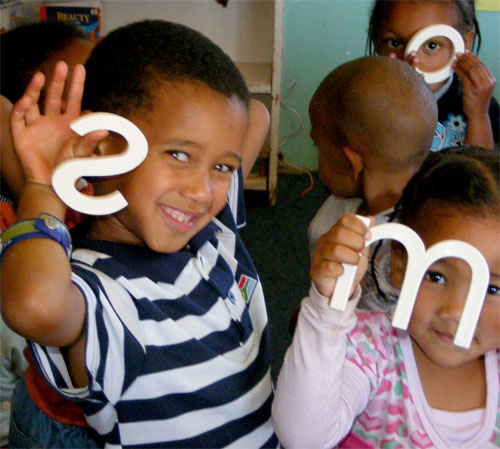
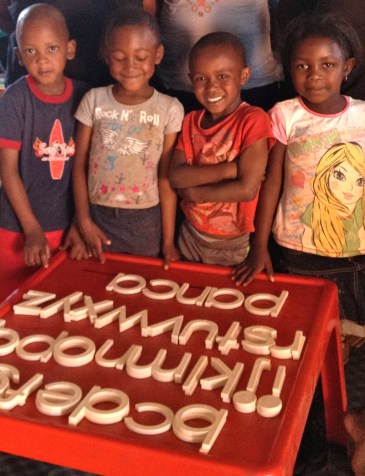
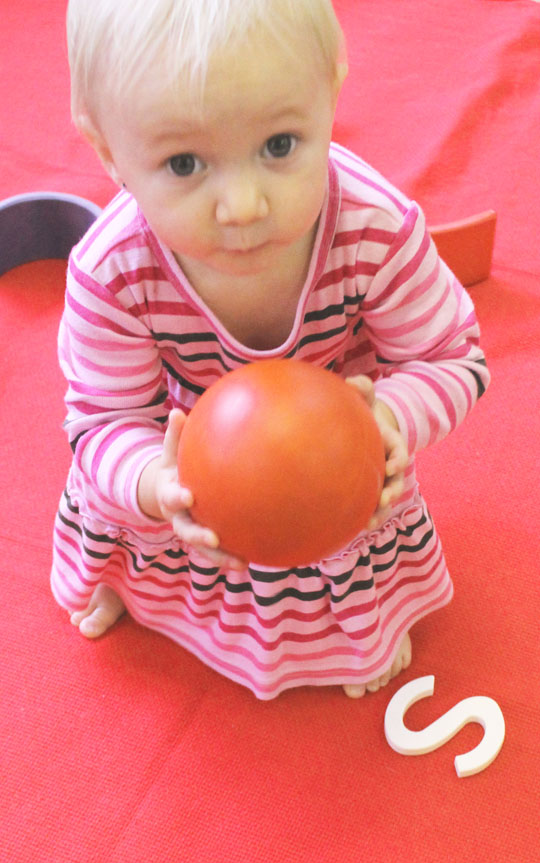
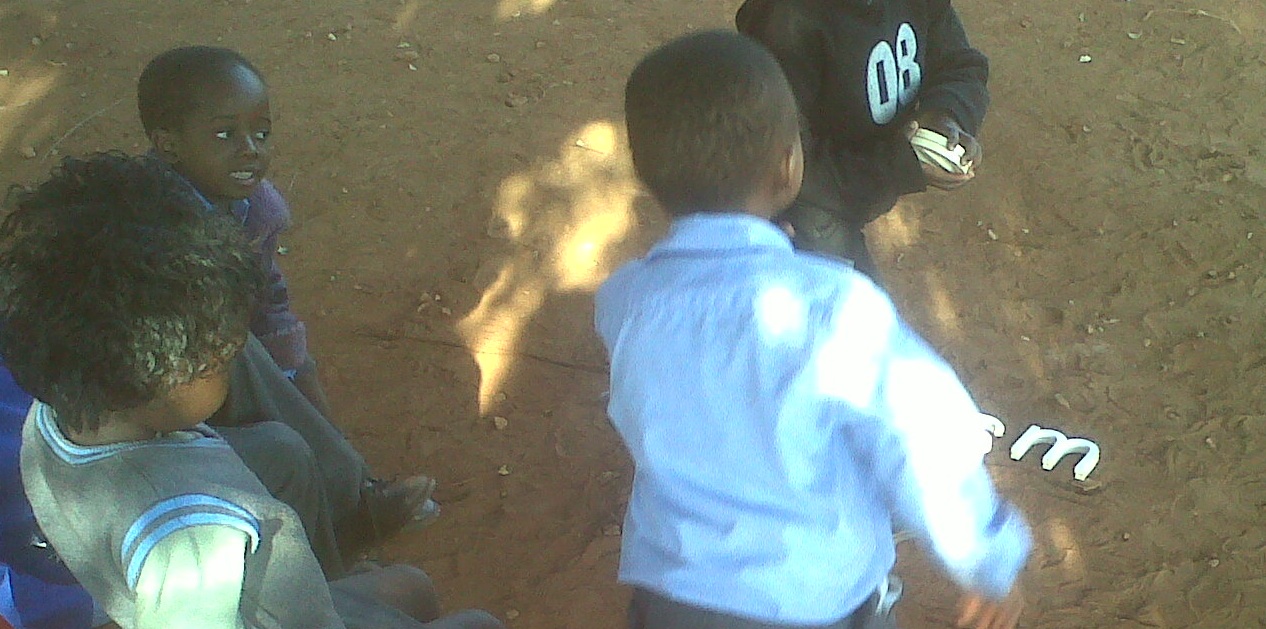
From preschool (left) to Grade 1 (below), Souns is working for these children. This Rotary literacy project between D6900 and D9400 is doing wonderful things for South Africa township children. One week of working with teachers and children from a range of crèches differ only in venue. Each opportunity was met with eager teachers and enthusiastic little people, ranging from 2 to 5 years of age. Most of the children referred to here began working with Souns last March. In those eight months they have beautifully achieved the target goals: letter-sound information for children to three; building words by listening to the sounds in spoken words for children who know their letter-sounds, usually four year olds; reading words for children five years plus. I can’t wait until our next visit in March.

Each of these children is a promising story unfolding, and the ability to write and read is a critical building block for their undiscovered dreams.

Unknown's avatar

You Will Be Surprised!

Where are we now with the collaboration of hearts, minds, talents, and resources intent upon children reading in South Africa? There is power in joined forces: Rotary Districts 6900 and 9400, Rotary Club of Pretoria East in South Africa, Rotary Club of Peachtree City , GA, USA., and the Peace Corps in South Africa. The Rotary Foundation funded a Global Grant which is impacting thousands of children from rural villages and urban townships across provinces in South Africa. Miracles do happen. Children will read! Thank you, Rotary! Thank you, Peace Corps!

A comment  from Robin Jones, the Rotarian heading this RD9400 and RD6900  project from Rotary Club of Pretoria East, South Africa –  The feed back from the existing Peace Corps volunteers (PCV’s) is slow but what I have received is amazing. You will be surprised at the numbers of kids we are reaching.

One PCVToday is our first day back to school after winter break. The kids I worked with today were all so excited I was back to teach them! Right before break I had tested each class on which sounds they have mastered. I assumed most of the kids would forget some of the sounds over break but surprisingly that wasn’t the case. All the kids had done extremely well in both remembering the previous sounds and with the introduction of new ones today. A few weeks before break we had started on constructing words which I plan to continue next week since our knowledge is expanding.

Another PCVI don’t know how much you have heard about the excitement level with souns and Peace Corps, but to say it is high would be an understatement. Many folks are reaching out to South Africa Rotary, Rotary back home, and planning together. It really is a great time. One of those awesome folks works with a large NGO. They are spread throughout the country and work with 56 creches. She has submitted a proposal to do trainings for each of these cretches. Pretty exciting to think about the impact this can have on early literacy.

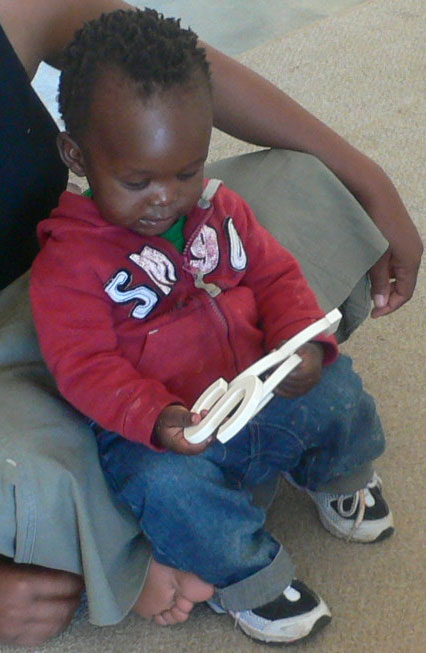
Yet another PCV I have been using SOUNS  for about 2 months in the Creche. I spend 4 days two hours each day teaching small groups (6-8) of toddlers 3-6 years old. It is a wonderful tool for teaching phonics….And the lower case alphabet is definitely the way to go! The plastic letters are indestructible: they have been chewed, dropped, sucked, thrown, kicked, ‘crayoned’, pulled…all without the slightest damage. I really love this program. It sets a good pace for kids learning…and the kids absolutely love these letters and sounds. I am hoping to see a difference in the Grade R at the Creche who will be entering Grade 1 at the Primary School.

And yet another PCVI was wondering, could we get other Rotary clubs to sponsor sets? For instance, my mom is in Rotary in North Carolina, does US Rotary have connections to other groups that could help us out?

“Can you help us out?”  is a call from the field for assistance that is so small in terms of dollars. You can help a Peace Corps volunteer help a classroom of children in his or her village. We have some materials funded now, with additional funding requested; but the numbers of classrooms are beyond that scope. One Rotary Club supporting One Classroom  will make the world shake with potential for these kids.

Peace Corps volunteers are passionate, committed  resources for their villages. They are teaching the children and the teachers so this work is sustainable. Rotary Districts, Rotary clubs, Rotarians or benevolent minded readers, consider what $200 will do, as that is all it takes for a classroom (no expendables, so imagine the impact over years).  Souns is a global Rotary literacy option (see Rotarian, August 2011) from  Counterpane, a 501-(c)- 3 non-profit educational organization. Your gift supports classroom materials only. All Souns training for Rotary projects is in-kind giving by Rotarians. Email everychildwillread@gmail.com or click below and support a classroom. Thanking you forward! Every child wants to read!          Please Donate!

  
Unknown's avatar

It Began With Rotary! Now Look!

This literacy effort began with a Rotary Matching Grant between RD6900 and RD9350. The lead Rotary clubs were RC Peachtree City (USA) and RC Sea Point (South Africa).  Now look! SounsAfrica has grown legs of its own!! https://sounstalk.org/wp-content/uploads/2012/08/souns-survey-june-2012.pdf

The following is an email with a powerful attachment from Knysna Education Trust in South Africa. KET is the source for Souns in South Africa for all activities outside of Rotary projects. They are really making a difference for literacy.

I thought you may be interested in the survey that I collated in June this year.  We are very pleased with the results that it shows.  I need to do another one for DG Murray Trust mid-September.  It is a lot of work and effort by many stakeholders to come out with this summary, but it tells us what we want to know.

The results in the 5 primary schools in the Knysna townships, where our preschool learners move on to, are also much better this year, which is the first year that Grade 1 results are able to be measured since starting the programme in the preschools.  The school management team of the Western Cape Education Department have told me that those 5 schools are much better this year.

Lesley S.   / Knysna Education Trust

Unknown's avatar

Building Literacy / Touching Families

There are compelling changes taking place in the world. We are learning about children. What we saw as a little human waiting to grow big is really a voracious, rapidly developing brain inside a slowly, but more visibly developing body. The young brain grows at an unparalleled rate, but we can’t  s e e  it like we can see the body grow. The body explores the world to feed the developing brain, as, interestingly,  the brain must progress ahead of the body in order to safeguard the survival of the child. There is such beautiful logic, so much of which we don’t see by casual observation. Look intentionally, and you will!

Understanding the learning potential of young children can change the world in dramatic ways. It can ensure peace or exacerbate war. That little brain is going to adapt whether it means pulling a trigger or planting a seed. Peace Corps and Rotary International are powerful organizations dedicated to a peaceful world. One of the avenues to that end is literacy. If children are able to read, they will be more informed and can make decisions for themselves. People who can read are more able to take charge of their lives and are less likely to be victimized.

“I will help you learn to read!” Beyond health and love, there is NO greater gift for a child or the world then literacy. Collaborations between organizations such as Rotary International and the Peace Corps in South Africa are reaching thousands of children in rural communities. Urban populations in South Africa and in Puerto Rico are involved in literacy projects funded by The Rotary Foundation. The world may turn a little more smoothly for these children thanks to such globally minded literacy efforts.

On a smaller – but no less important –  scale are individuals who are equally driven to help children. SenseAble Learning’s Della Palacios in Florida, USA, and Nikolai Pizarro in Puerto Rico with her publication Ring the Alarm are examples of the many hands reaching out to children. Della and Nikolai know the power of the young, developing mind. They know our tomorrows are defined by the experiences offered a child today.

Another hand reaching out and a thread that runs through each of the efforts mentioned above  – Souns for literacy – is designed in response to the way children learn best. Souns breathes life into the tools of print, w h a t e v e r   t h e   l a n g u a g e. In the hands of children, Souns leads naturally and incrementally to letter-sound knowledge which leads incidentally to reading. Reading leads to success in school; and success in school leads to a more independent life. The result of an independent life is the ability to see beyond oneself, a necessity if we are to ensure peace. Many hands or the hands of one can make a difference – Every child wants to read.

Unfortunately, even with Rotary, Peace Corps, committed individuals, and so much information about how children learn, building readers remains a global challenge. We construct schools, hire fabulous teachers, stock libraries, give books; but, in the end, the parent who is with the child during the most formative years holds the key to reading. We must empower parents from the ground up if we are to impact literacy in a global way. All efforts, large or small, must touch the family, acknowledging parents as the real unit of change!

Unknown's avatar

Souns/Peace Corps – Seeds Sprouting!

 Souns Approach to Learning Phonetic Sounds without Souns symbols.

This is the Souns program through the words of one Peace Corps volunteer as he is helping teachers around him build a more literate world for children in South Africa. He is introducing the Souns program across environments. Children will read in South Africa thanks to the collaborative effort of  the Peace Corps and Rotary Districts 9400/6900.


I.  Introduction

Children often have a difficulty with reading because they learn words through rote memory of high frequency words.  These children have difficulties when coming across unfamiliar words.  If children are exposed to individual phonetic sounds at an early age, such as the cretche age, they will be a more balanced reader, able to read with fluency and decode.

II.  An Approach

There is a program called Souns that utilizes hard plastic representations of phonetic sounds and a progression of phonetic sounds that allows a young child to learn high frequency sounds first.  The progression is as follows:

o  m  s  t  p  e  i  h  a  f  u  b  w  n  d  j  l  c  r  g

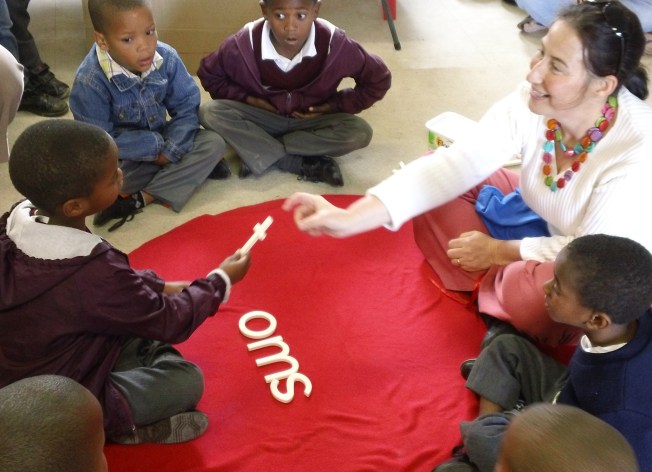
Learners are introduced to the first four sounds “o  m  s  t.”  Groups can be from 1-8 learners.  The preferred method is to be seated on the floor.  The teacher has the four sounds in a bag and pulls out one sound (the plastic representation of the sound) and says “o.”  The learners will repeat “o.”  Then the teacher goes from learner to learner, saying “o” and allowing each learner to touch and hold the sound.  After all learners have touched and said the “o” sound, lay the sound on the ground and repeat with “m” and then the rest of the four sounds.

After all 4 sounds have been introduced and laid on the ground in from of the learners, repeat the sound and give one to each child.  Now that each child is holding a sound, ask, “Can I have the “o”?”  The child with “o” will hand you the “o” and you will place the sound back in the bag.  Say “thank you” and ask for the “m” and so on until all the letters are in the bag.  Give each child a “high five” and say “thank you”.

III.  Notes on the Approach

Each session should last less than 15 minutes and done only once a day.  The sessions should focus on being fun and not dispensing of knowledge.

A teacher should never say “no.”  If a learner says a sound incorrectly, such as “o” when the sound is “m”, say, “This is “m,”” and continue with the session.  If a learner points at a sound, such as “m”, and says it incorrectly, say, “This is “m,”” and allow the child a chance to say it correctly.  If they continue to struggle, say “Good job,” make a note, and continue with the session.

It is important that each sound is not drawn out too much.  If the learners are learning “t”, make sure the learners say “t” once and not “t, t, t, t”.  If they are learning “s,” make sure they say “sss” and not “sss, sss, sss”.  This is because the child will soon be reading and they need to learn how the sound sounds naturally when read.

Never add vowel sounds to the end of consonant sounds.  If teaching “s”, it is never “sa” or “se” or “si”, it is “sss” and only “sss”.  This will help the child break words down and be able to learn other languages that do not follow the Bantu word formation of every syllable ending in a vowel.  “sa”, “se”, “si”, “so”, “su” is a helpful approach for reading intervention and can be done at a later stage, but it is not beneficial when a child is first learning phonetic sounds.

When showing the learners a sound, be sure to display the sound in a way that it is proper for the child viewing it.  This way they do not confuse the sound.  This is especially imperative when doing b, d, p, and q.

IV.  An Amended Approach for LEAP 5 and Local Cretche

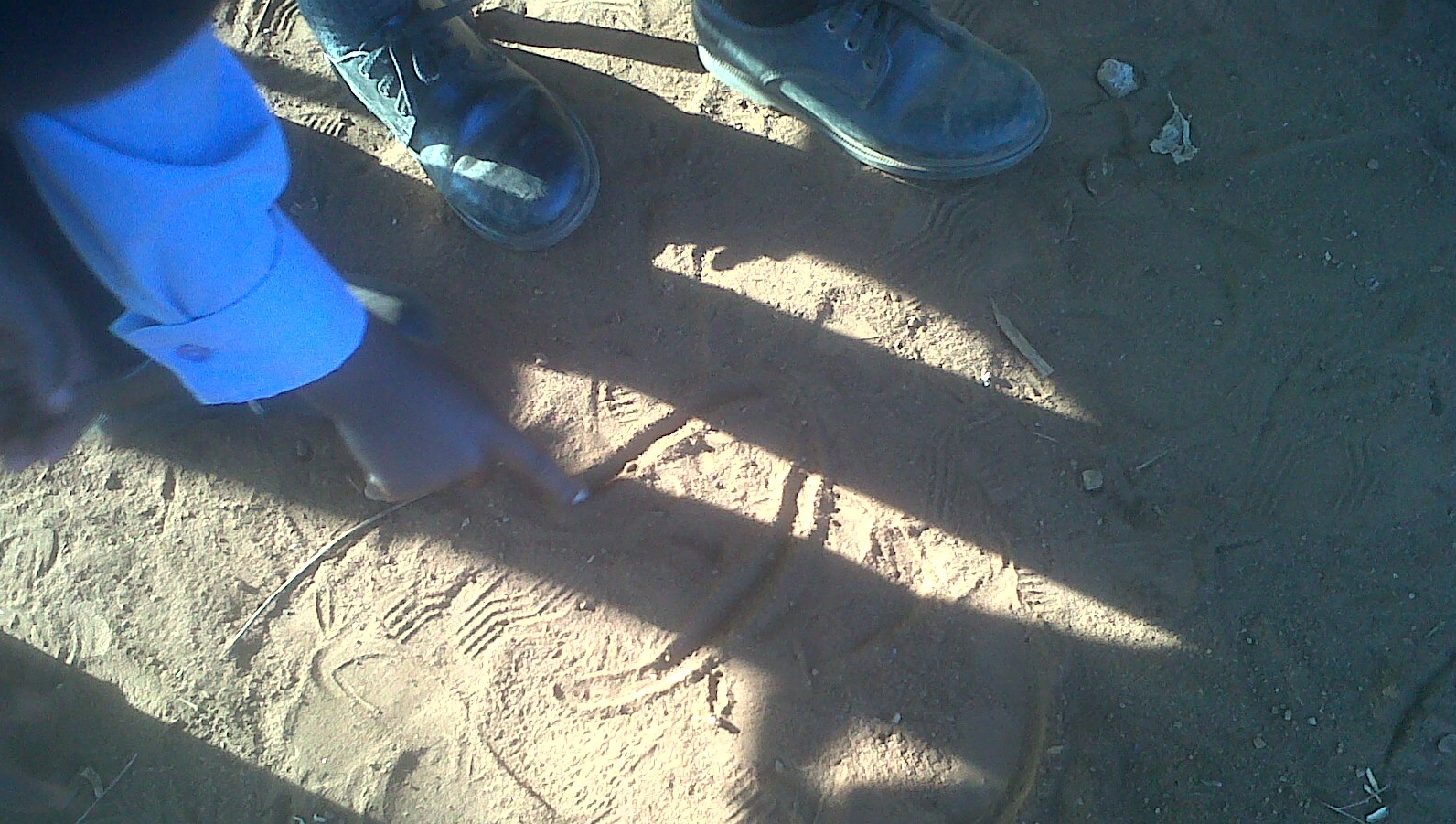
Working with the plastic representations can be substituted by drawing with a stick in the dirt.

Each LEAP learner could work with a group of 4 or less.  I suggest 4 or less so the cretche learners receive equal exposure.  You can adjust this if need be, of course.  Here is a suggested process:

1.  The LEAP learner will take their group and a stick to their designated spot in the yard.  In this case, they will sit down in a line with students beside the teacher. Greet each student, ask a simple question, and say something to get them excited, such as, “Ready to have some fun?!”  Be sure the learners can each see the patch of dirt in front of them and the LEAP learner.

2.  They will go through the introduction process, as mentioned above, but instead of displaying a plastic representation of the sound, the teacher will slowly write the sound in the dirt in front of the learners.  Form the letter slowly, so the child is able to watch how the letter is formed.

3.  The LEAP will point to the representation of the sound drawn in the dirt and say it to each learner.  After saying it to one learner, allow the learner to attempt drawing the sound in the dirt also.  As noted under “Notes on the Approach,” be sure to not say “no”.  Just allow the learner to try their best and move along, keeping their excitement high.

4.  By the end, you should have 4 sounds drawn in the dirt, facing the learners.  Go through each sound saying, “Can someone touch the “o”?” and then erase after choosing one child to touch it and then move to the “m” and so on until all sounds are erased.

5.  Give each learner a sign of congratulation such as a “high five” and end the session.

V.  Resources

Please visit souns.org and read more about souns.  Then go to souns Resources on the left hand column.  Once on the souns Resources page, click on the souns Tracking Sheet and start one tracking sheet for each cretche learner that is kept track of by their LEAP learner.

                   *Mastered, shading in the whole box, should be filled in only when you draw the sound in the
dirt, and without any prompting or prior teaching that day, the individual cretche learner say the
correct sound.

VI.  Activities to Add to the Approach

If learners are having difficulties with sounds, it often helps to change your approach.  Here are a few suggestions to make learning even more fun:

1.  Get a marker or pen and lightly write the sound on the hand of each learner.  Be sure to write the same letter on the same part of the palm.  This will allow you to write four sounds (2 on top of each hand and two on the bottom of each hand).  Be sure to sit behind the learner and slowly write the sound, allowing them to see how the sound is formed.  After this, you can ask them to match their sound to their friends’ same sound.  It is a fun way for them to take their learning home and show their parents what they learned that day at school.

2.  As a review, draw each sound apart from each other in the yard.  Say a sound and have the group run to each sound, look at it, and shout it out.  This is a good way to get them excited about the sound and can even be done individually as a way of review.  Be sure to demonstrate first.

3.  Get large representations of sounds already learned and spread them out in your learning area.  Ask learners to find the different sounds on the paper and/or have them show you the sounds.  This will be a pivotal step in their understanding of how sounds connect to the world they live in.

4.  Once learners attain the first 8 sounds, it is a good time to create some words.  From the first 9 sounds, in Tshivenda, you can say the words mme, ita, sita, sema, and many more that I don’t know.  Say the word normally and then say it slowly, making sure the learner hears each individual sound.  Ask the learner what that word means and if you have a physical representation of the word, show it to the learners.  Allow the learner then to do say the word normally and then slowly.  Say it again together, pointing out the first sound, and then you or, if able, the child writes the sound in the dirt.  Do the same for the next sound.  When the entire word is written, sound out each sound and then say the word again normally.  Congratulate the learner and tell them they built a word.  This will be a big step for the learner and should be used only with sounds mastered.

VII.  Final Note

This is an easy concept that will be great for the LEAP learners to share with the cretche learners.  It will be most beneficial when mixed with reading of stories, singing of songs, and playing of games.

© 2012 by SounsⓇ All rights reserved. No part of this document may be reproduced or transmitted in any form or by any means, electronic, mechanical, photocopying, recording, or otherwise, without prior written permission of Souns.