Unknown's avatar

A Beginning – CPCD / Souns

sounssoshs14

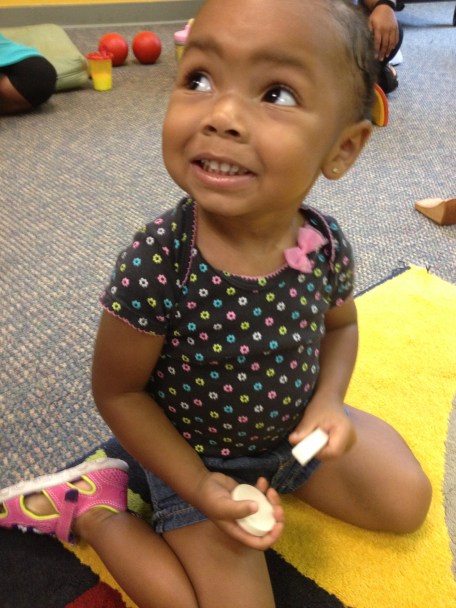
Building a future for children brings smiles to everyone’s face. Head Start has a plan! There is a tool – Souns – to make that plan come true, and there is an energy – Rotary – in the community wanting to make all the pieces fit together for children. Rotary is committed to impacting basic literacy skills and this project is about our preschool children learning to write and read in our community in Colorado Springs.

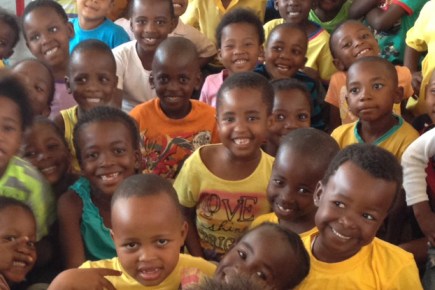
CPCD (Community Partnership for Childhood Development) is piloting the Souns program during the next few months to gather information for a grant application that, if approved, will provide Souns to as many Head Start classrooms as the grant will fund in the CPCD program. The excitement is clearly visible in the smiles, but is even more contagious as one watches this program unfold with children. Magic wraps up every moment as the little ones respond with… “I want to do it!” “It is my turn!” “Can I help her?” “Look, there is /m/ in Monday!” … at every turn when implementing the Souns program.

Thank you Rotary Clubs  in Colorado Springs for this possibility! Thank you Rotarian Robby Dale Nelson of the Rampart Range Rotary Club for your enormous commitment to the children in your community.

Unknown's avatar

Colorado Springs: Thank You!

sounscosrobbydale

   “Can you touch an /o/?” asks Rotarian Robby Dale Nelson.

I thank this community for reminding me, once again, of the difficult path to simple.

I am convinced that to be a teacher (myself included) is to be first and foremost a learner. As many times as I have observed and participated in a child’s learning…as much information as I have taken into that moment to teach the child…I have never left the experience without being the primary learner. Surprisingly, the lesson seems always to be keep it simple. The child will take the simplest of lessons to the depths of his or her interest…or there will be no learning.

In a classroom learning to implement Souns, the simple, incidental, easy style of the program is closeted by our predispostion as excellent, committed teachers to plan every detail of a day so that we can feel we have done our best. Yet, we rarely feel we have enough time in a day to do all we want to do. I feel that way myself visiting the classrooms and assisting teachers in understanding this program. I complicate, they complicate, we all are driven to complicate. We would be well advised to follow the child a bit more. They linger, examine, build knowledge, linger some more…roll around and speak to a friend, or stare out a window…then back to lingering, examining, and building.

So how does this relate to teaching Souns? How do we fit “another program” into an already packed-full day with cultural studies, self-esteem activities, social courtesy lessons, etc.? First, and most difficult, is to understand Souns is an unprogram. Souns is meant to be a part of the environment – as important, incidental, and consistant as food, clothing, and kindness. That is hard to do, as we have burdenened writing and reading with academic weight. Language is treated naturally, even joyfully, as little ones move into spoken communication. Progressing into writing and reading can be equally joyful and natural through intentional play. Play is how children learn. Souns is about intentional play.

“Look at the /s/ on your jacket!” is a lesson in Souns. “Did you hear the /h/ in home?” is a lesson in Souns. “Let’s find the sounds in dog.” is a lesson in Souns. It is a program that slips into the crevices of each day so filled with rich experiences planned by caring teachers. In all those experiences there are letter-sounds. Build excitement about listening to and identifying letter-sounds in the classroom. Keep it simple, play, have fun! Those little minds are always learning!

Thank you, Rotarians from the Rampart Range Rotary Club of Colorado Springs, CO, for believing in Souns.
Unknown's avatar

Colorado Springs: Follow up – DAY ONE

sounsCOS

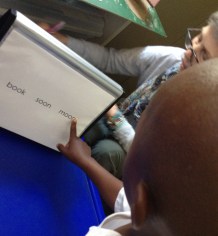
“See the Braille, the little bumps, on the letter? Can you find the Braille on your letter?”

I love working with administrators who are committed to a project and who are supportive of their teachers. The work moves so much more smoothly and children are so much more likely to succeed. A rhetorical statement for sure…but when you see such a situation in front of you there is a healing energy that counters the times the picture is broken.

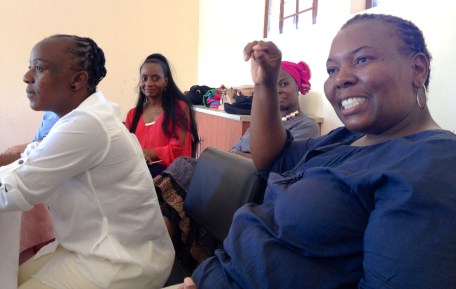
The school today was beautiful in talent, spirit, and leadership. From the toddler class through the four classrooms to the pre-kindergarten class, the rooms were filled with happy, eager learners. Teachers demonstrated their creative exercises with Souns, in each case drawing from the environment: books in the little reading corner, text on the walls, and letters on T-shirts. Their positive attitudes influence every little mind wanting to learn to write and read.

What I saw were children appropriately progressing through letter-sound knowledge with exploration and play. Their bodies were moving, their hands were examining letter shapes, and their faces reflected engagement.

This is the first year for Souns for this preschool, and, indeed, the letter-sound associations are being learned.  As is typical, the teacher is the primary learner for a new program. In subsequent years implementing the program will flow more naturally . It takes at least the experience of that year to realize how easily the child learns when their hands are involved and the lessons are daily, incidental, and playful. When comfort with the easy style of Souns is attained, the children will progress faster than most teachers expect.

For instance, the children surprised their teachers today. They knew more than the teachers thought they knew.  In the pre-kindergarten classroom, children were ready to build words with the Souns letters. They did not want to stop…and they learned two new letter-sound associations in the process. Children are more ready than we think. Pushing does not teach; however, kids thrive on trust… ”Do you think you are ready to do this…? “ Ask them; they will tell you. Then make certain they succeed. That is the fire that builds.

Thank you to Rotarians from the Rampart Range Rotary Club of Colorado Springs for initiating this effort.

Unknown's avatar

Rotary + Head Start = Building Early Literacy

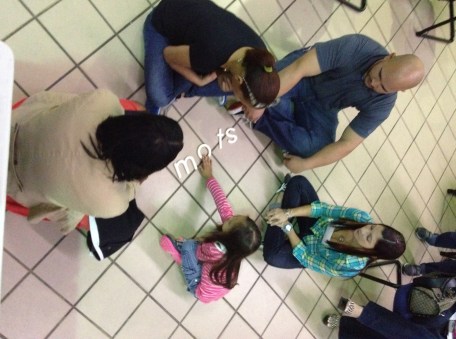
“There is nothing like an “I know!” It can come from a child or a teacher, but the smile, the joy, the power in that moment is magic. Such arrival points happen in an endless stream when we train for Souns…both with the children and with the teachers. I thank Rotary for providing Souns early literacy materials to so many classrooms, making a difference for so many people, and building possibilities for so many children. The following documents two projects; but, sadly, words cannot express the glee that comes with the engagement that unfolds as a result of those projects. For example, the image below is a Souns child teaching new teachers how to use the materials. Our children are our best teachers.

sounsPRtraining1-14(3)

What a collaboration! Dedicated teachers supported by the engaged hands and hearts of Rotary are making a difference for children in Head Start in Puerto Rico and Georgia, USA.

Head Start teachers from Southwest Georgia Community Action Council (SWGACAC) and the San Juan Municipality Head Start program are familiar with Souns, as some of their classrooms have used the program for several years. They were so happy with the results that each requested help to provide Souns materials to all of their classrooms. Rotary International and The Rotary Foundation have supported that request.

sounsPRtraining1-14wJesus

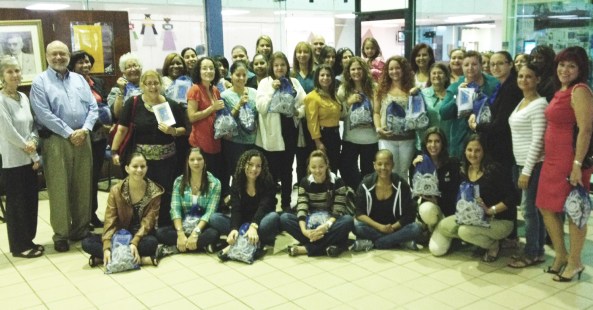
For Puerto Rico, there were two Matching Grants from Rotary District 6990 (RC Ft. Lauderdale South) and Rotary District 7000 (RC Rio Piedras) in support of the Head Start program in the San Juan Municipality. The first grant provided materials for half of the classrooms in the program, and the second and most recent grant provided materials for the remainder of the classrooms in the program, together serving 3000 children. Training of new teachers for implementation of Souns  and distribution of the second round of materials was January 9-10, 2014. We trained 127 teachers in two days. The training trip was particularly successful as we also trained Souns trainers to help teachers as they progress through the program. Sustainability requires a program grow legs, and that is what is happening in Puerto Rico with the Souns program.

sounsGAtraining1-14 amy

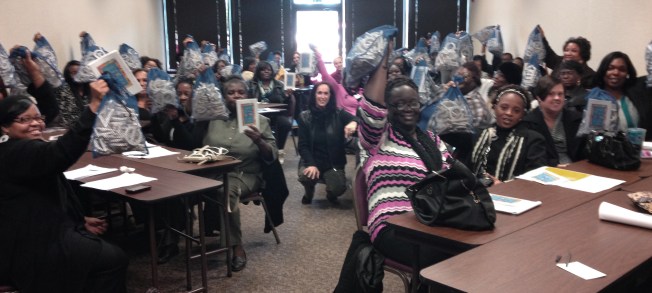
For Georgia’s SWGACAC Head Start program, The Rotary Foundation supported a Global Grant between Rotary District 6900 (RC Peachtree City) and Rotary District 7000 (RC Rio Piedras) providing materials to fully equip classrooms reaching 2500 children. This is a three-year grant and 2014 is the first year. We trained well over a hundred teachers on January 3rd and distributed materials to each of the classrooms. It was a fantastic experience, as Rotary Club of Peachtree City members delivered the materials personally to the teachers and participated in the training. It is so much fun to share the joy. During the three years, follow-up trainings are scheduled and visits by Rotary clubs in the area that support this effort are planned. Rotarians love to engage with projects, as that is the essence of Rotary.

Unknown's avatar

Past and Present Souns!

Video of 3-year-olds sounding USA English letter-sounds. The sounds /o/ and /a/ are different for other English speaking populations.

From a Souns family, past and present:

We purchased a set of nylon souns years ago when our almost 7-year-old was about 1 year old! Our now 3-year-old is really interested in sounds, and we were wanting to show him the video of the kids saying the letter sounds – our 7-year-old LOVED watching it now and then.

Our 7-year-old now LOVES words and reading! We followed your recommendations, introducing one sound at a time when he was quite young. We saw him spotting sounds in the woodwork, so to speak – in our metal railings (O) and the S on Safeway, etc.
 
We haven’t really pushed reading at all, as we knew and trusted he would pick it up and love it more if he was truly interested in it. So, we strewed books and books and books around our home, read books for bedtime every night, and we read books almost every day for school (we homeschool).
 
We also use BOB books, which have been super rewarding. We just have a little reading nook and when I think of it, or he does, we sit and read a book or two together. I’m sure he could read longer books by now, but just hasn’t been super interested to yet. Though, he does read story books to his younger brother. 
[To add a] really cool bit of the story…

A couple months ago, the boys were playing in their room, and I was in my room next door. I overheard my older son teaching my younger son letter sounds. Following a beat, he was saying [the letter sounds], “/a/a/a/a/a/!” and “/o/o/o/o/o/!” I went into their room and discovered, that my older son had also made his own “Souns” out of pipe cleaners as a teaching tool! A while later, he had our little one recognizing those two letters and knowing their sounds.
 
Really, we have LOVED using SOUNS and were amazed by the ease with which he took to learning the sounds of the letters! Thanks for creating such a practical, simple tool for learning!
image
  • Thank you for sharing your Souns story! We are always happy to hear from Souns families, as their experiences may change a child’s learning somewhere in the world.  Brenda
Unknown's avatar

Teachers Share – SA 2013

SAtchrmeeting13


From a transcription of a meeting with teachers from primary schools in South Africa:

“So learners were given the presentation [with Souns] and then it was easy for the teacher, because most of the time we just present [material] without having resources on hand. We are writing on the boards. [With Souns] learners have the opportunity to go and touch so that was easy. They touched and they were able to associate the tool with the sound. It was easy for them. And those learners that were battling with acquiring knowledge without having a tool on hand got an opportunity. They are seated around [and] they had their chance to touch, to associate, to match, to build. And then it was just easy for them [and] it was easy for the teacher.”

Unknown's avatar

“You Are Good For Our Children!”

nellmapiuspk2013

When the work speaks!

Souns 046

For over a week we have been evaluating Grade R and Grade 1 learners in South Africa and reviewing the impact of a Rotary project – GG25244 – based on the Souns for literacy program. The 258 learners from seven classrooms are from three pilot sites: one in Pretoria and two in the township of Mamelodi.

The results are indelibly imprinted! Consider such comments from HOD’s as:

“You may come [to our school] any time you want. You are good for our children.”

“Thank you, Rotary, for Souns. It is helping our children read!”

“Our teachers are crying for this program.”

The children are the miracles: Imagine evaluations that are filled with giggles,  slow, deep smiles of pride, jubilant jumps in the air, eyes glowing with joy that burn into your heart. All this happiness during individual assessments. Children are so excited about KNOWING!

What magic to hear a preschooler saying, “Can I read to you? Can I read to you?”

Then there is the sadness we see with learning issues or lack of support at home that delays progress. If a child does not learn letter sounds in preschool with 38-40 children in a classroom (one teacher), the child will not likely learn them in Grade 1 with 45-60 children in a classroom (one teacher) which is scripted to move much faster. After that we know how the pieces fall.

“Our system is supposed to be designed for the children, but that is not what we are doing.” says one. “Souns is helping us reach our children.”

While we have clearly inspired letter-sound learning through the Souns project for the typically developing child, we have so much to do for those children who are capable but unfold on a different time line. It is promising that one of the schools has begun a conversation to address this issue.  We celebrate this possibility, particularly when the HOD’s exclaim, “Nothing is impossible! We must do what we need to do for our children.” This is change speaking!

Getting people to pay attention to how and when children learn best is the best outcome for any literacy project. This is the stuff of Souns through Rotary in South Africa. It is deeply rich and moving work.

Microsoft Word - Document5

Thank you to The Rotary Foundation, and Rotary Clubs Pretoria East in RD9400 and Peachtree City in RD6900. 
 
Unknown's avatar

And We Clapped!

sukeyclap10-13 copy

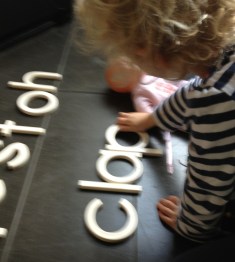
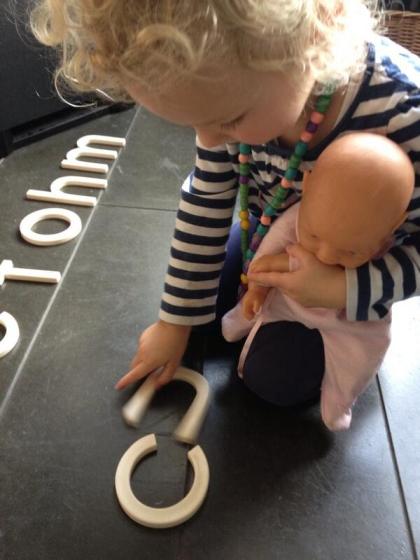
A fuzzy image often goes hand in hand with a dancing heart!

“I wanted to write clap,” she said with a big smile! My daughter was so excited to share with her dad that she wrote “clap” with her baby….”and we clapped!” she exclaimed, as she clapped the baby doll’s hands.

Intentional play! Have fun learning letter sounds first. Then, with Souns, building words phonetically – by listening to sounds spoken and finding the letters that represents the sounds –  comes much before sounding  words out phonetically. The steps for Souns are at http://sounsworks.wordpress.com. Play to learn!

Unknown's avatar

And Now: “some of her friends”

Sounsworkshop83013-2

A Souns mom shares:

Today, my daughter saw a plastic bin used when we moved that listed my name and the city and state where we moved from.

 She started calling out Souns- (s), (m), (t), and (o) and pointing to each one on the bin as she said it.
 
She was smiling as she talking. The look on her face was as if she had just come across some of her friends.
Unknown's avatar

It Is So Much Fun To KNOW!


BXcvYyTCQAA2KRv


From ongoing Linkedin discussion, well worth visiting.


To add to the discussion, I would like to share an experience this past week with a young child of three who has learned her letter-sounds as incidentally as she learned the doll or cup she was playing with at the time of this observation. She was role playing and was teaching her doll how to build the word “cup” by teaching her to listen to the letters in the word. I have had many say why teach a child letter sounds when they should be playing with dolls and cups and I find great frustration at not being able to explain successfully that the child was playing with knowledge she had of the world around her. She was so happy with what she “knew” about the world. She knows cups, dolls, and letter-sounds. After all, how many cups and baby dolls does a child see in a day compared to the number of printed letters. If the system could shift just a bit…with moms, dads, and caregivers sharing /m/ and /s/ as mmm and sss instead of letter-names offered at the same time as letter-sounds, we would find children building critical associations between what they heard people say and the letter-sounds that represent what their ears hear. I know I am the developer of the Souns program and this could be seen as a marketing moment…but I was a teacher of three decades before Souns and it is the child who led me to the logic of it. It is the child who wants real tools and if we could just offer the most useful tool – letter-sound associations – there would be no need for Souns or 70% of the intervention programs exhibited in conference halls. Rant over! 

Thank you for your ears and your hearts and your talents and your permission to share. Those little minds are ready and we are not ready for them.