Unknown's avatar

A Jewel In Colorado!

dellavisit13

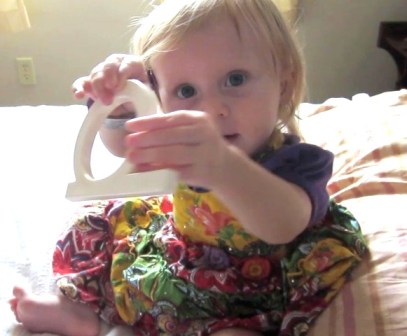
This lovely woman, Della Palacios, is now living in Boulder, Colorado. One of her offerings is Souns and Rhymes classes for little people. Get to know this remarkable talent. I celebrate that she is a Souns trainer as well!

Souns and Rhymes

The design of this class is to establish a foundation so firm that no holes will ever appear in fundamental literacy skills. It’s a simple brilliance that makes it so profound.  Souns® and Rhymes classes consist of two core elements: letter sounds and nursery rhymes.  Parents interact with children as language and literacy is brought to life.

I used Souns with my children and taught them nursery rhymes, but it was not until they were three and four years old.  Now, I am having the pleasure of watching one-year old babes learn nursery rhymes and letter sounds.  Two weeks ago, a 16 month-old said “row row row” in eager anticipation of “Row, Row, Row Your Boat.”  Another 17-month old pointed out the “mmm” when asked on the poster displaying the rhyme “mary had a little lamb.”  She connected the label of the Souns symbol, /mmm/, to the print on the poster.
 
Simple is best.  Teach children nursery rhymes.  Teach children letter sounds with lower case letters first.  Children will read.
Unknown's avatar

Paisley’s Souns


Panama 018

A Souns Mom Shares! 

“She loves her Souns!  We are doing some extended travel [and mail is an issue].  It would have been a lot easier to just order the whole set to begin with, but we had never seen them in person or known anybody to use them, so we didn’t know if we would even like them or use them.She’s learning so quickly.  I had no idea kids could learn this stuff so early!  Sometimes we talk about Souns as we are reading stories (/m/ /o/ /m/, or /p/ /e/ /t/, especially) and she just soaks it all up.

That reminds me of one other thing–when I introduced /p/ and /e/, it was as if Paisley already knew them, and was glad to finally know what they were.  She was delighted!  (Especially with her /p/.)  I’ve been thinking about it, and I think Souns are especially good for her because she talks so much, and since she is still little, when she verbalizes different words her speech is obviously not as clear as an adult’s.  She sometimes thinks it is funny that words in English sound alike.  For example, she is always asking me what things are, and one thing she asked about recently was the sheet on her bed.  So I told her, “Sheet.  That’s called a sheet.”  She was really surprised and amused by that.  “BAAA!”–she grinned–“Sheep!”  OH!  Yes, those words sound very similar, don’t they.  I explained it to her and sounded the words out clearly and slowly…but that is fairly typical.  Souns make it easier for me to help her differentiate between very similar words because they give us a shared frame of reference and they help separate sounds that are related to one another but different.  I think that will continue to be the case when we are able introduce more.

She loves “reading” (just flipping through pages of her books, mostly silently), and being read to, and this past week I offered her a pen and paper and she finally loves to scribble…so it will be very interesting to see how Souns continue to shape her learning.  We’re having a lot of fun with this!”

Unknown's avatar

“The Brain Is Never NOT Learning!”

sounsworkshop83013-3

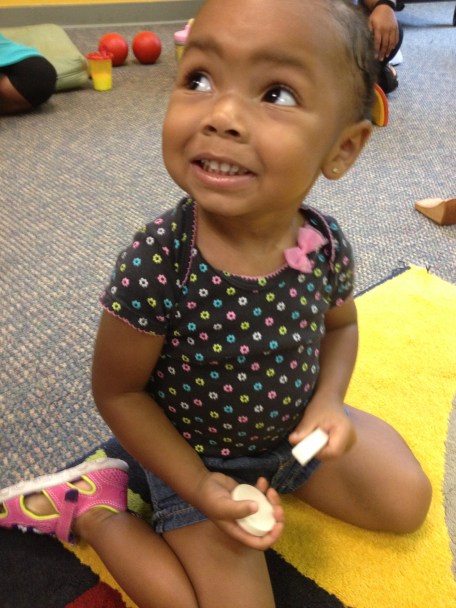
Observation of a very young child shows an endless stream of exploration: input, input, input to a developing brain. Watch the eyes followed by the hands followed by the mouth.  A spot on the rug is intensely explored. A smooth painted geometric shape is examined, moved from hand to hand and to the mouth until interest is diverted to another child doing something nearby.  All eyes, hands, feet, mouth, ears feeding the brain by engagement with the environment, examining every detail with attention rarely matched in later years.

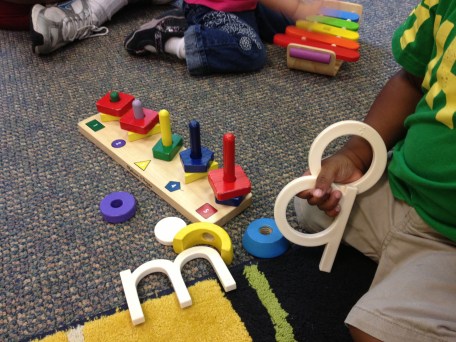
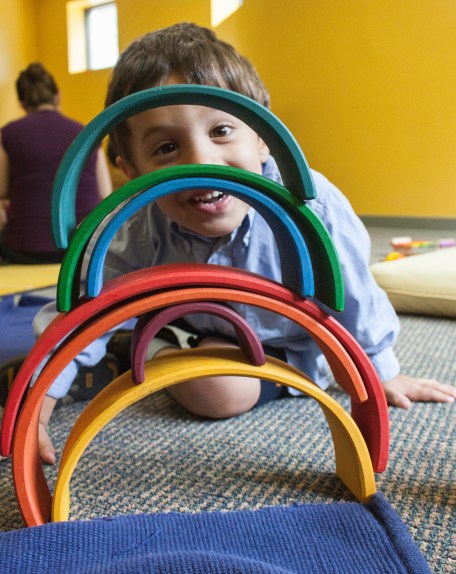
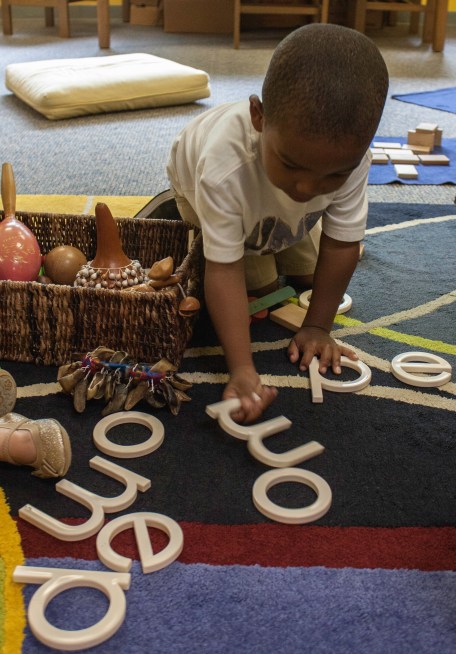
Look at the toys in this morning visit.  All designed for little hands and minds to explore: geometric shapes and letter shapes; stacking toys and building toys.  “This is an /o/.”  “That is a rectangle.” “Thank you for the red ball.” Simple comments, short, gentle, and to the point leaves space for the child’s mind to consider the information in their own time.

sounsworkshop813

It is very interesting to watch creative little hands try to stack and sort in a very personal way.  It is in our patient watching that we are able to see the learning happen. We must be still and not interrupt the direction of the play except to keep children safe. A surprise presents itself in every visit if we observe and let the exploration happen. “The brain is never not learning!” I love those words of Patricia E. Wolfe in Mind Matters.

“Yes, little one…that is the letter for /i/!” They find so much confidence in just KNOWING!

Sounsworkshop83013-2

Unknown's avatar

Head Start Meets Rotary

sounsprfoundationseminar13

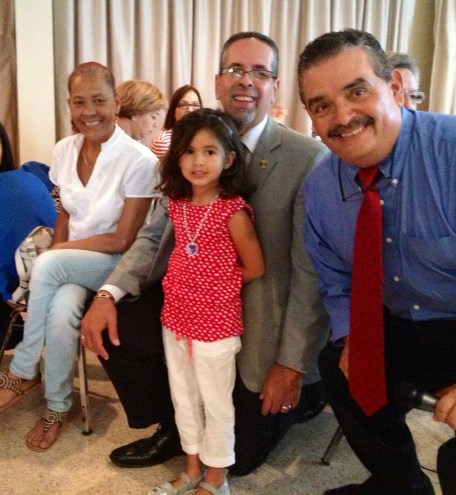
A visit to San Juan for Rotary District 7000’s Foundation Seminar highlighted beautiful people doing remarkable things for children in Puerto Rico! There was a reveiw of literacy projects based on the Souns program involving Rotary Districts 7000, 6990, and 6900. This included one Matching Grant recently completed, the beginning of a second Matching Grant, and a plan for a Global Grant. Totally inspiring!

Visiting Head Start sites in the project demonstrated the power of the young preschool mind when given tools of print through engaging hands-on activities that build letter-sound knowledge. So far, the Rotary literacy project has provided Souns materials to 135 classrooms in San Juan and, through a second grant, will extend materials to ALL the Head Start classrooms in the San Juan Municipality program within the year. With site visits several times each year, we are able to see the progress, hear about the progress, and move forward with teacher training.

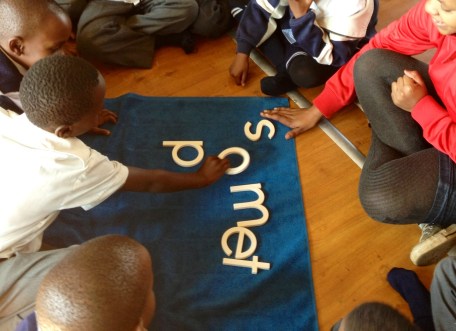
This August visit, just a few days into the school year, confirmed children came back to school with retention of letter-sound knowledge (and that new children were quick to pick up the information). Given the gift of a Souns writing mat, the group of learners were able to hear a word and build that word by listening to the sounds in the word. This is only possible if the child is confident with letter-sound knowledge. What a positive environment and developmentally appropriate materials can do for early literacy! Working as a team, the children built four words. The last word, feo, presented a surprise, as a new child was quietly persistent as she kept pointing to the second letter – e (eh) – when the others were pondering the sound. It was a very special moment for everyone…particularly that little girl who knew she knew!.

sounpr8-2013-2

Unknown's avatar

“a remarkable tool”

asa-map
As a professional I have used Souns in therapeutic play, as a teacher, and as a classroom facilitator; but Souns is so much more personal to me and my family.  We introduced Souns to our toddler and enjoyed watching him begin to mouth and sound out the alphabet one symbol at a time.  As he began to identify these symbols on placards and traffic signs we started the exciting process of blending sounds and later decoding.  During this process my son was identified as having pervasive developmental delays. Now, at age eight, he still works hard on self regulation and focus, but demonstrates fifth grade reading comprehension, is writing in a journal most days, and loves to read at night before he falls asleep.

asa stripes 2
This personal process helped me to identify other children who were able to learn letter sound recognition using Souns.  As a special needs teacher in a DIR/Floortime school I used Souns to give meaning to the alphabetic symbols when children had memorized the letter names. Some of my non-verbal students were able to give the sound of a letter as the first means of language.  A child may not be able to say cookie but could grab the “c” cuh to express what s/he wanted.

I have also used Souns to help children who struggle with fine-motor delays.  Using the large letters, children are able to “write” words and short sentences by placing the letters together to form phonetically spelled words. The child is able to produce inventive writing  while their fine motor skills continue to develop.

Both personally and professionally Souns has proven to be a remarkable tool when introduced playfully and strategically during the appropriate developmental level.

Kellie Porter-Burks M.Ed.
DIR/Floortime Practitioner
Unknown's avatar

Souns FUN = Intentional Learning!

souns_Friday_July5,2013_67

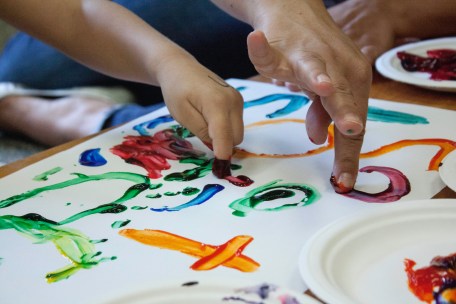
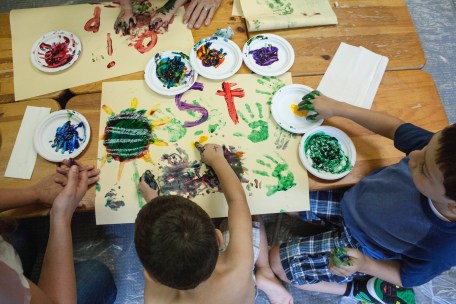
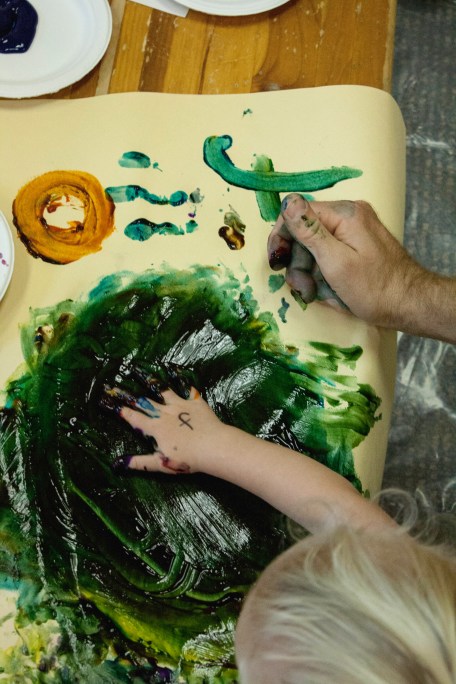
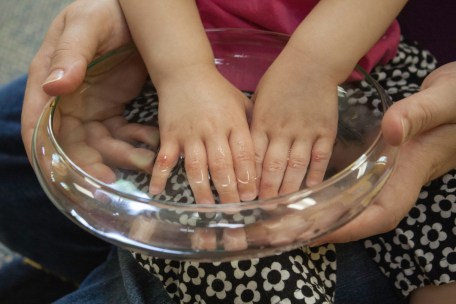
Parents and children learning together is the best! Our Early Literacy Workshop today was a great example. Getting the hands into the building of letter-sound knowledge with finger paints – little hands and big hands. No letter-names are found in our environment until after the child has begun sounding out simple phonetic words comfortably, which usually happens between three to four years of age for typically developing children who have followed this very informal program. One little one – not yet two years  – loves her Souns and knows ten of her letter-sound associations already. I smiled at her and quietly enticed, “You think you are ready for a new sound?” She responded with a spontaneous and confident smile, “Yes!” I introduced /u/ to her and she shared it with her dad. What fun is this!!! I told her dad, “I can’t wait for you to see what three looks like for your child!”

Another member of the group is being helped to learn letter-sounds by his older sibling. They each are having fun “teaching” mom letter-sounds. Moms can be the most inspiring students for their children.

Another mom shared that her child – the youngest in the group – seemed to learn the first four sounds slowly, but the fifth sound was learned the same day it was introduced. This is what we see quite often. Once the child has created the “hook” for letter-sound associations with the first four Souns symbols, the rest snap right into place. Those little minds are amazing, particularly if play and child-time are taken seriously.
It was a great day for all!

souns_Friday_July5,2013_106

souns_Friday_July5,2013_91

Unknown's avatar

Sun + Paint + Water + Little Ones = Squishy

Soun_Friday_June_21_2013_53

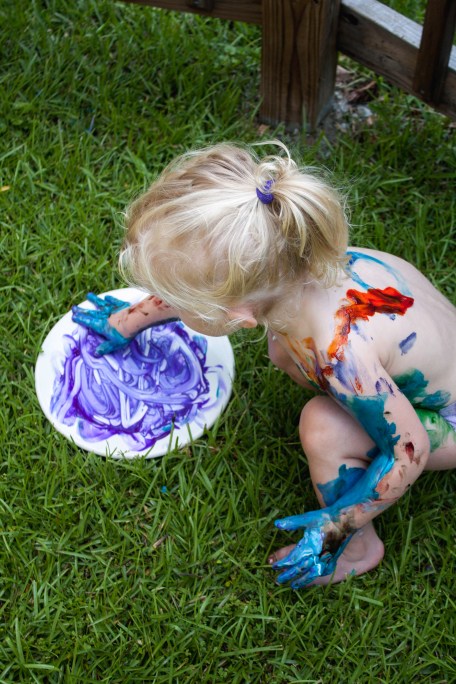
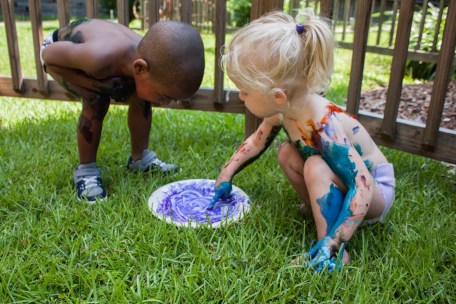
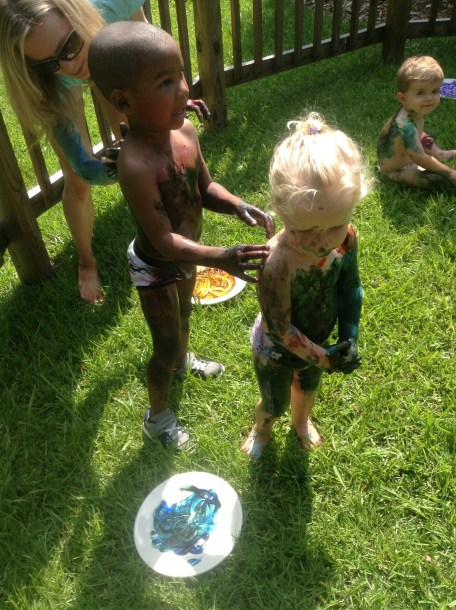
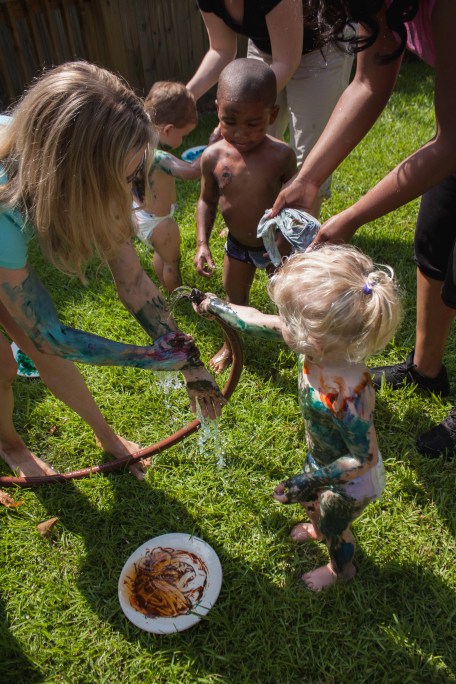
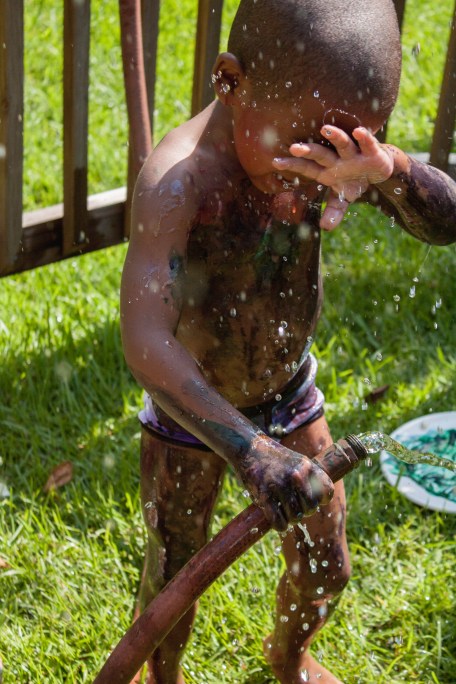
Intentionality at its best! Souns games can look like this with little people, finger paints, sunshine, and water. Soooo much fun! Warm weather is an invitation to play outside with messy things in big ways. Setting out plates of individual colors about six feet apart and turning little ones loose to do as their little hands desire with color on themselves (and sometimes a willing parent) was so delightful. We used primary and secondary colors plus white. As one would expect…sensorial wins out! Paints were squished together between the fingers and spread like butter all over their little bodies. Giggles confirmed a good day for all. Cleaning up with the hose was as much fun as the painting.

Finger painting letter sounds on little backs tickled, but each could tell you the sound they felt being written… play is the best window for learning. All so GOOD!

Soun_Friday_June_21_2013_56

photo-200

Soun_Friday_June_21_2013_71

Soun_Friday_June_21_2013_66

Unknown's avatar

FUN (with Souns Cookies), Anyone?

Souns_Friday_June_7_2013_47

Another great gathering with Souns families! Measurable progress is being made and critical learning for us in how to best prepare parents to implement the Souns program in the home. Watching children explore and learn letter-sound associations through play informs one of more natural paths to writing and reading.

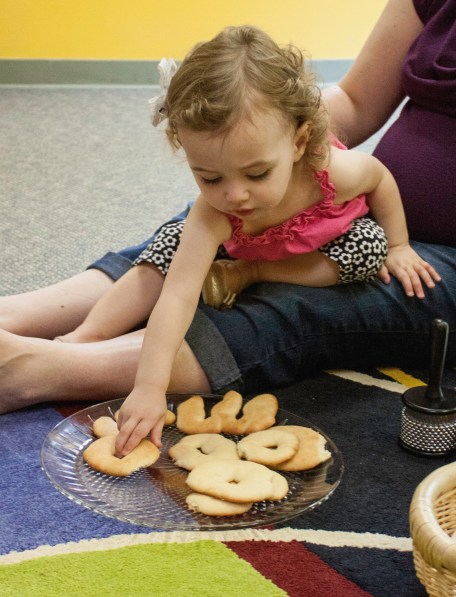
One of the parents surprised us with a plate of homemade /o/m/s/t/ cookies. The children eagerly chose a sound, “I have an /o/,” giggling as they ate. What a fun way to engage children with letter-sounds.

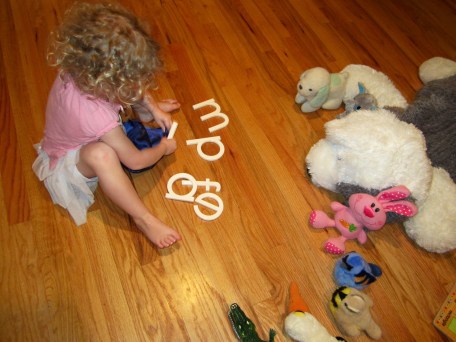
Another family who could not attend this morning’s workshop sent us images or their child working with Souns at home. She spent the morning lining up her many stuffed animals to teach them Souns. It is interesting that this is an activity often engaged in by young Souns kids.

We viewed a video on music and movement for infants and toddlers, readying for a workshop where we will introduce simple creative ways to include music and movement into a child’s world.

Souns_Friday_June_7_2013_34

Souns_Friday_June_7_2013_21

Souns_Friday_June_7_2013_06

Souns_Friday_June_7_2013_54

photo-200

Little animals all lined up for their Souns lesson! Guess who is doing the learning?

Unknown's avatar

Through The Hearts Of Teachers

photo-199 copy 3

Teaching the teacher (parent or caregiver) about Souns initially takes about two hours.   The Souns program – focusing only on letter-sound associations – is the most natural, developmentally appropriate route to reading for the young child. Teachers love this simple, logical, effective tool. After the introduction of the program, we observe the teacher teaching the children (below).

photo-199 copy 7

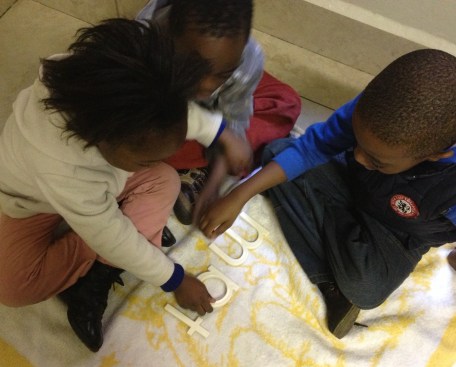
The result, often in three to four months of learning letter-sound associations, is the building of words (below). This “writing” by listening to sounds in words lasts for several weeks or a month. Taking the puzzle of a spoken word apart, building it with symbols is fun! This understanding of the structure of words leads to a seamless step into sounding out printed phonetic words.

photo-199 copy 4

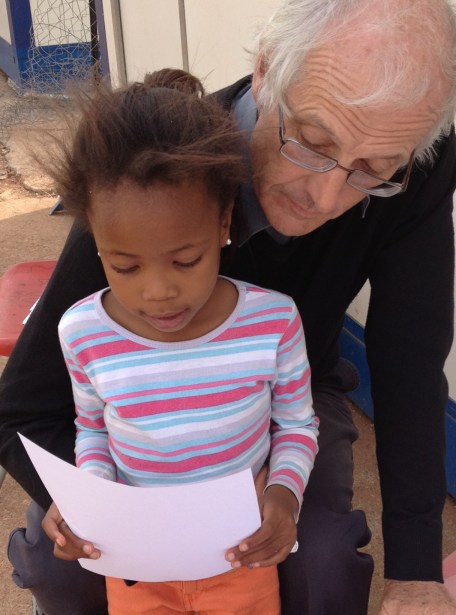
Soon, the magic of decoding – sounding out words – appears spontaneously in the classroom….one little person at a time. The five-year-old in the image below is reading a sentence I wrote. She sought us out to share something she had read in the classroom. I wanted fresh material for her, so I created a short phonetic sentence, which she read with no hesitation.

photo-199 copy 2

photo-199 copy 6

Are we making a difference in South Africa? Absolutely! Rotarian volunteers teach the teachers in the implementation of a program that is provided by a Rotary Global Grant.  In a country with 11 official languages, Souns focuses ONLY on letter-sounds, most of which are the same across all the languages. Letter-sound associations are the most direct link to writing and reading. These children will walk a better path toward success in school; they will read!

“Thank you!” to The Rotary Foundation for your support of this Global Grant 25244 literacy project initiated by the Rotary Club of Pretoria East in Rotary District 9400 and the Rotary Club of Peachtree City in Rotary District 6900.

Unknown's avatar

Compelling Success In South Africa

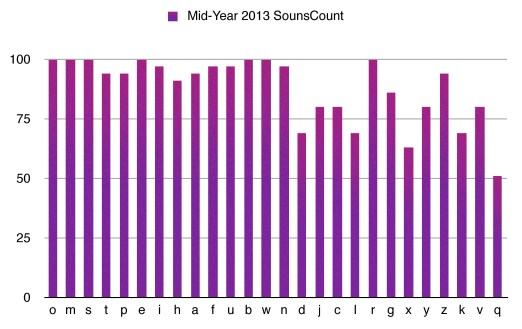
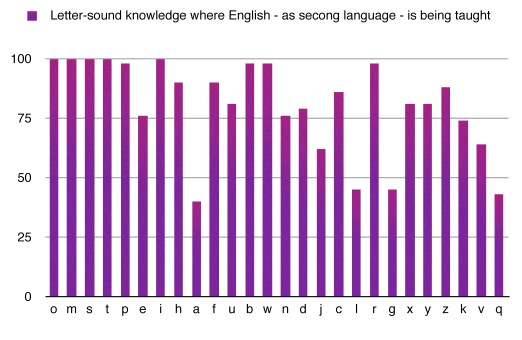
SounsCount: Mid-year assessments for two Grade R classrooms: One where learners are taught in home-language (N=35) and one (N=42) where they are taught in second language.

graphimageshollo5-13

The  5 year old children from these two Grade R classrooms in the township of Mamelodi* began their work with Souns in January 2013, several weeks after the beginning of their school year. These assessments were administered in late May 2013. Considering school holidays and only a portion of their year completed, the results (percents) are stunning. According to the teachers and our observation, building words and sounding out words – the application of letter-sound knowledge –  are regular activities in the classroom. When the school year ends in December, the learners will be well on their way to a successful school year in Grade 1.

While each classroom is demonstrating notable success, there is a distinct difference between the class which is teaching children in their home language (above) and the class where children are being taught English (below), a second language for the learners. It will be interesting to see the results as the children in the two classrooms continue through the Souns program.

LukiNelmapius5-13

Based on the joy we witnessed in the classrooms, these children are learning the fundamental skills of writing and reading – letter-sound associations – with fun and exploration. The teachers are engaged with the program and excited about the results. Souns® works!

This is a Rotary literacy project initiated by Rotary Districts 6900 and 9400. Thank you, Rotary Club of Pretoria East in RD9400 and Rotary Club of Peachtree City in RD6900. Children have a better path ahead because of you and the The Rotary Foundation.

*Mamelodi is a township of over a million population: http://www.mameloditrust.org.uk/photos/photo_about1.jpg