Unknown's avatar

Building Literacy / Touching Families

There are compelling changes taking place in the world. We are learning about children. What we saw as a little human waiting to grow big is really a voracious, rapidly developing brain inside a slowly, but more visibly developing body. The young brain grows at an unparalleled rate, but we can’t  s e e  it like we can see the body grow. The body explores the world to feed the developing brain, as, interestingly,  the brain must progress ahead of the body in order to safeguard the survival of the child. There is such beautiful logic, so much of which we don’t see by casual observation. Look intentionally, and you will!

Understanding the learning potential of young children can change the world in dramatic ways. It can ensure peace or exacerbate war. That little brain is going to adapt whether it means pulling a trigger or planting a seed. Peace Corps and Rotary International are powerful organizations dedicated to a peaceful world. One of the avenues to that end is literacy. If children are able to read, they will be more informed and can make decisions for themselves. People who can read are more able to take charge of their lives and are less likely to be victimized.

“I will help you learn to read!” Beyond health and love, there is NO greater gift for a child or the world then literacy. Collaborations between organizations such as Rotary International and the Peace Corps in South Africa are reaching thousands of children in rural communities. Urban populations in South Africa and in Puerto Rico are involved in literacy projects funded by The Rotary Foundation. The world may turn a little more smoothly for these children thanks to such globally minded literacy efforts.

On a smaller – but no less important –  scale are individuals who are equally driven to help children. SenseAble Learning’s Della Palacios in Florida, USA, and Nikolai Pizarro in Puerto Rico with her publication Ring the Alarm are examples of the many hands reaching out to children. Della and Nikolai know the power of the young, developing mind. They know our tomorrows are defined by the experiences offered a child today.

Another hand reaching out and a thread that runs through each of the efforts mentioned above  – Souns for literacy – is designed in response to the way children learn best. Souns breathes life into the tools of print, w h a t e v e r   t h e   l a n g u a g e. In the hands of children, Souns leads naturally and incrementally to letter-sound knowledge which leads incidentally to reading. Reading leads to success in school; and success in school leads to a more independent life. The result of an independent life is the ability to see beyond oneself, a necessity if we are to ensure peace. Many hands or the hands of one can make a difference – Every child wants to read.

Unfortunately, even with Rotary, Peace Corps, committed individuals, and so much information about how children learn, building readers remains a global challenge. We construct schools, hire fabulous teachers, stock libraries, give books; but, in the end, the parent who is with the child during the most formative years holds the key to reading. We must empower parents from the ground up if we are to impact literacy in a global way. All efforts, large or small, must touch the family, acknowledging parents as the real unit of change!

Unknown's avatar

Souns/Peace Corps – Seeds Sprouting!

 Souns Approach to Learning Phonetic Sounds without Souns symbols.

This is the Souns program through the words of one Peace Corps volunteer as he is helping teachers around him build a more literate world for children in South Africa. He is introducing the Souns program across environments. Children will read in South Africa thanks to the collaborative effort of  the Peace Corps and Rotary Districts 9400/6900.


I.  Introduction

Children often have a difficulty with reading because they learn words through rote memory of high frequency words.  These children have difficulties when coming across unfamiliar words.  If children are exposed to individual phonetic sounds at an early age, such as the cretche age, they will be a more balanced reader, able to read with fluency and decode.

II.  An Approach

There is a program called Souns that utilizes hard plastic representations of phonetic sounds and a progression of phonetic sounds that allows a young child to learn high frequency sounds first.  The progression is as follows:

o  m  s  t  p  e  i  h  a  f  u  b  w  n  d  j  l  c  r  g

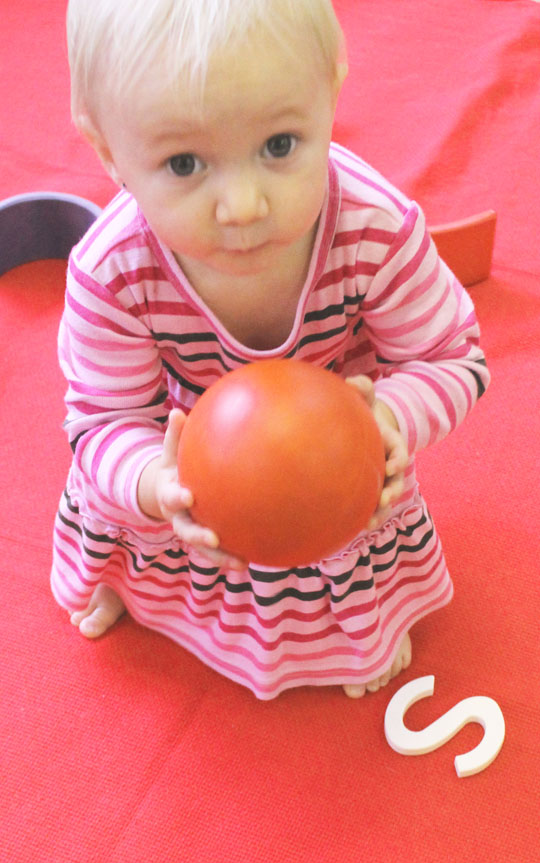
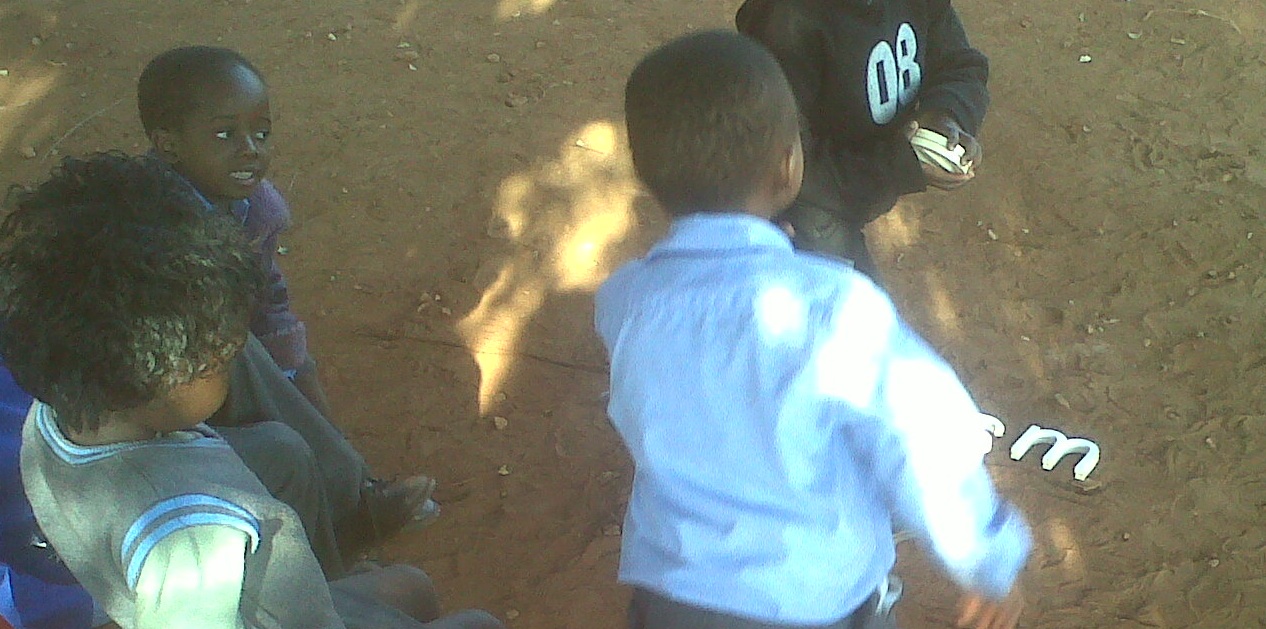
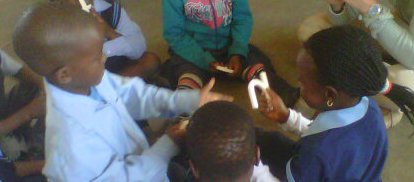
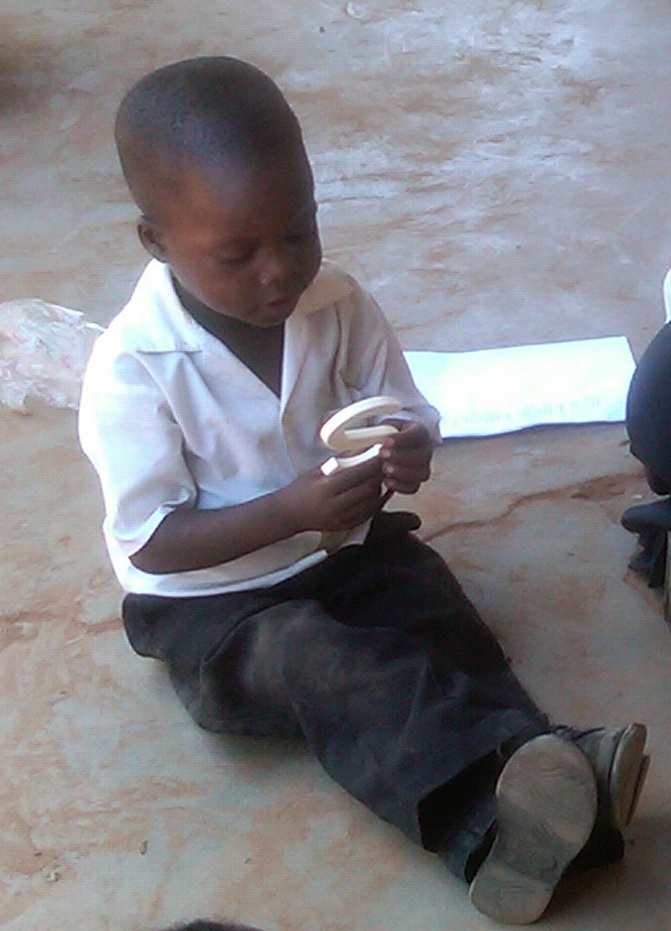
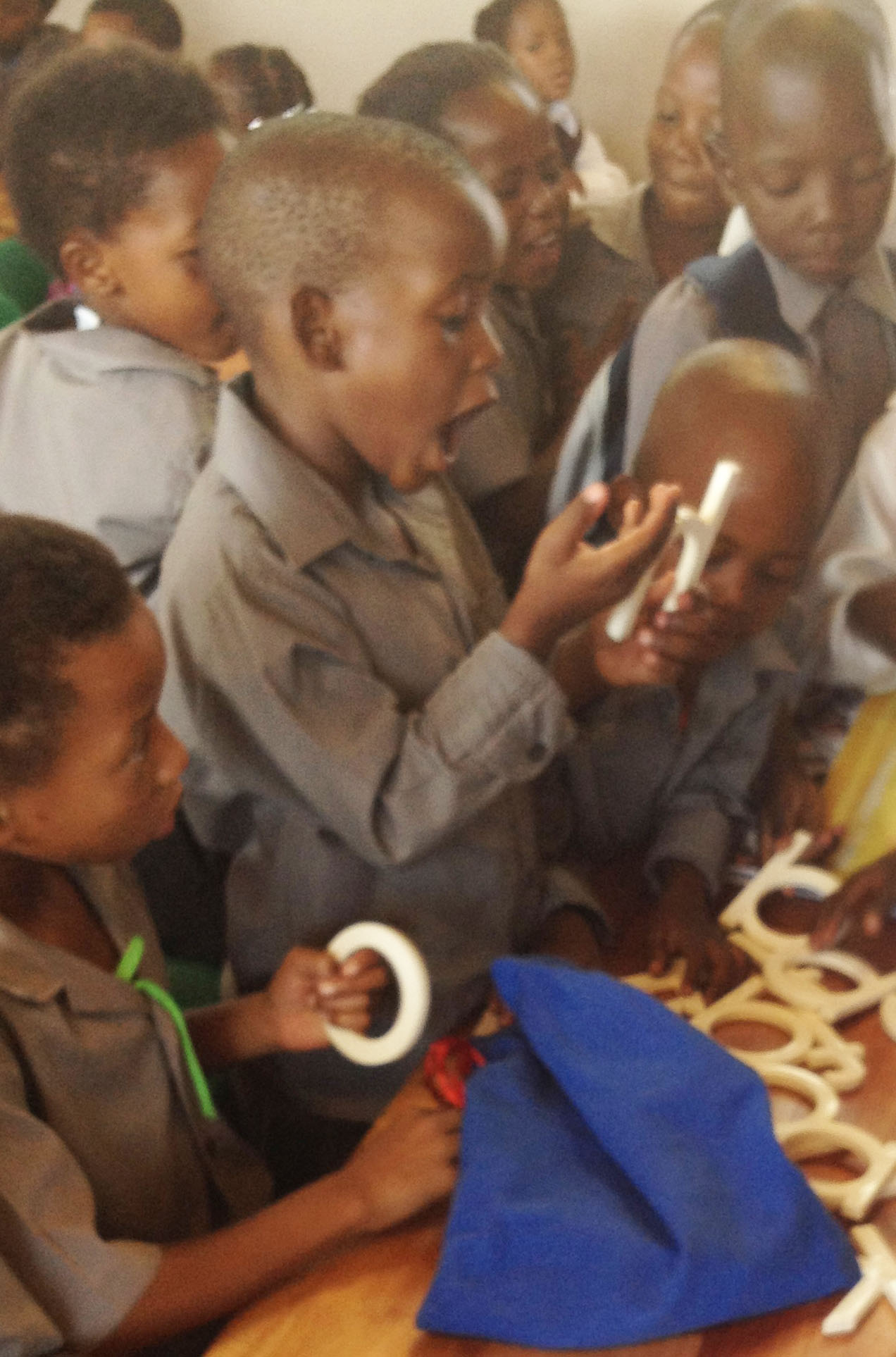
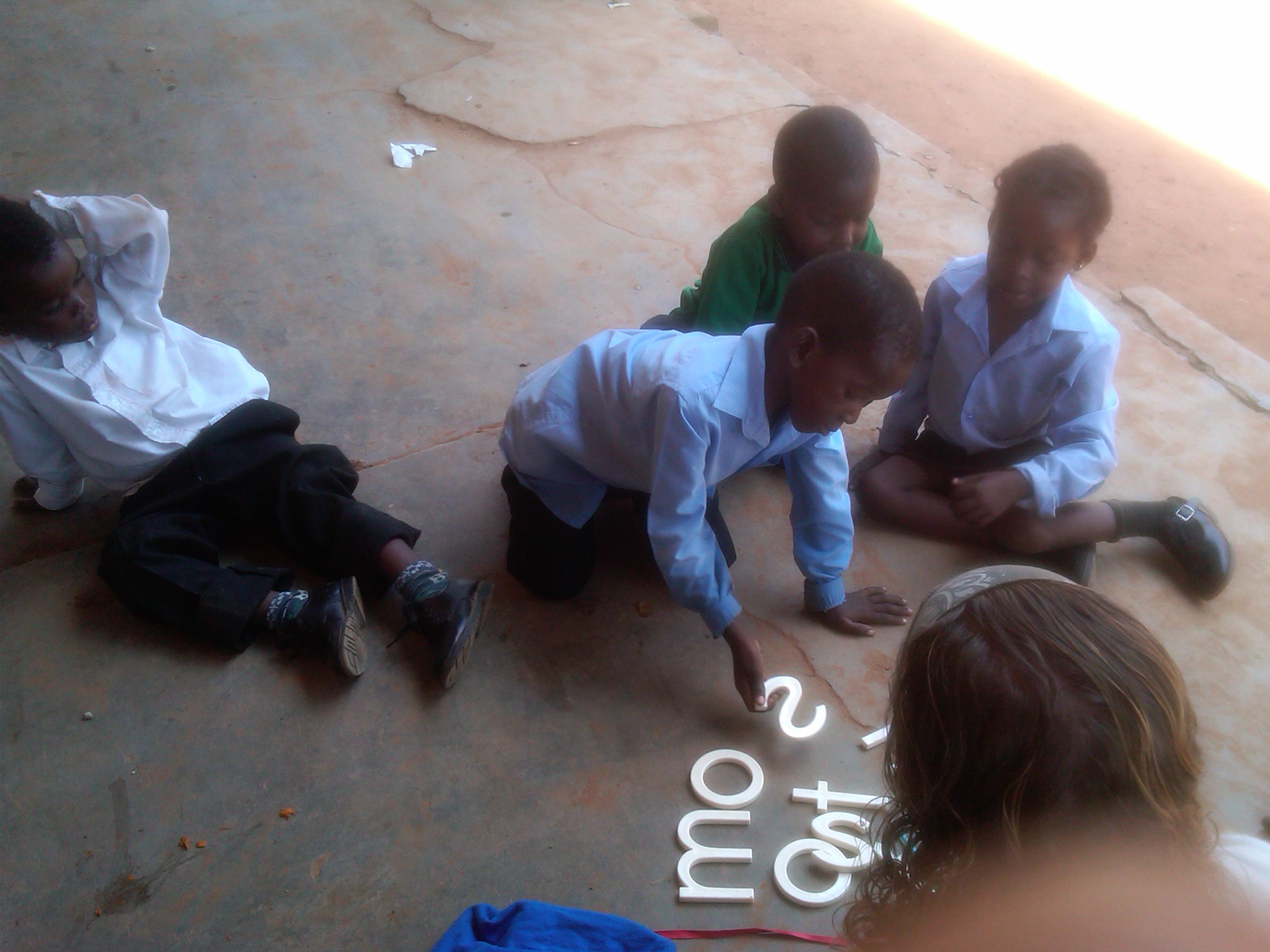
Learners are introduced to the first four sounds “o  m  s  t.”  Groups can be from 1-8 learners.  The preferred method is to be seated on the floor.  The teacher has the four sounds in a bag and pulls out one sound (the plastic representation of the sound) and says “o.”  The learners will repeat “o.”  Then the teacher goes from learner to learner, saying “o” and allowing each learner to touch and hold the sound.  After all learners have touched and said the “o” sound, lay the sound on the ground and repeat with “m” and then the rest of the four sounds.

After all 4 sounds have been introduced and laid on the ground in from of the learners, repeat the sound and give one to each child.  Now that each child is holding a sound, ask, “Can I have the “o”?”  The child with “o” will hand you the “o” and you will place the sound back in the bag.  Say “thank you” and ask for the “m” and so on until all the letters are in the bag.  Give each child a “high five” and say “thank you”.

III.  Notes on the Approach

Each session should last less than 15 minutes and done only once a day.  The sessions should focus on being fun and not dispensing of knowledge.

A teacher should never say “no.”  If a learner says a sound incorrectly, such as “o” when the sound is “m”, say, “This is “m,”” and continue with the session.  If a learner points at a sound, such as “m”, and says it incorrectly, say, “This is “m,”” and allow the child a chance to say it correctly.  If they continue to struggle, say “Good job,” make a note, and continue with the session.

It is important that each sound is not drawn out too much.  If the learners are learning “t”, make sure the learners say “t” once and not “t, t, t, t”.  If they are learning “s,” make sure they say “sss” and not “sss, sss, sss”.  This is because the child will soon be reading and they need to learn how the sound sounds naturally when read.

Never add vowel sounds to the end of consonant sounds.  If teaching “s”, it is never “sa” or “se” or “si”, it is “sss” and only “sss”.  This will help the child break words down and be able to learn other languages that do not follow the Bantu word formation of every syllable ending in a vowel.  “sa”, “se”, “si”, “so”, “su” is a helpful approach for reading intervention and can be done at a later stage, but it is not beneficial when a child is first learning phonetic sounds.

When showing the learners a sound, be sure to display the sound in a way that it is proper for the child viewing it.  This way they do not confuse the sound.  This is especially imperative when doing b, d, p, and q.

IV.  An Amended Approach for LEAP 5 and Local Cretche

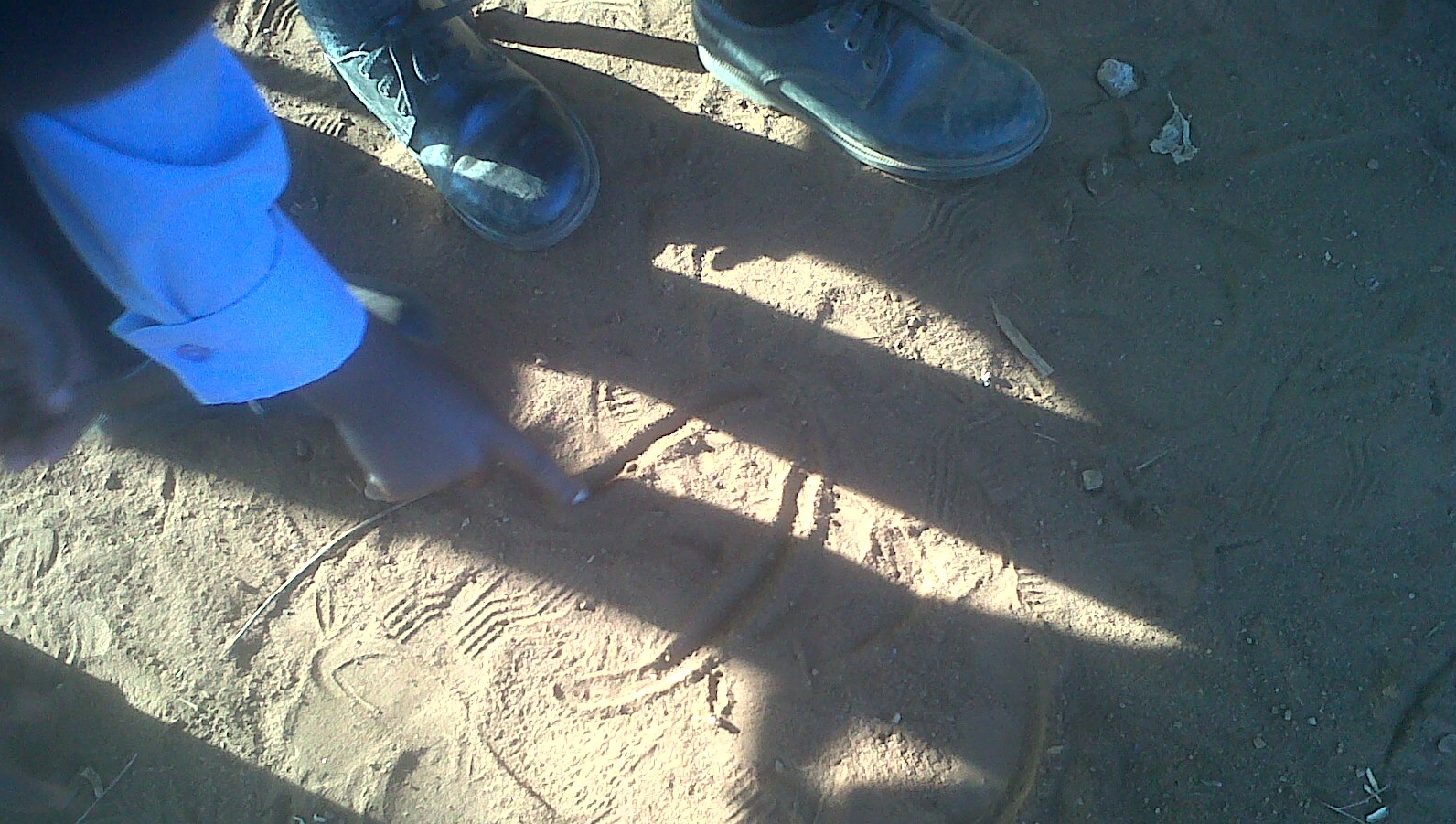
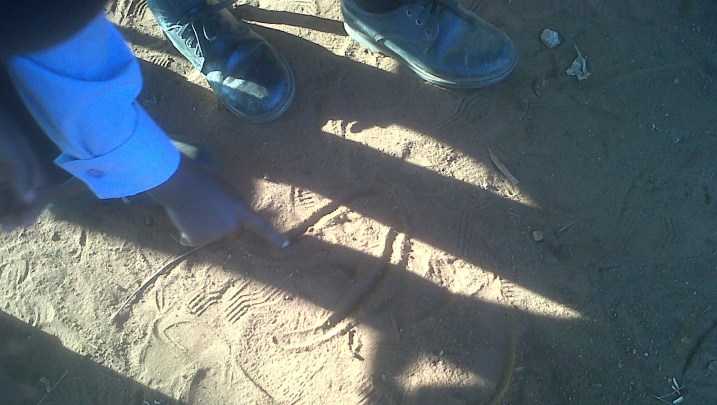
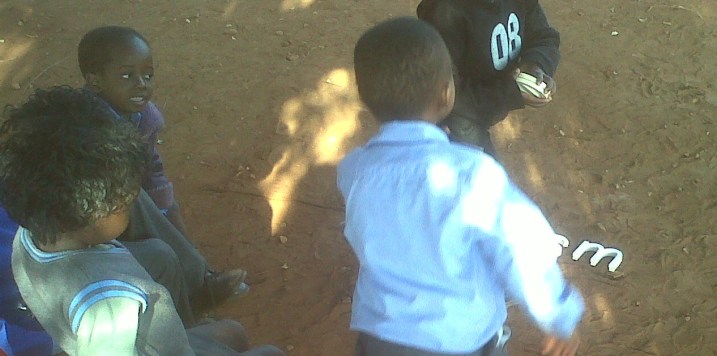
Working with the plastic representations can be substituted by drawing with a stick in the dirt.

Each LEAP learner could work with a group of 4 or less.  I suggest 4 or less so the cretche learners receive equal exposure.  You can adjust this if need be, of course.  Here is a suggested process:

1.  The LEAP learner will take their group and a stick to their designated spot in the yard.  In this case, they will sit down in a line with students beside the teacher. Greet each student, ask a simple question, and say something to get them excited, such as, “Ready to have some fun?!”  Be sure the learners can each see the patch of dirt in front of them and the LEAP learner.

2.  They will go through the introduction process, as mentioned above, but instead of displaying a plastic representation of the sound, the teacher will slowly write the sound in the dirt in front of the learners.  Form the letter slowly, so the child is able to watch how the letter is formed.

3.  The LEAP will point to the representation of the sound drawn in the dirt and say it to each learner.  After saying it to one learner, allow the learner to attempt drawing the sound in the dirt also.  As noted under “Notes on the Approach,” be sure to not say “no”.  Just allow the learner to try their best and move along, keeping their excitement high.

4.  By the end, you should have 4 sounds drawn in the dirt, facing the learners.  Go through each sound saying, “Can someone touch the “o”?” and then erase after choosing one child to touch it and then move to the “m” and so on until all sounds are erased.

5.  Give each learner a sign of congratulation such as a “high five” and end the session.

V.  Resources

Please visit souns.org and read more about souns.  Then go to souns Resources on the left hand column.  Once on the souns Resources page, click on the souns Tracking Sheet and start one tracking sheet for each cretche learner that is kept track of by their LEAP learner.

                   *Mastered, shading in the whole box, should be filled in only when you draw the sound in the
dirt, and without any prompting or prior teaching that day, the individual cretche learner say the
correct sound.

VI.  Activities to Add to the Approach

If learners are having difficulties with sounds, it often helps to change your approach.  Here are a few suggestions to make learning even more fun:

1.  Get a marker or pen and lightly write the sound on the hand of each learner.  Be sure to write the same letter on the same part of the palm.  This will allow you to write four sounds (2 on top of each hand and two on the bottom of each hand).  Be sure to sit behind the learner and slowly write the sound, allowing them to see how the sound is formed.  After this, you can ask them to match their sound to their friends’ same sound.  It is a fun way for them to take their learning home and show their parents what they learned that day at school.

2.  As a review, draw each sound apart from each other in the yard.  Say a sound and have the group run to each sound, look at it, and shout it out.  This is a good way to get them excited about the sound and can even be done individually as a way of review.  Be sure to demonstrate first.

3.  Get large representations of sounds already learned and spread them out in your learning area.  Ask learners to find the different sounds on the paper and/or have them show you the sounds.  This will be a pivotal step in their understanding of how sounds connect to the world they live in.

4.  Once learners attain the first 8 sounds, it is a good time to create some words.  From the first 9 sounds, in Tshivenda, you can say the words mme, ita, sita, sema, and many more that I don’t know.  Say the word normally and then say it slowly, making sure the learner hears each individual sound.  Ask the learner what that word means and if you have a physical representation of the word, show it to the learners.  Allow the learner then to do say the word normally and then slowly.  Say it again together, pointing out the first sound, and then you or, if able, the child writes the sound in the dirt.  Do the same for the next sound.  When the entire word is written, sound out each sound and then say the word again normally.  Congratulate the learner and tell them they built a word.  This will be a big step for the learner and should be used only with sounds mastered.

VII.  Final Note

This is an easy concept that will be great for the LEAP learners to share with the cretche learners.  It will be most beneficial when mixed with reading of stories, singing of songs, and playing of games.

© 2012 by SounsⓇ All rights reserved. No part of this document may be reproduced or transmitted in any form or by any means, electronic, mechanical, photocopying, recording, or otherwise, without prior written permission of Souns.
Unknown's avatar

“Souns like…..” A Peace Corps Reflection


SOUNS Like… “Sesi Nyeleti! Sesi Nyeleti!” All of the Grade R learners shout my name, and jump up and down in unison as I walk from the staff room across the school yard to the Grade R classroom. They are all very excited, because they know that when I come to Grade R it is time for SOUNS. As we walk (or they sprint) over to the spot where we practice our SOUNS, they animatedly yell the most recent sound we have mastered. SOUNS, a literacy program that was introduced during my PST, has become a major part of my day at both primary schools where I teach. On my days at both primary schools, in between my other classes and helping the teachers at the school, I wedge in time to take three groups of about eight Grade R learners per group to work with them on SOUNS.

I had trouble implementing the program. I wanted to make it fun for the kids I was working with, but at the same time effective and educational. After all, learning is the major goal. Literacy is what this program is after. I found myself a tad frustrated, using the same activities day after day and making it far too tedious for the learners. Luckily, at a meeting with my fellow PCVs we had the chance to swap stories and ideas on how to better implement the program. Since returning to site after the meeting, SOUNS has been going wonderfully. Activities like drawing the letter (woops, sound!) on the learners’ hands, having the learners run to the sound, and having the learners sing in unison what sound you have just pulled out of the blue SOUNS bag all make this program very enjoyable for the kids.

What’s more is that they are actually learning. They are connecting the shape/visual of the letter to its sound. A few weeks back, as I was walking with one of the women I am friends with in my village and her son (Grade R), my friend asked her son what he was learning in school. Her son stopped right there, leaned down, and drew the shape of the sound “t” in the ground, voicing the “t” sound. I felt successful, even if it meant I had only reached one learner.

Since starting SOUNS, more PCVs have jumped on the SOUNS bandwagon. From hearing the positive effects it has had on the learners we work with, other PCVs hope to obtain a SOUNS set for their school. In the future and in an effort to make this a sustainable resource, I plan to work with the Foundation Phase Educators on how to implement this program into everyday teaching or as a remediation tool. For now, however, I am quite content as the learners skip back to class after our SOUNS session, happily chanting “mmmmm” and “ssssss.”


Unknown's avatar

Rotarians ● Peace Corps Africa ● Literacy

Rotary Clubs, join hands with the Peace Corps! Children need us!

The following letter is from Dick Day, Regional Director of The Peace Corps in Africa.

Dear Rotarians,

Early childhood development is such a critical need across Africa. While we have some Peace Corps Volunteers working with local non-governmental organizations to support ECD with orphans and vulnerable children, they have little training in early childhood development and fluency teaching and few resources.

Thank you for helping equip our Volunteers on both fronts through the Souns program, and thank you for touching the little ones who so desperately need love and training.

Dick Day                                                                                                                                                                                                                          

This letter is the result of a pilot literacy project in South Africa, promising the fundamental skills of reading and writing for children. A collaboration between the Peace Corps and Rotary (currently including D9400 and D6900) means a door is open and the light is shining through it. A sustainable path to impacting literacy is visible. We have two amazingly dedicated organizations and a tool designed to teach children to read in any African language.

How can you get involved? There is a Global Grant option, as well as ample opportunity for any Rotary Club to support one or more Peace Corps volunteers in Africa. Please email: everychildwillread@gmail.com to discuss the possibilities. You might even consider joining in the training at some point. Once you have experienced the eyes of these children as they learn, you will see many things differently.

Unknown's avatar

Global Grant Option for Rotary Clubs

A Global Grant to help 12000 children read in South Africa!

The past and the present! Global Grant #25244 has been extraordinarily successful in building fundamental literacy skills for almost 8000 children of Mamelodi in Gauteng Province, South Africa. Such success has led to a new Global Grant proposal to provide Souns literacy materials to 250 classrooms in Gauteng and surrounding Provinces via the University of Pretoria, University of Venda, and the Peace Corps. This new grant will provide materials initially impacting almost 12,000 children through primary schools and creches, as well as equipping Peace Corps volunteers with Souns materials to better serve them as a resource for their communities.

Since Souns materials are not expendable, the overall impact as the years go by will be exponential. The grant provides funds for classroom materials only and is matched almost dollar-for-dollar by experienced Rotarian volunteers training local teachers to implement the program. Teaching teachers ensures long term sustainability.

The almost completed Global Grant 25244 ($34,200) was initiated by D9400, Host Club Pretoria East, and D6900, International Partner Club Peachtree City, along with Rotary Clubs Carrollton Dawnbreakers, East Cobb, and North Fulton. This international literacy project is changing lives for children. Clearly, this is a demonstration of the power of Rotary.

The new, proposed Global Grant ($50,000) is being initiated, once again, by the Rotary Club of Pretoria East. This project builds on the collaboration between D6900 (International Partner) and D9400 (Host) and promises an even larger impact by Rotary on the fundamental literacy skills for young children in South Africa.

If you are in District 6900(USA) or District 9400(ZA) and are interested in your club participating in this international literacy Global Grant, please email everychildwillread@gmail.com. If you are in another Rotary District and want to get involved in this effort, contact me and we will find a way to make that happen. The world is filled with children who want to read, and we need as many hands joined as possible. The ability to read and write is the peacemaker, and we must ensure that every child – YES, EVERY – child will read!

Unknown's avatar

Peace Corps Reflections (from the field)

Volunteers in the Peace Corps have the option to use Souns in their communities in South Africa. This opportunity is the result of a collaboration between Rotary Districts 6900, 9400, and Africa Peace Corps. The work is promising, even compelling when one considers the difference for children that is being made. It is a wonderful thing to see organizations join forces for building a literate world, which is the only route to a peaceful one.  Please enjoy the collection of quotes from the field. Keep in mind, Souns works in any language using the Latin alphabet symbols. You associate the sound of the symbol for the child’s language. What a bridge between differences.

“I really like the simple, realistic ideals of the souns program. The individualized program meets the learners where they are and provides small group interaction that is often missing in the regular classroom setting.” 

“It was nice to see despite the different language barriers how fast the children pick up on the idea of the program and the different activities you can do with it.”  

“One simple technique that I had not thought of was asking the kids to exchange souns with another learner.”  

“I am going to start grouping the students more as they progress, since I don’t want the students who are progressing to get bored.”

“Things are going well!
I’m learning that
writing must be done in smaller groups!
I recently had a little guy [who wasn’t feeling well] – but he
still participated… only afterwards did I realize [how badly he felt]. Poor guy! But he still was working hard.

I’m trying to get to every kid at least once a week. I’m seeing
progress. Using local words has been especially effective.

Souns is a great way for me to get to work with the younger grades,
otherwise I wouldn’t have the opportunity to interact with them.”

“Souns is doing well in my area! Before our training I had thought we needed to perfect each cluster of 4 sounds before moving on so I wasn’t as far into the sounds as the other volunteers. But now that I am on track things are looking really well! Just the other week we started our first combination of sounds to form short words. It was amazing to see the lightbulb go off in the kids head when the put together sounds to make simple words.”