Unknown's avatar

“Souns like…..” A Peace Corps Reflection


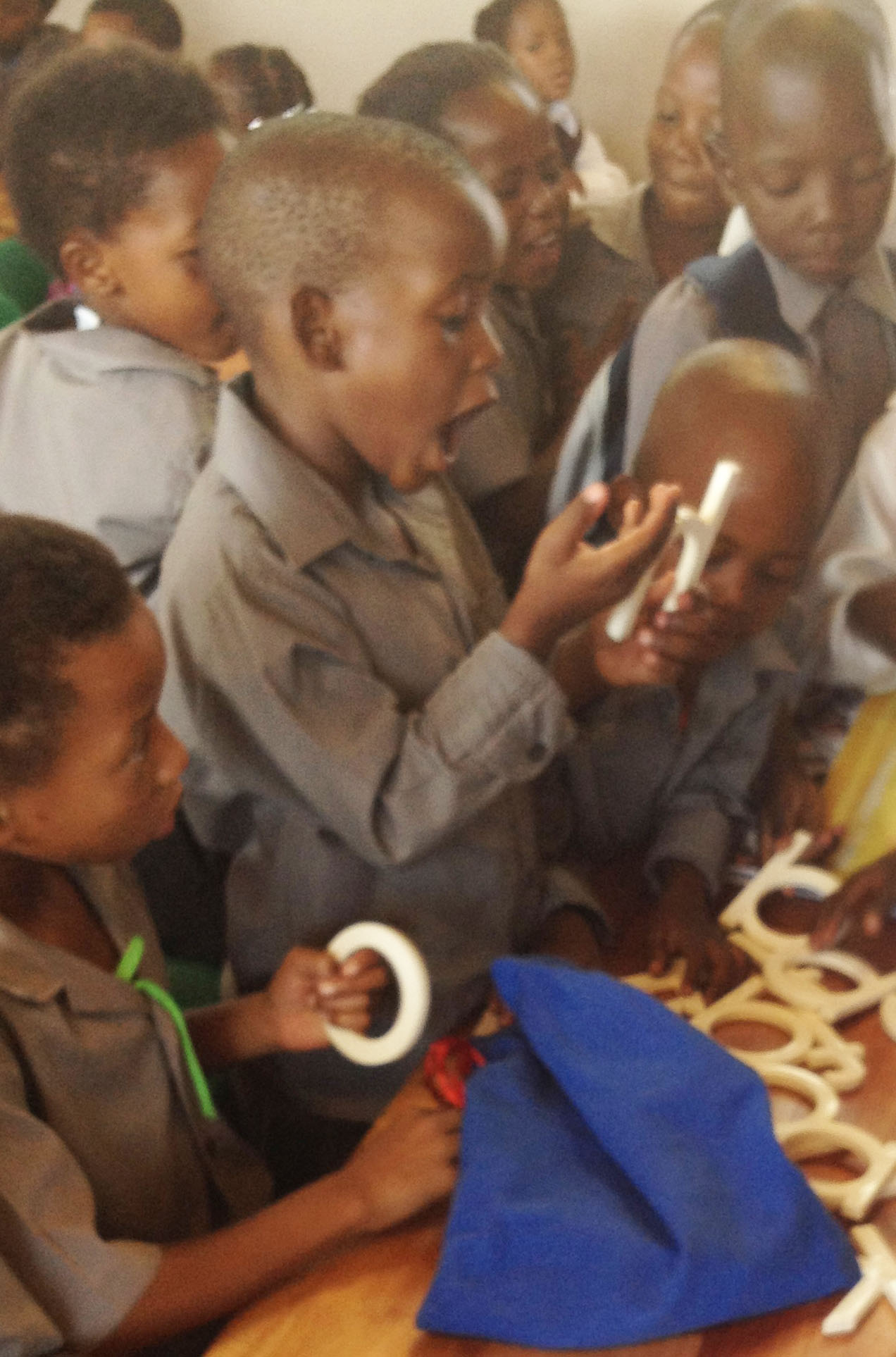
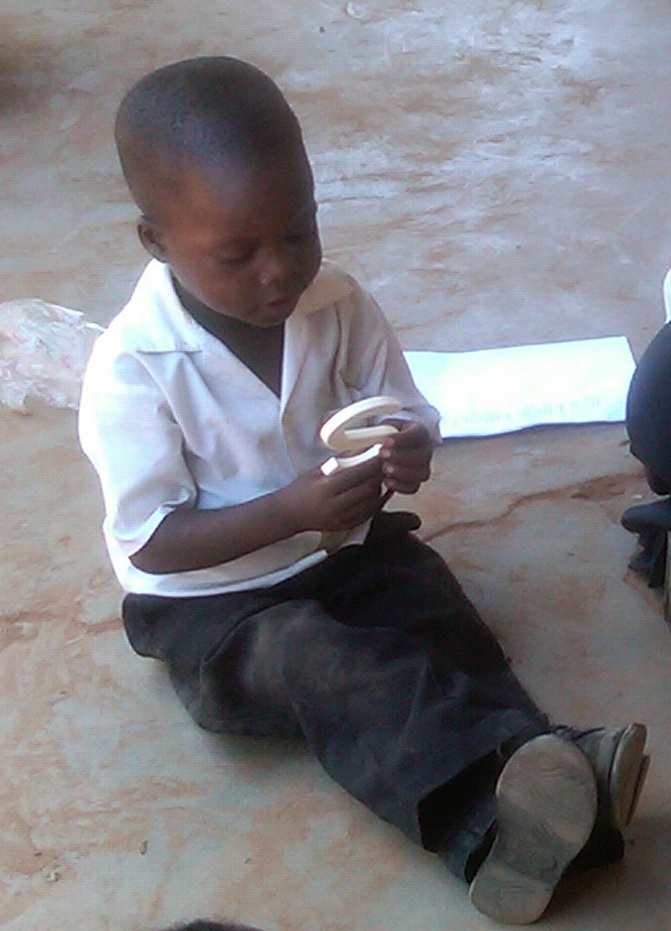
SOUNS Like… “Sesi Nyeleti! Sesi Nyeleti!” All of the Grade R learners shout my name, and jump up and down in unison as I walk from the staff room across the school yard to the Grade R classroom. They are all very excited, because they know that when I come to Grade R it is time for SOUNS. As we walk (or they sprint) over to the spot where we practice our SOUNS, they animatedly yell the most recent sound we have mastered. SOUNS, a literacy program that was introduced during my PST, has become a major part of my day at both primary schools where I teach. On my days at both primary schools, in between my other classes and helping the teachers at the school, I wedge in time to take three groups of about eight Grade R learners per group to work with them on SOUNS.

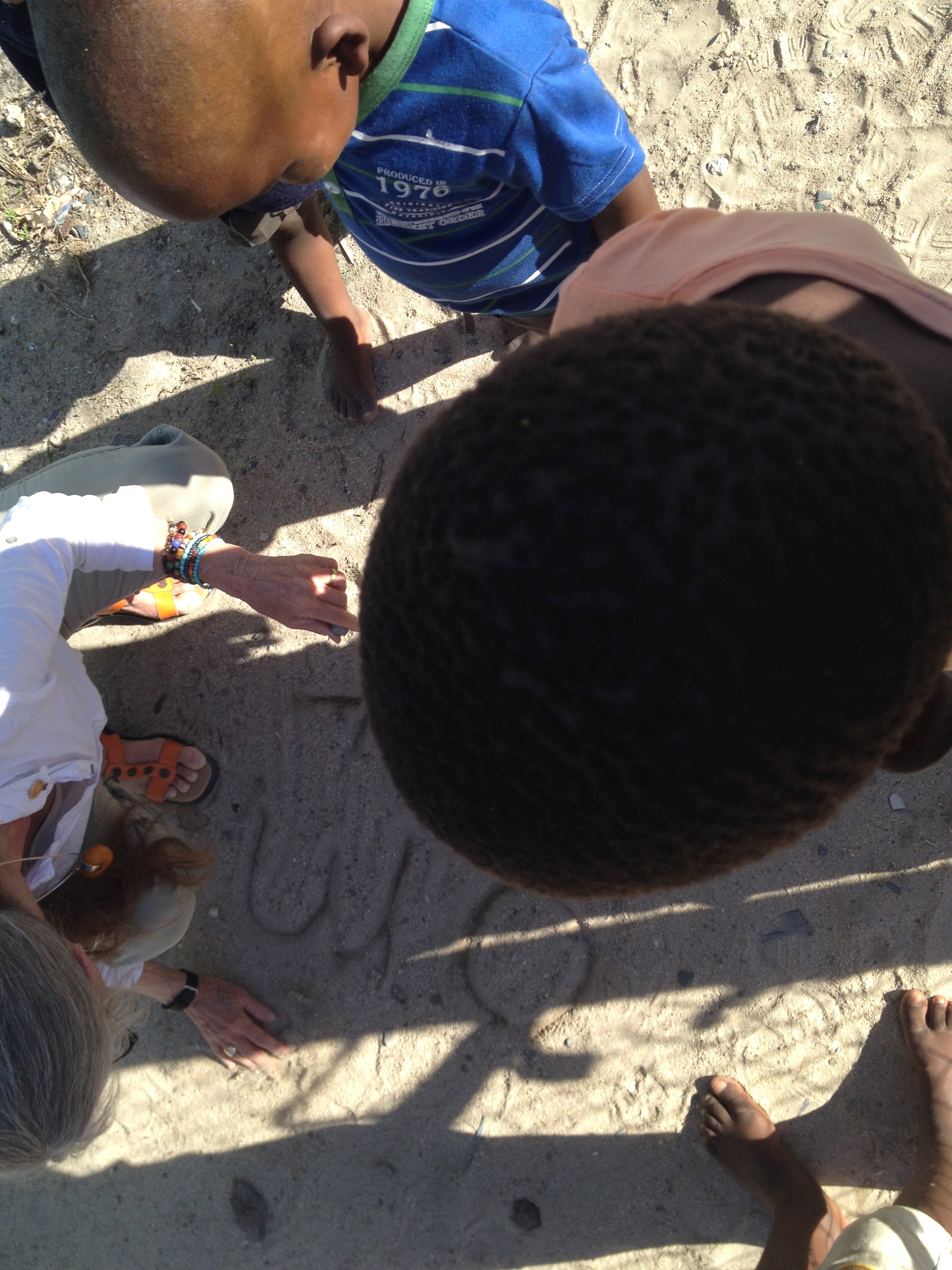
I had trouble implementing the program. I wanted to make it fun for the kids I was working with, but at the same time effective and educational. After all, learning is the major goal. Literacy is what this program is after. I found myself a tad frustrated, using the same activities day after day and making it far too tedious for the learners. Luckily, at a meeting with my fellow PCVs we had the chance to swap stories and ideas on how to better implement the program. Since returning to site after the meeting, SOUNS has been going wonderfully. Activities like drawing the letter (woops, sound!) on the learners’ hands, having the learners run to the sound, and having the learners sing in unison what sound you have just pulled out of the blue SOUNS bag all make this program very enjoyable for the kids.

What’s more is that they are actually learning. They are connecting the shape/visual of the letter to its sound. A few weeks back, as I was walking with one of the women I am friends with in my village and her son (Grade R), my friend asked her son what he was learning in school. Her son stopped right there, leaned down, and drew the shape of the sound “t” in the ground, voicing the “t” sound. I felt successful, even if it meant I had only reached one learner.

Since starting SOUNS, more PCVs have jumped on the SOUNS bandwagon. From hearing the positive effects it has had on the learners we work with, other PCVs hope to obtain a SOUNS set for their school. In the future and in an effort to make this a sustainable resource, I plan to work with the Foundation Phase Educators on how to implement this program into everyday teaching or as a remediation tool. For now, however, I am quite content as the learners skip back to class after our SOUNS session, happily chanting “mmmmm” and “ssssss.”

Unknown's avatar

Rotarians ● Peace Corps Africa ● Literacy

Rotary Clubs, join hands with the Peace Corps! Children need us!

The following letter is from Dick Day, Regional Director of The Peace Corps in Africa.

Dear Rotarians,

Early childhood development is such a critical need across Africa. While we have some Peace Corps Volunteers working with local non-governmental organizations to support ECD with orphans and vulnerable children, they have little training in early childhood development and fluency teaching and few resources.

Thank you for helping equip our Volunteers on both fronts through the Souns program, and thank you for touching the little ones who so desperately need love and training.

Dick Day                                                                                                                                                                                                                          

This letter is the result of a pilot literacy project in South Africa, promising the fundamental skills of reading and writing for children. A collaboration between the Peace Corps and Rotary (currently including D9400 and D6900) means a door is open and the light is shining through it. A sustainable path to impacting literacy is visible. We have two amazingly dedicated organizations and a tool designed to teach children to read in any African language.

How can you get involved? There is a Global Grant option, as well as ample opportunity for any Rotary Club to support one or more Peace Corps volunteers in Africa. Please email: everychildwillread@gmail.com to discuss the possibilities. You might even consider joining in the training at some point. Once you have experienced the eyes of these children as they learn, you will see many things differently.

Unknown's avatar

Global Grant Option for Rotary Clubs

A Global Grant to help 12000 children read in South Africa!

The past and the present! Global Grant #25244 has been extraordinarily successful in building fundamental literacy skills for almost 8000 children of Mamelodi in Gauteng Province, South Africa. Such success has led to a new Global Grant proposal to provide Souns literacy materials to 250 classrooms in Gauteng and surrounding Provinces via the University of Pretoria, University of Venda, and the Peace Corps. This new grant will provide materials initially impacting almost 12,000 children through primary schools and creches, as well as equipping Peace Corps volunteers with Souns materials to better serve them as a resource for their communities.

Since Souns materials are not expendable, the overall impact as the years go by will be exponential. The grant provides funds for classroom materials only and is matched almost dollar-for-dollar by experienced Rotarian volunteers training local teachers to implement the program. Teaching teachers ensures long term sustainability.

The almost completed Global Grant 25244 ($34,200) was initiated by D9400, Host Club Pretoria East, and D6900, International Partner Club Peachtree City, along with Rotary Clubs Carrollton Dawnbreakers, East Cobb, and North Fulton. This international literacy project is changing lives for children. Clearly, this is a demonstration of the power of Rotary.

The new, proposed Global Grant ($50,000) is being initiated, once again, by the Rotary Club of Pretoria East. This project builds on the collaboration between D6900 (International Partner) and D9400 (Host) and promises an even larger impact by Rotary on the fundamental literacy skills for young children in South Africa.

If you are in District 6900(USA) or District 9400(ZA) and are interested in your club participating in this international literacy Global Grant, please email everychildwillread@gmail.com. If you are in another Rotary District and want to get involved in this effort, contact me and we will find a way to make that happen. The world is filled with children who want to read, and we need as many hands joined as possible. The ability to read and write is the peacemaker, and we must ensure that every child – YES, EVERY – child will read!

Unknown's avatar

Peace Corps, “Souns has been the calm in my sea!”

Greater words to share hath no person than these: I have helped a child! Working with the Peace Corps on this Rotary District 9400/APC pilot for future literacy work has inspired me beyond expectations. What beautiful people demonstrating the very best of humanity. Thank you PCV’s! You are our promise of calm in the world’s turbulent sea! One PCV’s words on his work with Souns:

Souns has been the calm in my sea of first year turbulence. It has been a solid start to everyday, and seeing youth progress in something tangible has been rewarding to push forward in the times when content doesn’t not come so fluidly. Even teachers are picking up the concept of putting learning into the child’s hands.

I have seen the most success in my two days at the cretche. The learners have almost no formal exposure and are taking to it like fish to water. I still have a slower moving group, but even the parents of these children are coming up to me saying their child plays in the sand making their souns.

As mentioned above, teachers are picking it up. The principal of my own school slid in a challenge to his teachers to use more visual aids and study aids in order to improve learner’s retention. He proceeded to make a connection with souns and the vocabulary notebooks he was starting with his Grade 5 learners.

Moving forward, I need to improve my communication with the Grade R teacher in order for them to more congruent follow up during non-souns days. I also need to figure what to do with my grade 1s who have mastered their souns and are progressing quickly with building words.

I see souns not only having a lasting impact on literacy, but also parental and communal involvement. Being visible and informally teaching is broken down barriers to school. In my own house, the parents are talking more with their child about what they are learning and challenging them with new knowledge.

I think we could use a little more shop talk with each other, but I obviously haven’t been able to prioritize it.

Unknown's avatar

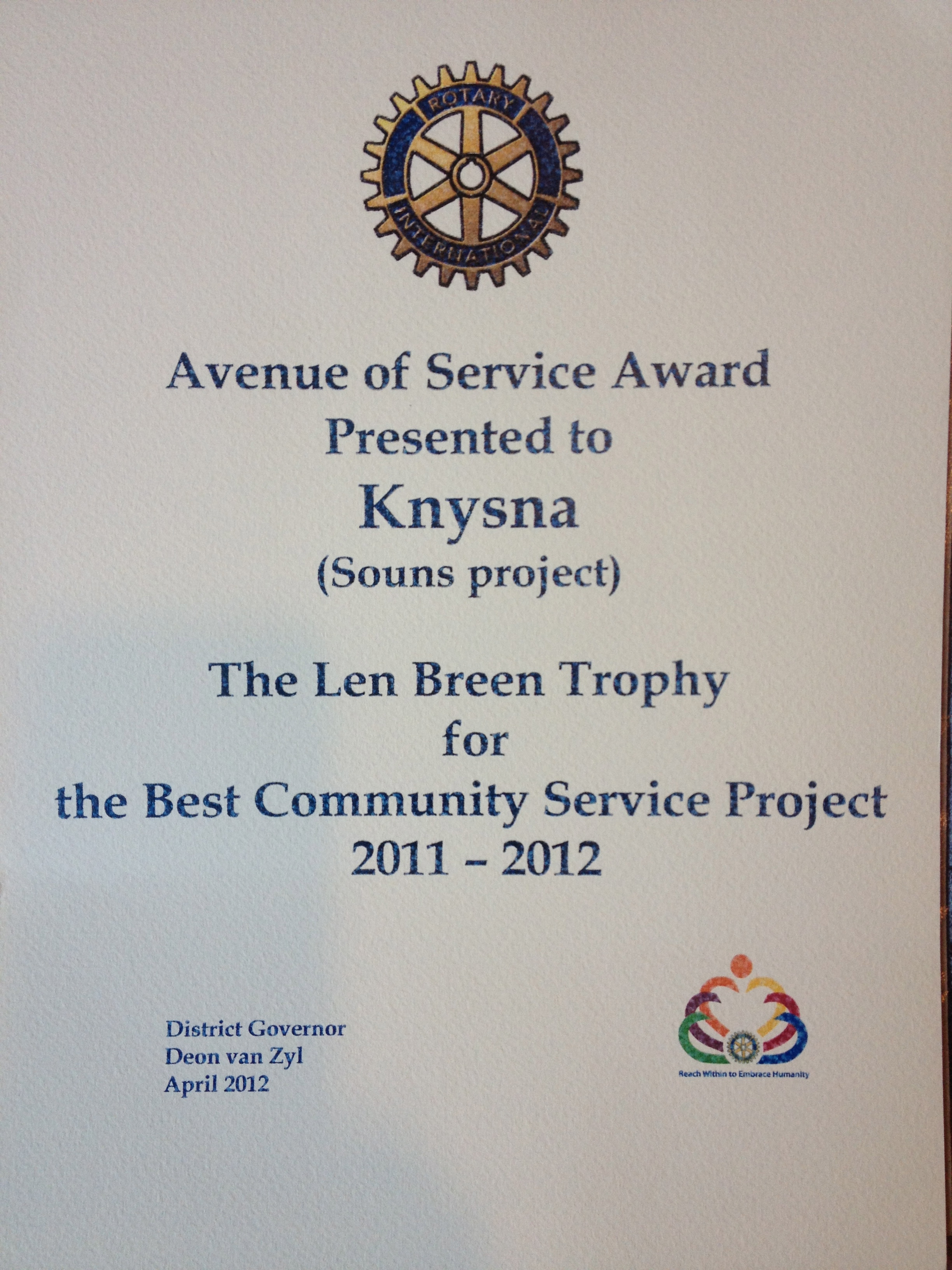
Len Breen Award – Souns Project RD 6900/9350


KNYSNA’S SOUNS PROJECT                                                                                                        By Lesley Satchel,             Past President, Knysna

Knysna has been busy with literacy projects this past year, and most of our Matching Grants also have a literacy component. SOUNS LITERACY PROGRAMME Knysna RC, in conjunction with the Knysna Education Trust, has continued to expand the SOUNS Literacy Programme at 48 pre- schools in the greater Knysna area townships, and rural communities. This programme was developed by Brenda Erikson, a Rotarian from the Peachtree Club in Georgia USA, who be- lieves that literacy should be introduced from a very young age (less than a year old) and be mastered by means of the kinaesthetic sense (the dominant sense at that age) rather than the usual visual and auditory senses. Of course, all senses come into it later. Brenda managed to have all 48 sets of SOUNS letters sponsored by Rotary Clubs in her District, so it is truly a Rotary project. Brenda and her husband visit South Africa twice every year to monitor the progress of the programme, which is being used very successfully in Afrikaans and Xhosa in our area. Through KET, SOUNS programmes are being used in the Mossel Bay area, sponsored by Mossel Bay RC, and also Pretoria, through a local RC there.


Best community service project (The Len Breen Trophy)

1 A viable project that meets the community’s needs

2 Ongoing sustainability

3 Implemented in partnership and in collaboration with the community/authority structure and organization

4 Degree of participation of Rotary club members

5 Degree of participation by the community

6 Enhances Rotary’s visibility and public image in the community

7 Project should have been running for six months prior to conference

8 Project registered on the District database

9 Donation of money is not a criterion