Unknown's avatar

One Sheet Fits All

DSC00005Oh, the simplicity of Souns! This is the progress sheet for a classroom or number of students from initial introduction of Souns through decoding. If you are a teacher, a glance at this sheet (if you record data regularly) will give you the information needed to re-group your children according to ability. This should be done often to sustain a dynamic learning environment.

It is important to record information or activities mastered. Souns is such a simple, fun, hands-on way to build little readers – in their time!

The classroom tracking sheet ensures classroom management. Responsible use of this tool is one of the few critical requirements of this program. After each group lesson, record any updates via the legend for each child.

Proper use of this sheet includes following the Souns sequence of letters, even when compelled to do otherwise. This order has been developed with much guidance and has been scrutinized by speech/language pathologists. There is nothing arbitrary or happenstance about the Souns program, including the order of introduction.

ONLY as a sound is mastered may you add one new sound. That means there will not be more than 4 letter-sounds being learned by a child at one time. Do not, however, stop including the sounds mastered by the child in future lessons. In this way, the child will work across the row of the tracking sheet and through the digraphs, starting with o/m/s/t and adding one new sound for each one mastered. Digraphs will be specific to the language being taught.

With this classroom overview, using the same legend as on the individual tracking sheet for each student, you can group and re-group the learners as they progress through letter-sound associations. Children should be re-grouped regularly according to their abilities. This will keep the groups and the entire classroom more dynamic and will cross-fertilize the environment with a variety of letter-sounds.

This classroom tracking sheet helps you re-organize at a glance. Legend:

Not Introduced Yet

Introduced

Knows = Learner can find or touch without error when asked for specific sound.

Mastered = Learner volunteers the sound for a letter without being asked (from print in the classroom or as the letters are being taken out of a container for a lesson).

For each Mastered sound, the child is introduced to the next new sound in the Souns sequence of letters.

Unknown's avatar

Interim Souns Report From Knysna, SA

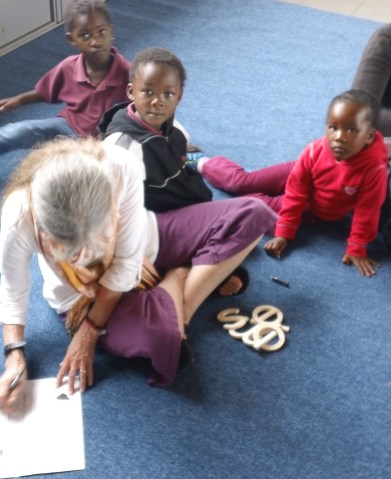
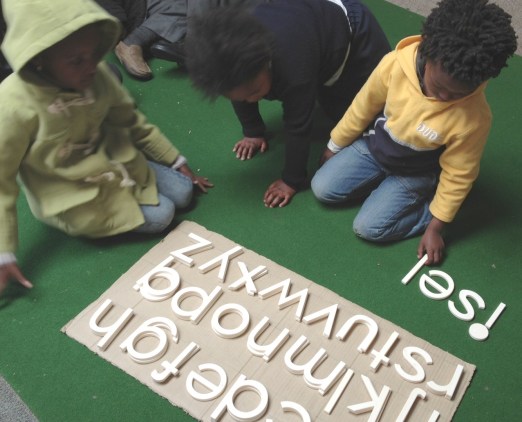
5 year olds building the word isele (frog) by listening to sounds.

In 2010 the first SOUNS kits (2 alphabets of lower case letters and training booklet written in English) were piloted at selected preschools affiliated to the Knysna Education Trust, supported by a matching grant from Rotary Districts 9350 (SA) and 6900 (USA).

In 2011 all 22 of the KET preschools received a SOUNS kit to share among its classes.  At this stage material in the local languages was prepared so that the teachers understood the methodology of the programme correctly, and a local DVD was produced to be used in the training. It was soon realised that there was a need for a Xhosa-speaking person in the field to make sure that the teachers were following the instructions and monitoring their learners’ progress correctly.  A person was appointed by KET to work in the field on all aspects of preschool education, which also included SOUNS. Towards the end of 2011, a generous grant was accessed from the DG Murray Trust, which enabled every teacher at the KET preschools to receive her own SOUNS kit for her own class.  The kits were made up with everything required to present SOUNS successfully, including a polar fleece mat for 8 children to sit around on the floor, and a file containing information about SOUNS in Xhosa and Afrikaans.

In 2012, the kits were distributed to every preschool teacher in KET preschools, and they were trained in the methodology of the programme.

At the same time, volunteers were brought in to monitor progress of learners in every class.  21 volunteers offered their services and one volunteer agreed to monitor 2 preschools that bordered each other.   17 of the original volunteers are still busy with the SOUNS programme (3 have accepted permanent employment, and 1 has gone to England for several months).  The volunteers monitor the progress of the learners (the teachers do the teaching), and guide and support the teachers in the field.  Every teacher reports that she enjoys the regular visits of the volunteer concerned, and the volunteers report that they feel welcome in the preschools. The teachers are proud to show off their learners’ progress to the volunteers when they come.

1.     EVIDENCE FROM Grade 1 TEACHERS:

A list of learners was compiled to try to track learners who had had SOUNS in 2010 and 2011 in KET preschools and Grade R classes, now in Grade 1, in 5 local township primary schools.  172 learners were identified during June 2012 and the following information was supplied by Grade 1 teachers with regard to their performance in literacy after 6 months in primary school:

91 (53%) good – excellent       52 (30%) average – satisfactory      29 (17%) weak                                     

2.     KET PRESCHOOLS SURVEY:

21 of the 22 KET preschools and 17 volunteers replied, in varying amounts of detail. One preschool is being rebuilt, and the teacher did not get her information to me because she was busy moving her preschool into temporary accommodation.  Information from both volunteers and teachers has usually been consistent.

3.  FACTORS THAT MUST BE CONSIDERED, AS GROUPS ARE NOT HOMOGENOUS:

3.1            Some classes consist of mixed ages and languages.  It is recommended that children learn SOUNS in their mother-tongue, in a group who speak the same language. However, there are foreigners from other parts of Africa in some of the classes.  One Child Welfare preschool has an Afrikaans-speaking teacher with Xhosa learners, and she is trying to teach them SOUNS in English!  None of them will go to an English primary school.  We have Xhosa learners in Sedgefield, with a Xhosa teacher, but the primary school there is only Afrikaans-medium at the moment. These are practical problems, and they will interfere with the children’s future educational development.

3.2            Most teachers report that absenteeism among their learners is a challenge.

3.3            Learners in township preschools come and go, joining and leaving classes throughout the year.

3.4            Individual teachers have had personal traumatic experiences, and this causes ups and downs in teaching. It is expected that the same has happened to some of the learners.

3.5            Some preschool facilities are extremely overcrowded.

4.   LEARNING AND TEACHING:

4.1            By August 2012 many of the older learners (Grade R) knew all the SOUNS of the alphabet, and could decode and encode many 4, 5 and 6-letter phonetic words.  The teachers have found “phonetic” a challenge, as the words they give their learners to build and decipher must be able to be sounded out with the individual sounds that the children have learnt, (e.g. ses, and sestig are phonetic, but not sestien).  Suitable word lists in Xhosa, Afrikaans and English have been compiled, and teachers still need guidance in selecting phonetic words for the learners to work with.

4.2            Teachers in the preschools have become more confident and capable as they have become more familiar with the programme, and the learners have more scope for experimentation.  Teachers have reported that they enjoy teaching SOUNS, the children look forward to it (“It is like play when we do SOUNS!”), and they are all proud of their progress.  Most parents are impressed, as are the volunteers, who speak highly of the programme (“This is a wonderful system, and I was amazed at the progress we saw.”)   In my own visits I have been impressed with the teachers’ attitudes, they have been patient, kind, calm and positive towards their learners, and have handled them all in a most loving way.

4.3            The languages that are used in KET preschools are mostly Afrikaans and Xhosa.  In Afrikaans, one can start with 2 and 3-letter words, e.g. om, and os, but the shortest Xhosa words are usually 4-letters, so the learners have to listen more attentively when forming their first words. In Xhosa there are also repetitive syllables, like mama, tata, sisi, which enable the learners to experience patterns in words.


5. GRADE R :

8 Xhosa classes, 9 Afrikaans classes, 3 Mixed Classes, 1 Has changed from Xhosa to English, 1 did not reply.

Time on SOUNS Letter Knowledge Building Words Reading Words
18 and 23 months      All 26                  5-6 letters 5-6 letters
16 months     All 26                                           5 letters, names  
13 months 13  4 letters   3 letters
13 months                 12  3-4 letters  
12 months                  All 26                                           4-6 letters  
11 months                  All 26                                          3 letters  
11 months                                                       15-all 26 3 letters  
9 months                     14 3 letters  
9 months                    10 3-4 letters  
8 months All 26                                           3 letters, names  
7 months                    24-all 26                                     4 letters, names  
7 months 20 3-4 letters  
7 months                    15   3-4 letters, names  
7 months                    13 6 letters, names  
7 months                    13 5 letters, names  
6 months 12-all 26  
5 months 12  

Some teachers have reported that their Grade R learners are also enjoying writing words (on paper, board, sand etc.) at this stage.

6.  4 and 5 Year old Classes :  5 Xhosa Classes, 8 Afrikaans classes , 1 did not reply.

Time on SOUNS Letter Knowledge Building Words Reading Words
14 Months 13 – 26 4 Letters
7 Months 26 4-5 Letters
7 Months 18 3 letters
7 Months 15
7 Months 10 3 letters
7 Months 10
7 Months 9 – 13 3 Letters
7 Months 4-13
7 Months 9 3 Letters
 Months 9 3 letters
7 Months 6
7 Months 7
5 Months 9

A teacher in this age range has reported that her learners recognise the word STOP. Another teacher sings a SOUNS song to her class.

7.  3-4 Year Old classes : 3 Xhosa Classes, 4 Afrikaans Classes, 1 mixed class.

Time on SOUNS Letter Knowledge Building Words Reading Words
7 Months 14 6 letters
7 Months 13
7 Months 12 – 26 3 letters
7 Months 10
7 Months 8 – 26 3 letters
7 Months 6
7 Months 6
7 Months 4-10

One teacher reports that her learners have started identifying letters that they have learnt at the beginnings of their names and other words.

8. Under 3’s : 6 Xhosa Classes, 4 Afrikaans Classes.

Time on SOUNS Letter Knowledge Building Words Reading Words
7 Months 13 – 26  
7 Months 12    
7 Months 10    
7 Months 7-14    
7 Months 6    
7 Months 4    
7 Months 4  
7 Months 4    
7 Months 3-11    
7 Months Babies Crawl around and handle them    

As was reported in June 2012, there is clearly a wide range of performance in all age groups.  This will depend on time spent on the programme, as well as many other factors within each preschool, teacher and child.  All ages have shown progress, and more teachers have reported starting word-building in the past 2 months.

CLOSING COMMENTS:  The closing comments from both volunteers and teachers who are participating in the programme speak for themselves.  The vast majority are VERY enthusiastic!

VOLUNTEERS: “This is a great system, and I am so impressed that children as young as 3 years are able to identify sounds confidently.  The teachers have impressed me.”

“The children and teachers enjoy ‘outside’ person taking an interest in their (pre)school. Consequently the visits have been most rewarding as one feels appreciated and the teachers don’t regard you as a threat.”

“The teachers are well organised and display a genuine care for their work and want the children to succeed with their project”.

“The teacher is very patient and encourages her children….She is structured and systematic with the children who are very small, and the children want to please her.”

“Holidays make a big gap in the learning. The teacher is enthusiastic and the children respond well.  This group has really improved this term.”

“The teacher applies the programme effectively and incorporates it in her daily teaching….She has wonderful results and I was amazed at the progress I saw every time I went back.  This programme is fantastic and it works!”

“The teacher works at the level of the children.  She is patient and prompts them when they hesitate.  She had a chart and asked them to place the SOUNS on the letters which were arranged in an alphabet….She makes everyone clap when they get something correct and prompts those who falter.  Very gentle but assertive.”

“Most of the group are quick, confident and ready to move on.  Their enjoyment is evident – they are a great credit to the teacher”.

TEACHERS:

Most of them say they enjoy teaching SOUNS.  The children “love” learning SOUNS and are “excited” about the programme. “They are curious about SOUNS”. “That is the pleasure, even to feel the SOUNS” “Kinders kan nie wag wanneer ons met die SOUNS begin nie”.

“They are very glad when they see the SOUNS, they say we are now ready to do our work”.

“The SOUNS are very important, especially for Grade R because SOUNS help them develop their thinking and language skills.”

“My children can read and write.  Their progress is good and has a big effect on children’s lives.”

“Four of my children have a hearing problem…” (Discovered through working with SOUNS).

“Parents appreciate the progress because their children can learn a few words.  They answer if you ask…” “They speak more clearly”. “Parents hear (listen?) when children talk or tell a story”.

One of the preschool teachers who also has an aftercare facility for older children, reports that those children’s spelling has improved as a result of them using SOUNS at her preschool.

“The programme makes things easy to manage…and developing children’s skills, knowing names, counting and numbers”.

“Children remember easily”. They “learn well and listen.”

“Children call out SOUNS at home”.

“Parents are proud.”  “SOUNS make children brilliant, not even at preschool, but at primary school also”.

When I teach them, they are free and listening”.  The little ones are “just playing with them and eat them.”

“The children go to the alphabet chart and say the SOUNS that they know. They will be the best generation.”

“Children ask for books and paper at home.”  “They respond to alphabets, and words on TV and magazines”.  “Children point to letters in shops and street names”.

SOUNS is a “fun way to learn”.  The children play on their own with SOUNS and become “clever”   each day.

A 3-year-old shows her Mom the S of Siyafunda on the way to preschool every day.

“Ouers is beindruk met SOUNS want dit gee ‘n hupstoot met die alfabet.”

“Die program help my baie met kinders wat skaam is.  Dit gee my ‘n kans om ‘n sterker band to bou en terselfde tyd leerders se developmental stage vas te stel.”

Two teachers do not know what their parents think – they have had no contact on this level.

Some teachers would like more training, and this need will be addressed soon.

One of our preschool principals has this to say: “Your motivation and inspiration are helping us here…..to prepare leaders and readers for the future of the world.”

KNYSNA EDUCATION TRUST 2012

(Watch for the final report in November.)

Unknown's avatar

Where Is The Dirt?

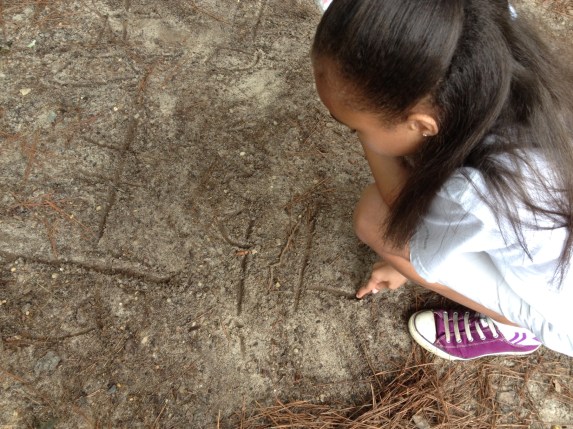
What is a kid without mud pies?  What if there was no dirt for digging holes, building ramps for little bridges, making designs, or planting a seed. It is so sad to visit preschool sites and train for Souns, suggesting the teacher write letters in the dirt on the playground, only to receive that vacant look that says, “There is no dirt on the playground.” Not even a spot of dirt.

A child’s construction! Tomorrow’s yurt builder or city planner.

Literacy began on a cave wall and progressed with playing in and with the dirt. We may live in different times and wear different clothes, but children are quite the same. They need to use their hands to move and shape and create worlds from their imaginations. Dirt is the natural medium. Creativity is, indeed, being stripped of its roots.

Our lives are so busy and our children are captive in our harried schedules, spending their days on playgrounds that are plastic coated, shrink wrapped, and stamped “sterile.”

Children need a spot of dirt to dig and play and build their world!

Unknown's avatar

One Story – One Child

One story at a time!

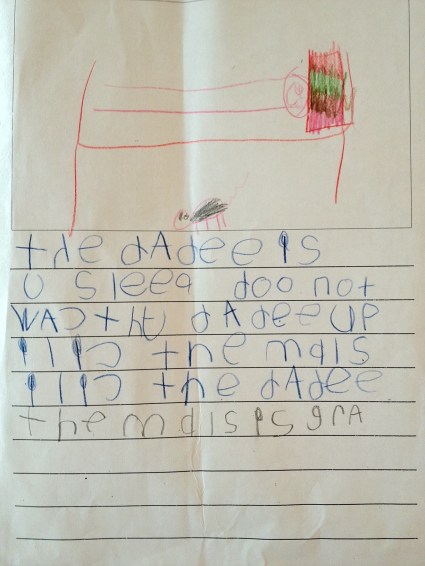
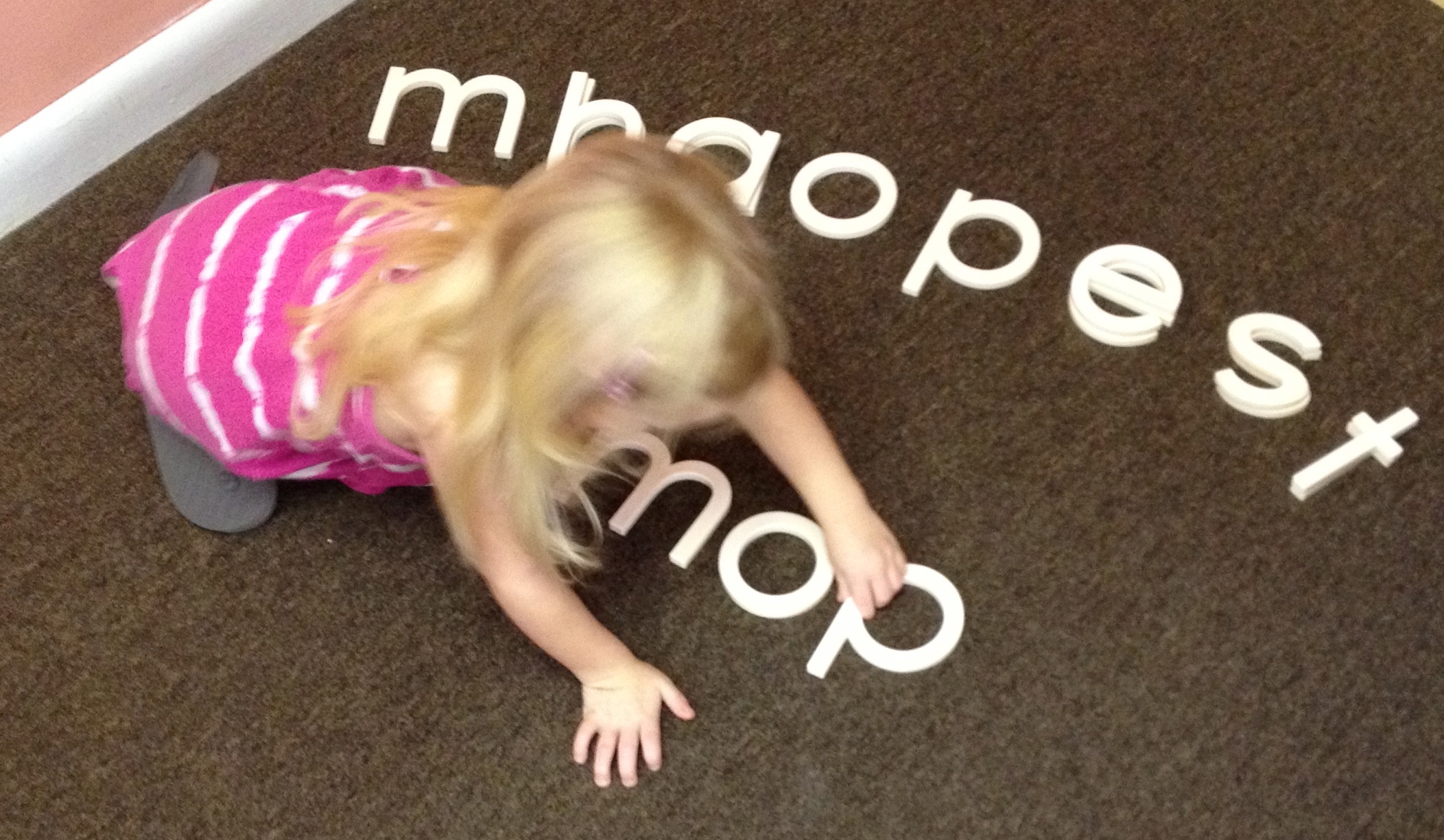
This little one became a Souns kid when she was barely 2 years old. She is now five. She is reading and writing. Creative writing for a young child means creative spelling….and research confirms that children who write creatively early are better spellers in school  (Souns White Paper  page 8). More important than spelling is the absolute joy a young child has in written expression. The work of it disappears, morphed into the confidence of “I can do this!” Head down (with mouth almost touching the paper), little hand moving to encode the sounds in the words the mouth is quietly saying.

It is magical! It is mysterious! It is freedom!

(the daddy is asleep; do not wake the daddy up; I like the mouse; I like the daddy; the mouse is gray)


Unknown's avatar

The Writing On The Wall

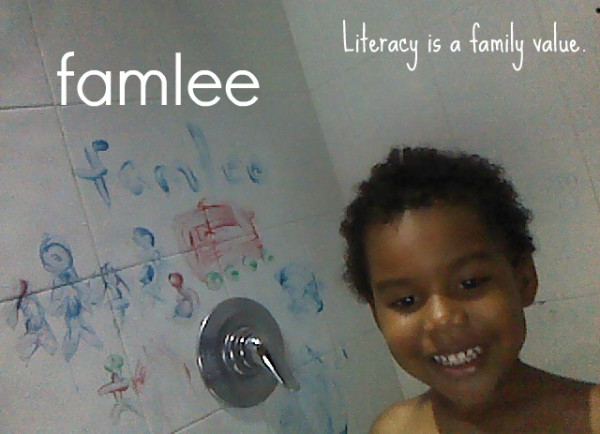
So THAT is how much fun a Souns kid can have? Meet Prince, and his marvelous mother Nikolai. Prince has had Souns since his mother and I met on TWITTER  and she ordered Souns materials (January 2011). The journey has been furiously fast moving and engaging. Within two weeks of  Nikolai seeing the impact Souns had on her young child, she was compelled to change every child’s life in Puerto Rico. She  spoke to everyone, trying to build a resource for getting Souns into the hands of the children in her community. Finally, a Rotarian from Rotary District 7000 heard of the effort and suddenly, a Matching Grant was in the making.

Where are we now with this vibrant mother and one little boy who loved his Souns? Mix such passion and commitment with Rotary and the world really does change. Currently, the Head Start program of San Juan Municipality is the recipient of a grant from The Rotary Foundation, a Matching Grant sought by Rotary Districts 6990 and 7000. One mom and the experiences of one little boy on a mission now impact 4000 children in Head Start. The ultimate goal is to change the world for children in all of Puerto Rico. That mission is not to be denied, at least not for Nikolai .

And what about the star of this story, our little Prince? Prince is now building words with Souns letters, writing words with his hands, and sounding out phonetic words in two languages. He is not even old enough to be in kindergarten. What do you think his world will be like as he enters school? He loves learning. He is curious and inspired. Family matters to children. Souns has powered a relationship with a family and their community and has spawned a future for 4001 children. Nikolai is taking that even a step further – surprise! She has written, published, and is traveling and speaking about the power of family. Ring the Alarm: The Hope of Black and Brown communities: A Zero to Five Parenting Guide for Low Income Black and Latino Caregivers.   Nikolai Pizarro (Author)  http://www.amazon.com/Ring-Alarm-Communities-Parenting-Caregivers/dp/1468146963

It started with a TWEET between @counterpane and @Be_Pure! It is now a major literacy project in Puerto Rico thanks to The Rotary Foundation and the support of Rotary Districts 6990 and 7000 (inspired by the dream of one very passionate mother and her child). Today’s communication tools combined with service-above-self organizations such as Rotary build amazing opportunities, linking minds, hearts, and purpose.

Unknown's avatar

Impromptu Moments!

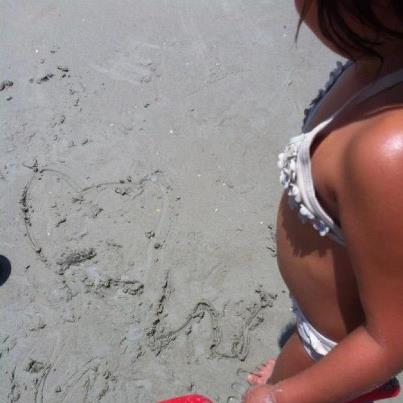
While playing in the sand at the beach, my 4-year-old daughter grabbed me and said,

“Look Mom, I made a sound.”

“Wonderful!  What sound did you make?”

“/w/,” she answered.
It’s the unprompted moments of demonstrated understanding that illustrate
the power of the Souns® for Literacy program.
Thank you,  Della of @sensablelearning in Apopka, Florida, for this entry!
Unknown's avatar

Even Start Family Literacy Program

A school year has spun by so quickly since we began Souns with the Even Start Family Literacy Program in Georgia. Five counties participated, with one center in each. The centers ranged from childcare settings which met daily during the week to centers with once a month visits by families. Almost every site included home visits by Even Start teachers.

From my experience, the people involved in ESFLP are an inspiration and such a positive reflection on the efforts to build literacy in Georgia. Each site is unique in its style and population. I have delighted in the eagerness of a parent watching her four-year-old child demonstrate letter-sound knowledge while she, herself, was on her way to a classroom to study for the GED. She is determined her child will have a head start in school. A home visitor shared the success she was having with a family whose child was not succeeding in school because of reading issues. There are abundant anecdotes of how Souns made a difference for children and their families. One teacher bemoaned the fact that the Even Start Family Literacy Program did not have Souns until this year, saying it would have made a tremendous difference had they had it during previous years.

We also learned about the conditions that make it harder for Souns to succeed. Souns works best when a child has regular exposure to the program. Souns once a month does not give as positive results as Souns being taught each day. Home visits were successful where the family supported the program between visits. Children who miss many days of school are clearly in jeopardy of not progressing as well as their classmates who attend regularly. The teachers voiced this frustration many times, “The program works if the child is here.”

Souns is an early literacy program that teachers love and children love if we can get the teacher, the material, and the children together on a regular basis. An exceptional academic program and great teachers are two critical legs of a stool that will not stand without the third leg – the child, supported by their family. The issues that challenge families who qualify for Georgia’s Even Start Family Literacy Program are clearly issues that are not easily remedied by the best of intentions or the greatest of programs and teachers. We must find a way to intercept families earlier and in incidental ways that adapt to the needs and schedules of very determined parents with complicated daily lives. How can we reach the most predictable teacher for a child  – the parent – with the right information to build literacy at home? This hope I gained from this year. That is our goal, and I thank the Even Start Family Literacy Program for giving us such a clear direction for helping children. Every parent wants their child to read!

Unknown's avatar

Souns/Peace Corps – Seeds Sprouting!

 Souns Approach to Learning Phonetic Sounds without Souns symbols.

This is the Souns program through the words of one Peace Corps volunteer as he is helping teachers around him build a more literate world for children in South Africa. He is introducing the Souns program across environments. Children will read in South Africa thanks to the collaborative effort of  the Peace Corps and Rotary Districts 9400/6900.


I.  Introduction

Children often have a difficulty with reading because they learn words through rote memory of high frequency words.  These children have difficulties when coming across unfamiliar words.  If children are exposed to individual phonetic sounds at an early age, such as the cretche age, they will be a more balanced reader, able to read with fluency and decode.

II.  An Approach

There is a program called Souns that utilizes hard plastic representations of phonetic sounds and a progression of phonetic sounds that allows a young child to learn high frequency sounds first.  The progression is as follows:

o  m  s  t  p  e  i  h  a  f  u  b  w  n  d  j  l  c  r  g

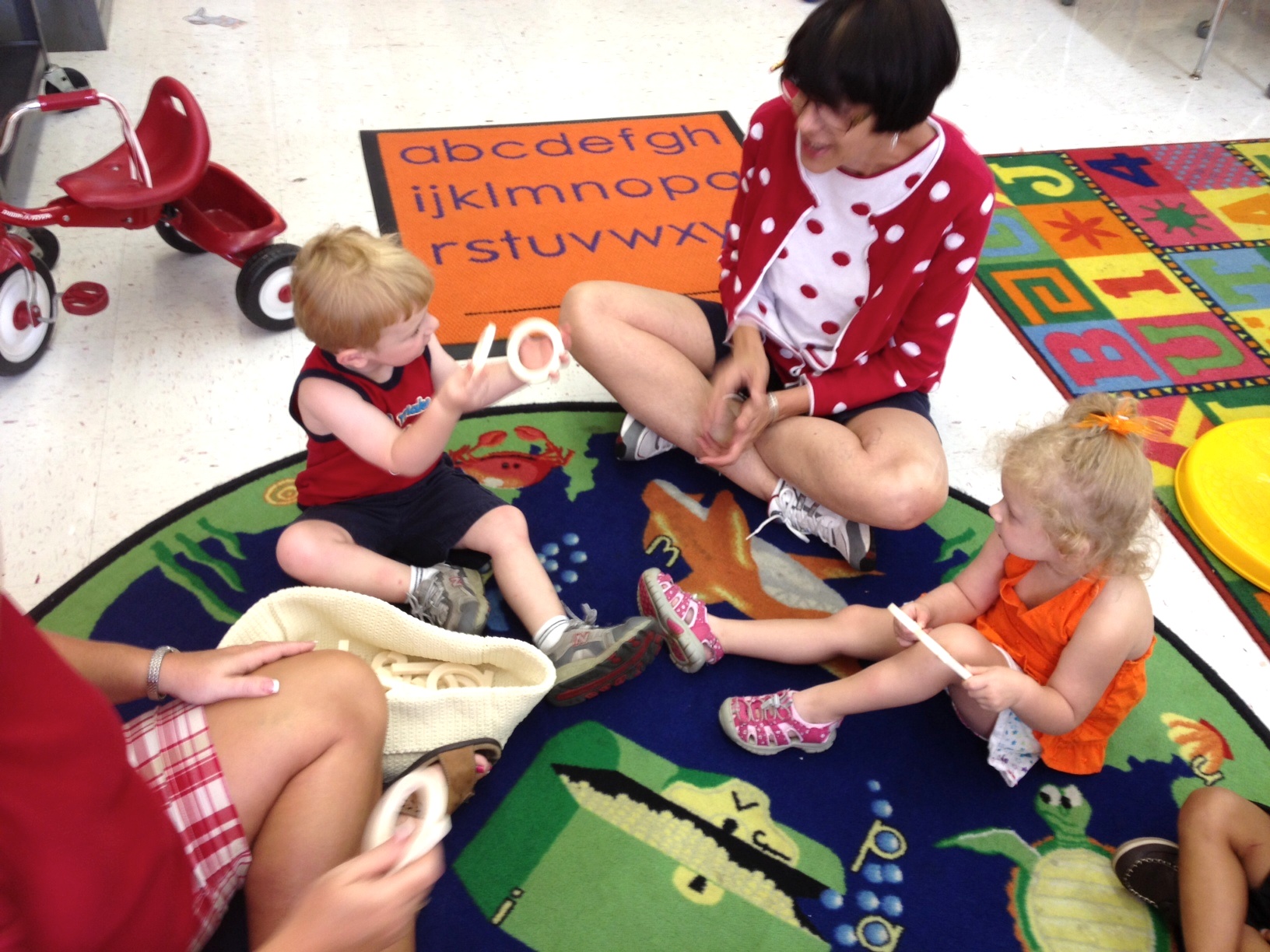
Learners are introduced to the first four sounds “o  m  s  t.”  Groups can be from 1-8 learners.  The preferred method is to be seated on the floor.  The teacher has the four sounds in a bag and pulls out one sound (the plastic representation of the sound) and says “o.”  The learners will repeat “o.”  Then the teacher goes from learner to learner, saying “o” and allowing each learner to touch and hold the sound.  After all learners have touched and said the “o” sound, lay the sound on the ground and repeat with “m” and then the rest of the four sounds.

After all 4 sounds have been introduced and laid on the ground in from of the learners, repeat the sound and give one to each child.  Now that each child is holding a sound, ask, “Can I have the “o”?”  The child with “o” will hand you the “o” and you will place the sound back in the bag.  Say “thank you” and ask for the “m” and so on until all the letters are in the bag.  Give each child a “high five” and say “thank you”.

III.  Notes on the Approach

Each session should last less than 15 minutes and done only once a day.  The sessions should focus on being fun and not dispensing of knowledge.

A teacher should never say “no.”  If a learner says a sound incorrectly, such as “o” when the sound is “m”, say, “This is “m,”” and continue with the session.  If a learner points at a sound, such as “m”, and says it incorrectly, say, “This is “m,”” and allow the child a chance to say it correctly.  If they continue to struggle, say “Good job,” make a note, and continue with the session.

It is important that each sound is not drawn out too much.  If the learners are learning “t”, make sure the learners say “t” once and not “t, t, t, t”.  If they are learning “s,” make sure they say “sss” and not “sss, sss, sss”.  This is because the child will soon be reading and they need to learn how the sound sounds naturally when read.

Never add vowel sounds to the end of consonant sounds.  If teaching “s”, it is never “sa” or “se” or “si”, it is “sss” and only “sss”.  This will help the child break words down and be able to learn other languages that do not follow the Bantu word formation of every syllable ending in a vowel.  “sa”, “se”, “si”, “so”, “su” is a helpful approach for reading intervention and can be done at a later stage, but it is not beneficial when a child is first learning phonetic sounds.

When showing the learners a sound, be sure to display the sound in a way that it is proper for the child viewing it.  This way they do not confuse the sound.  This is especially imperative when doing b, d, p, and q.

IV.  An Amended Approach for LEAP 5 and Local Cretche

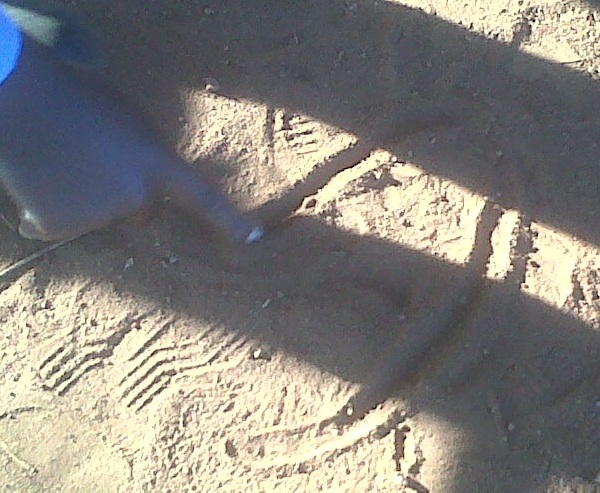
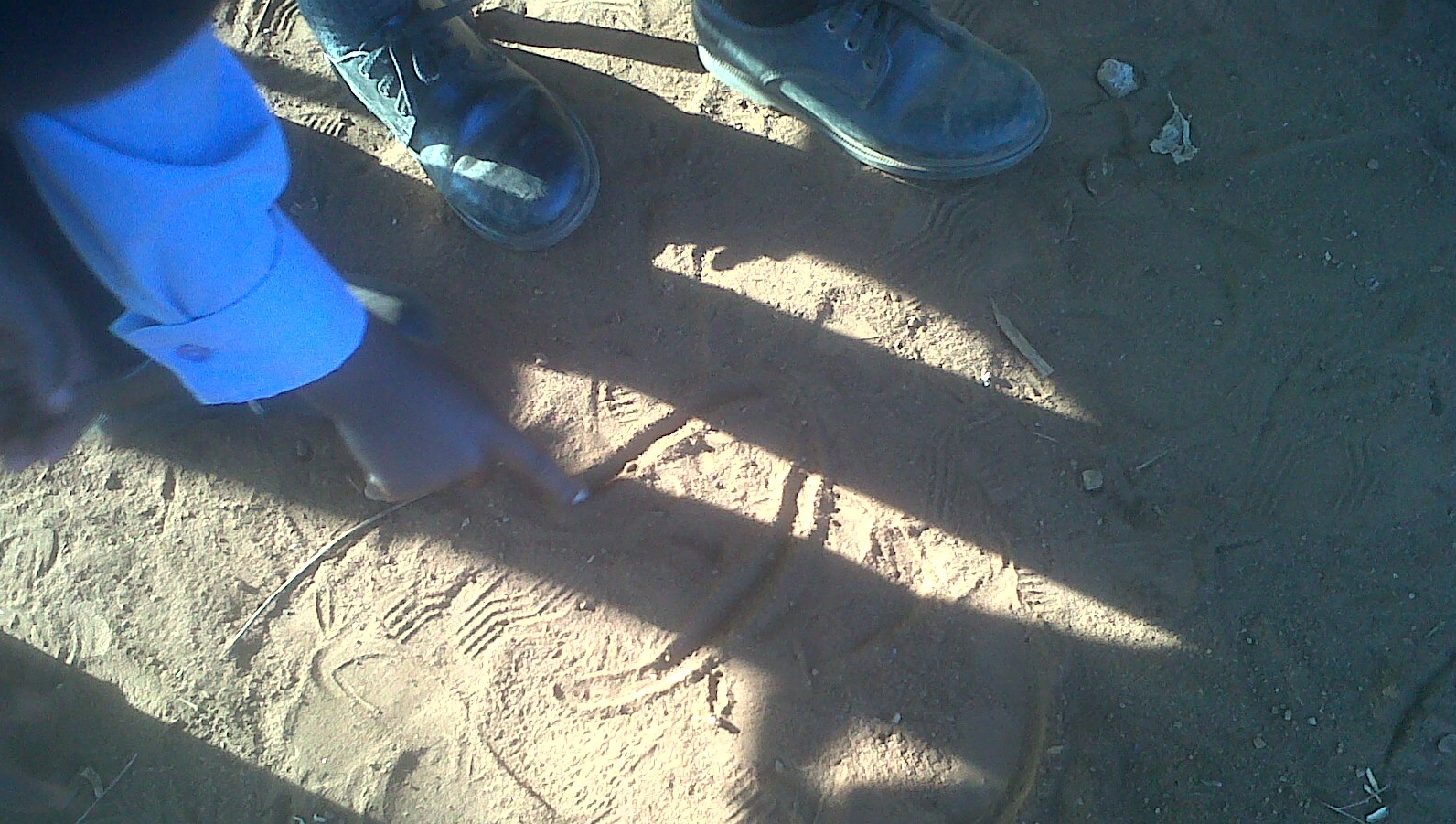
Working with the plastic representations can be substituted by drawing with a stick in the dirt.

Each LEAP learner could work with a group of 4 or less.  I suggest 4 or less so the cretche learners receive equal exposure.  You can adjust this if need be, of course.  Here is a suggested process:

1.  The LEAP learner will take their group and a stick to their designated spot in the yard.  In this case, they will sit down in a line with students beside the teacher. Greet each student, ask a simple question, and say something to get them excited, such as, “Ready to have some fun?!”  Be sure the learners can each see the patch of dirt in front of them and the LEAP learner.

2.  They will go through the introduction process, as mentioned above, but instead of displaying a plastic representation of the sound, the teacher will slowly write the sound in the dirt in front of the learners.  Form the letter slowly, so the child is able to watch how the letter is formed.

3.  The LEAP will point to the representation of the sound drawn in the dirt and say it to each learner.  After saying it to one learner, allow the learner to attempt drawing the sound in the dirt also.  As noted under “Notes on the Approach,” be sure to not say “no”.  Just allow the learner to try their best and move along, keeping their excitement high.

4.  By the end, you should have 4 sounds drawn in the dirt, facing the learners.  Go through each sound saying, “Can someone touch the “o”?” and then erase after choosing one child to touch it and then move to the “m” and so on until all sounds are erased.

5.  Give each learner a sign of congratulation such as a “high five” and end the session.

V.  Resources

Please visit souns.org and read more about souns.  Then go to souns Resources on the left hand column.  Once on the souns Resources page, click on the souns Tracking Sheet and start one tracking sheet for each cretche learner that is kept track of by their LEAP learner.

                   *Mastered, shading in the whole box, should be filled in only when you draw the sound in the
dirt, and without any prompting or prior teaching that day, the individual cretche learner say the
correct sound.

VI.  Activities to Add to the Approach

If learners are having difficulties with sounds, it often helps to change your approach.  Here are a few suggestions to make learning even more fun:

1.  Get a marker or pen and lightly write the sound on the hand of each learner.  Be sure to write the same letter on the same part of the palm.  This will allow you to write four sounds (2 on top of each hand and two on the bottom of each hand).  Be sure to sit behind the learner and slowly write the sound, allowing them to see how the sound is formed.  After this, you can ask them to match their sound to their friends’ same sound.  It is a fun way for them to take their learning home and show their parents what they learned that day at school.

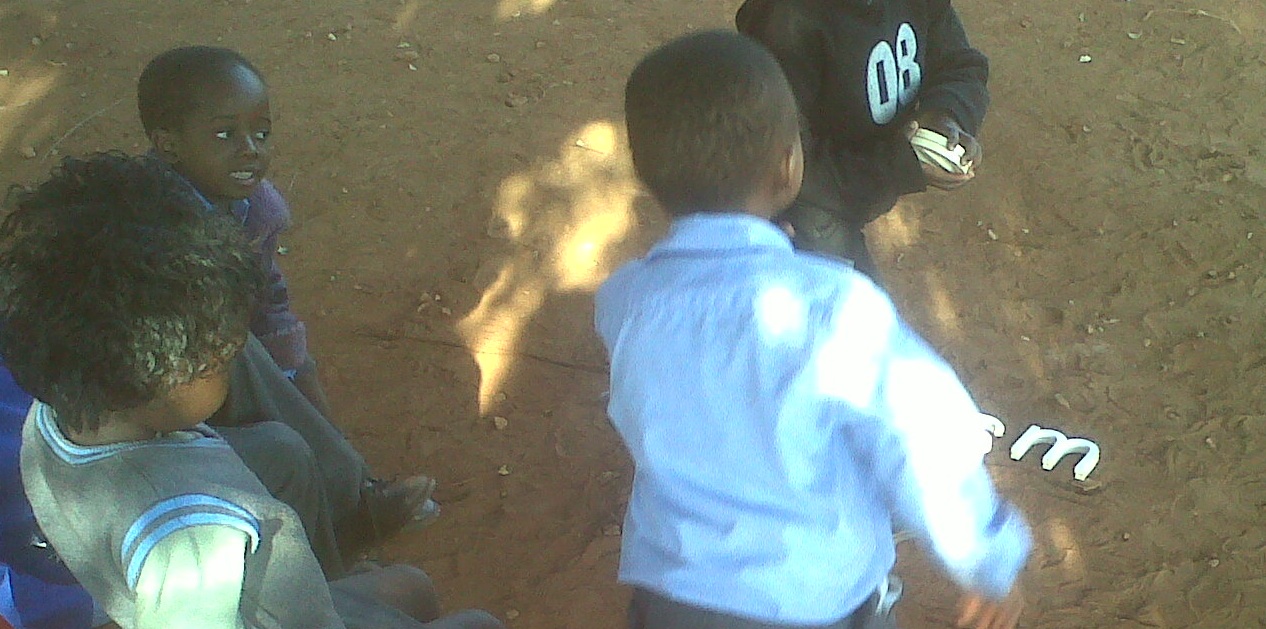
2.  As a review, draw each sound apart from each other in the yard.  Say a sound and have the group run to each sound, look at it, and shout it out.  This is a good way to get them excited about the sound and can even be done individually as a way of review.  Be sure to demonstrate first.

3.  Get large representations of sounds already learned and spread them out in your learning area.  Ask learners to find the different sounds on the paper and/or have them show you the sounds.  This will be a pivotal step in their understanding of how sounds connect to the world they live in.

4.  Once learners attain the first 8 sounds, it is a good time to create some words.  From the first 9 sounds, in Tshivenda, you can say the words mme, ita, sita, sema, and many more that I don’t know.  Say the word normally and then say it slowly, making sure the learner hears each individual sound.  Ask the learner what that word means and if you have a physical representation of the word, show it to the learners.  Allow the learner then to do say the word normally and then slowly.  Say it again together, pointing out the first sound, and then you or, if able, the child writes the sound in the dirt.  Do the same for the next sound.  When the entire word is written, sound out each sound and then say the word again normally.  Congratulate the learner and tell them they built a word.  This will be a big step for the learner and should be used only with sounds mastered.

VII.  Final Note

This is an easy concept that will be great for the LEAP learners to share with the cretche learners.  It will be most beneficial when mixed with reading of stories, singing of songs, and playing of games.

© 2012 by SounsⓇ All rights reserved. No part of this document may be reproduced or transmitted in any form or by any means, electronic, mechanical, photocopying, recording, or otherwise, without prior written permission of Souns.